
Sump Pump in Finished Basement: Installation, Placement, and Design Solutions
A sump pump in finished basement spaces is a critical water management system that removes accumulated groundwater and prevents flooding while maintaining the aesthetic appeal of your living space. This system sits in a specially constructed pit and automatically pumps water away from your foundation when water levels rise. For homeowners with finished lower levels, integrating this essential equipment requires careful planning to balance functionality with design—whether you’re converting an existing space or planning a new renovation.
Understanding how to properly install, place, and conceal a sump pump ensures your investment in finishing your basement remains protected from water damage while preserving the room’s livable appearance.
Key Takeaways
- Sump pumps can be successfully installed in finished basements with proper planning during renovation or through retrofitting existing spaces, though pre-installation during finishing is significantly easier and more cost-effective.
- The optimal location is the lowest point of your basement where water naturally collects, typically in a corner or along an exterior wall, which allows gravity to work in your favor and maximizes system efficiency.
- Multiple concealment options exist including custom cabinetry, decorative covers, built-in storage solutions, and corner enclosures that maintain accessibility while blending with your finished space design.
- Professional installation prevents costly mistakes such as improper discharge routing, inadequate pit sizing, electrical code violations, and drainage issues that can compromise both your pump’s performance and your finished basement’s integrity.
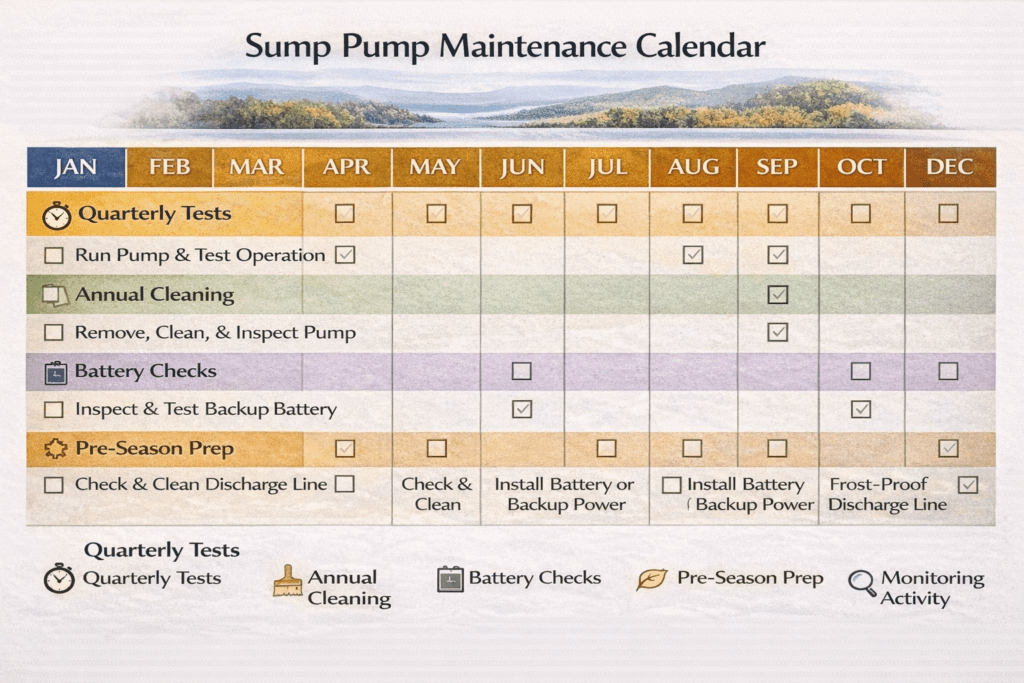
- Regular maintenance is non-negotiable with quarterly testing, annual cleaning, battery backup checks, and discharge line inspections ensuring your system protects your finished space investment year-round.
- Modern systems offer quiet operation and smart features including Wi-Fi monitoring, battery backup systems, and low-profile designs that integrate seamlessly into finished living spaces without compromising functionality.
Understanding Sump Pumps and Why Finished Basements Need Them
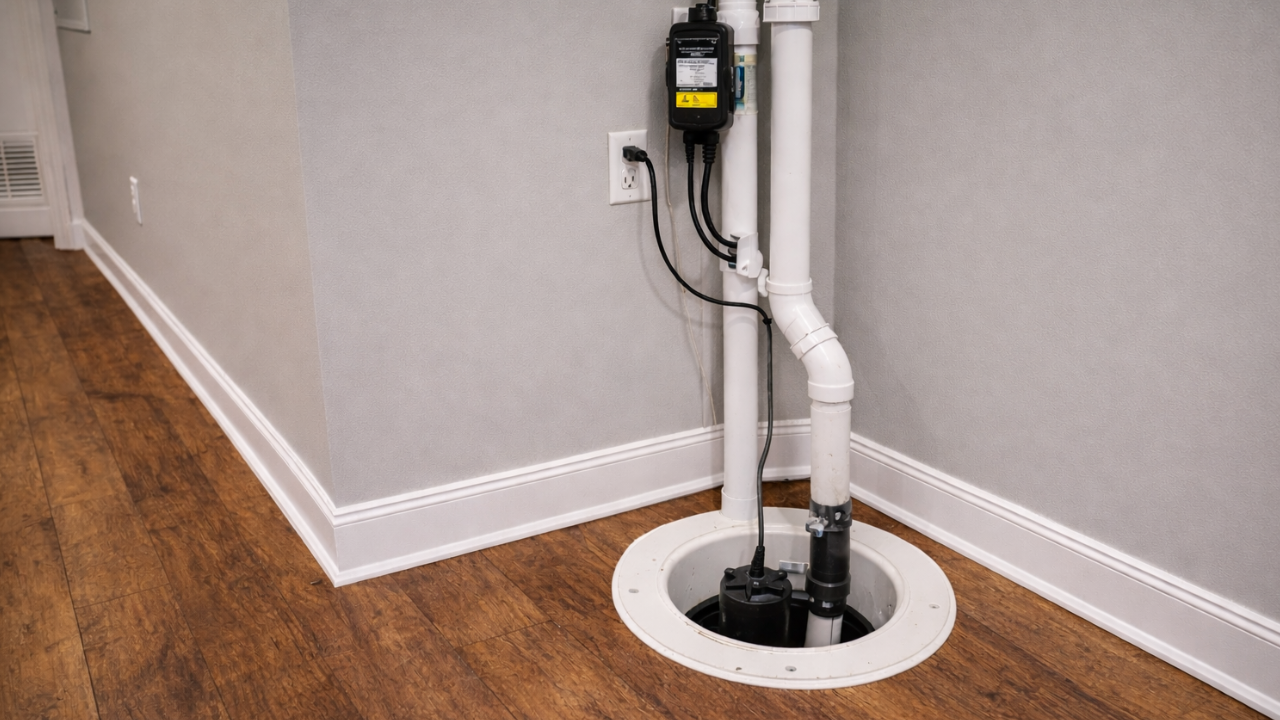
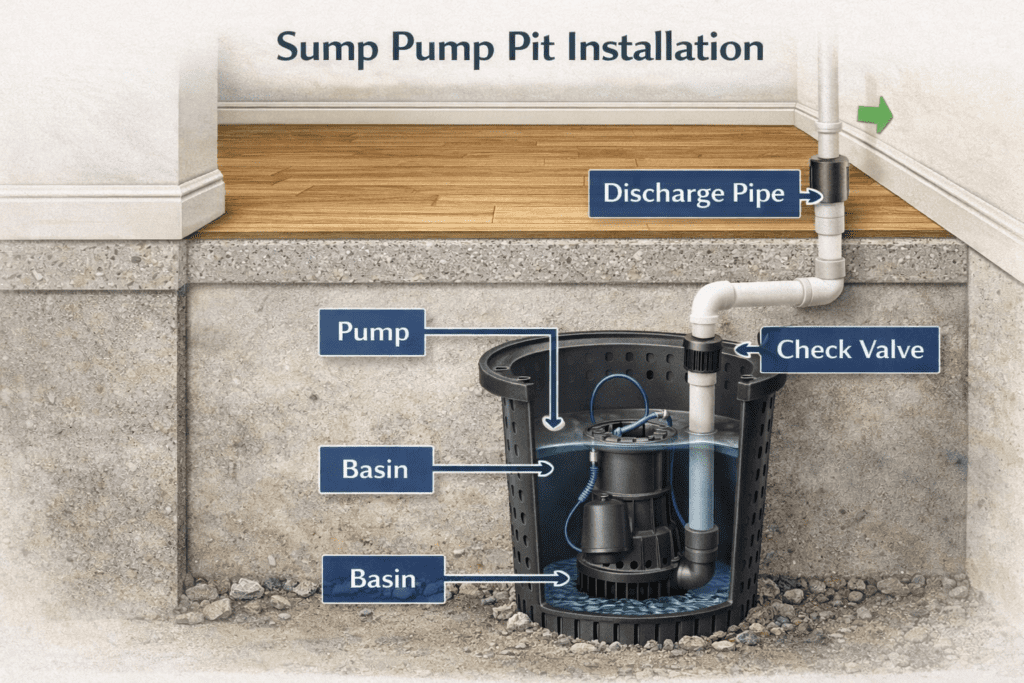
A sump pump serves as your basement’s first line of defense against water intrusion. The system consists of a pump housed in a basin or pit that collects water seeping through your foundation or entering through drainage systems. When water reaches a predetermined level, a float switch activates the pump, which then discharges the water away from your home’s foundation through a discharge pipe.
In finished basements, this protection becomes even more critical because water damage doesn’t just affect concrete and foundation—it destroys flooring, drywall, furniture, and electronics. The cost of repairing a flooded finished basement far exceeds the investment in a quality sump pump system.
Finished basements face unique water management challenges. Unlike unfinished spaces where moisture issues are visible and easily addressed, finished areas conceal water problems until significant damage occurs. By the time you notice water stains on drywall or carpet, mold growth may already be establishing itself behind walls and under flooring.
How Water Enters Basements and Why Pumps Are Essential
Groundwater enters basements through several pathways. Hydrostatic pressure forces water through foundation cracks and porous concrete when the water table rises after heavy rain or snowmelt. Floor-wall joints represent particularly vulnerable points where water commonly penetrates.
Without a sump pump, this water has nowhere to go except into your finished space. Even homes with exterior drainage systems benefit from interior sump pumps as a secondary defense layer, especially in regions with high water tables or clay-heavy soil that doesn’t drain effectively.
The Cost of Not Having a Sump Pump
The average finished basement flood causes between $10,000 and $50,000 in damage depending on the space’s size and finishes. This includes water extraction, drying, mold remediation, and replacement of materials like drywall, insulation, flooring, and trim. Many homeowners also lose irreplaceable items stored in basement areas.
Insurance considerations matter significantly. Many policies either exclude or limit coverage for groundwater flooding, or they significantly increase premiums for homes in flood-prone areas without proper mitigation systems. Installing a sump pump can lower insurance costs while providing peace of mind.
Can a Sump Pump Be Installed in a Finished Basement?
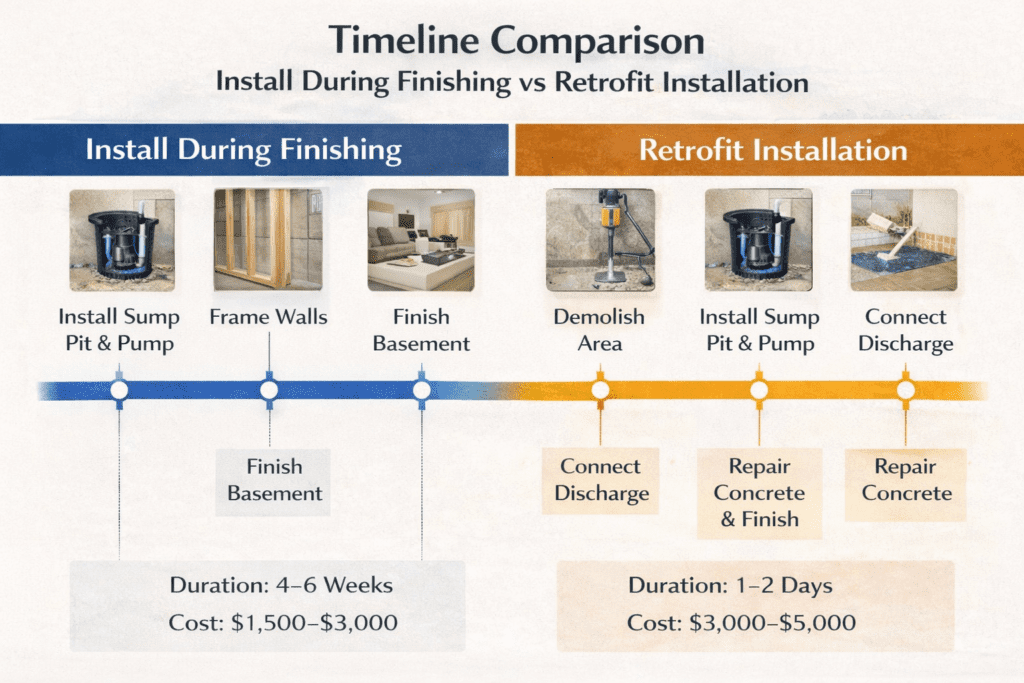
Yes, sump pumps can absolutely be installed in finished basements, though the process differs significantly from installation in unfinished spaces. The primary challenge involves accessing the floor to create the sump pit without causing excessive damage to finished materials. Homeowners have two main timing options: installation during the finishing process or retrofitting after completion.
Installing during basement finishing represents the ideal scenario. The contractor can coordinate plumbing, electrical, and drainage work alongside other systems before flooring and walls go up. This approach allows for optimal placement, proper discharge routing, and seamless integration with your design plan.
Retrofitting a Sump Pump After Finishing
Retrofitting requires cutting through finished flooring to access the concrete slab below. A contractor will remove a section of flooring—typically 24 to 30 inches square—then use a jackhammer to break through the concrete and excavate the sump pit. The pump installation follows, after which flooring must be patched and refinished.
Material matching presents the biggest aesthetic challenge. If you have carpet, matching pile and color years later can be difficult. Tile and hardwood require careful selection to minimize visual differences. Many homeowners use this as an opportunity to install the pump in a utility closet or storage area where flooring repairs are less noticeable.
The typical retrofit installation takes one to two days depending on complexity. Costs range from $1,500 to $4,000 including pump, pit, plumbing, electrical work, and flooring repair. This compares to $800 to $2,000 for installation during initial finishing.
Code Requirements and Permits
Sump pump installation requires electrical work and plumbing modifications that fall under building code jurisdiction. Most municipalities require permits for this work, particularly when electrical circuits are added. Professional installation ensures code compliance with proper GFCI protection, discharge pipe sizing, and check valve installation.
Discharge locations also face regulations. Many communities prohibit pumping directly into sanitary sewers to prevent overwhelming wastewater treatment during heavy rain events. Typical approved discharge points include yard drainage, dry wells, or municipal storm sewers where permitted.
Where Is the Best Place to Put a Sump Pump in a Basement?
The optimal sump pump location is the lowest point in your basement where water naturally accumulates due to gravity. This spot typically sits in a corner or along an exterior wall where the floor slopes slightly or where foundation drainage systems concentrate water flow. Identifying this location requires careful observation during wet conditions or consultation with a drainage professional.
Placement along exterior walls offers advantages for discharge pipe routing. The pump can expel water directly outside through the shortest path, reducing pipe length and associated friction losses that decrease pumping efficiency. Shorter discharge runs also minimize freeze risk in cold climates.
Evaluating Your Basement’s Water Flow Patterns
Before selecting a location, assess where water enters and travels in your basement. During heavy rain, check for dampness patterns, especially at floor-wall joints and around foundation penetrations. Water follows the path of least resistance, so understanding these patterns helps position your pump where it will intercept the most water.
If you’re planning a new finished basement ideas project, work with your contractor to determine the best pump location before framing walls and installing systems. This coordination allows you to build around the pump rather than accommodating it later.
| Location Factor | Ideal Characteristics | Why It Matters |
| Floor Elevation | Lowest point in basement | Gravity directs water naturally to pump |
| Wall Proximity | Near exterior wall | Shortest discharge pipe route reduces cost and freeze risk |
| Electrical Access | Within 6 feet of GFCI outlet | Meets code requirements without extension cords |
| Drainage Tile | Where perimeter drains converge | Intercepts water before it enters basement space |
| Accessibility | Easy to reach for maintenance | Regular testing and cleaning are essential |
Avoiding Poor Placement Decisions
Several common placement mistakes compromise sump pump effectiveness. Installing too far from water entry points means water must travel across your basement floor before reaching the pit, potentially damaging finished materials along the way. Center-of-room placement may seem convenient but typically requires long discharge pipes and creates accessibility issues.
Avoid locations near load-bearing posts or under stairways where access becomes difficult. While aesthetics matter in finished spaces, prioritize function over complete concealment. A poorly placed pump that fails to protect your basement serves no purpose regardless of how well it’s hidden.
How to Hide Sump Pump in Finished Basement
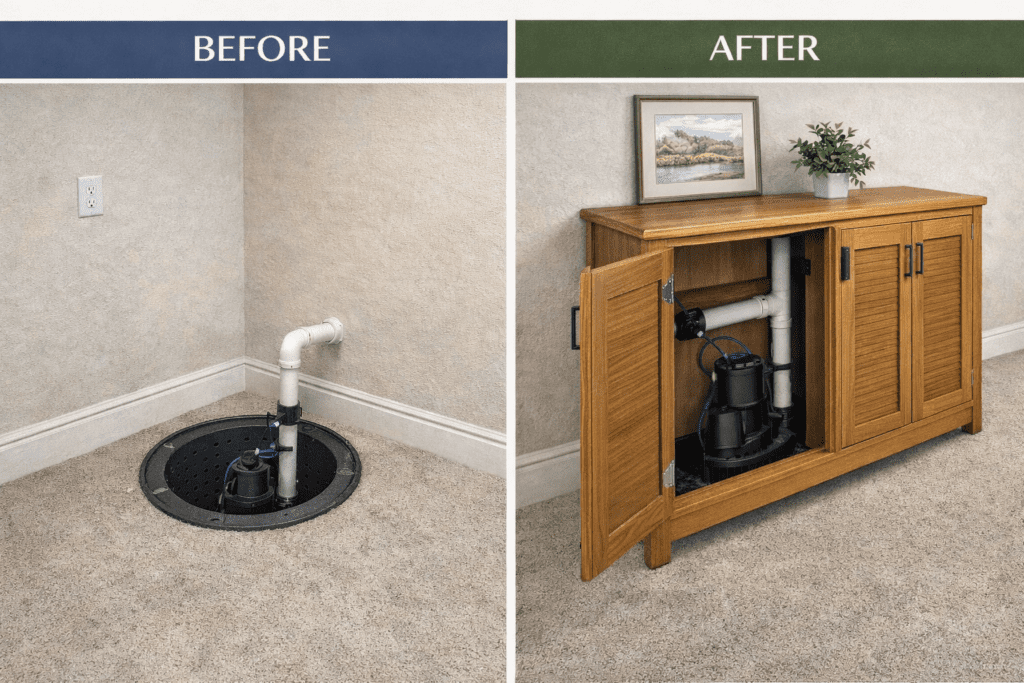
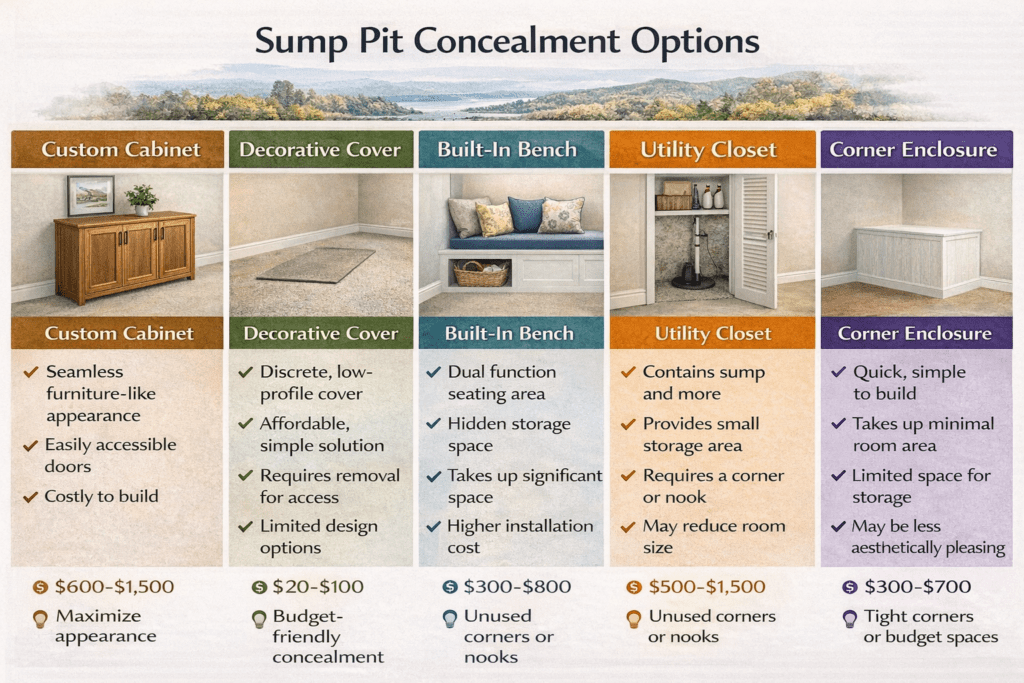
Custom enclosures, decorative covers, and built-in furniture represent the three primary strategies for concealing sump pumps in finished basements while maintaining necessary access for maintenance and operation. The key lies in balancing aesthetics with functionality—your cover must look good but also allow quick pump access during emergencies and routine service.
The most effective concealment strategies incorporate the pump into your basement’s design rather than treating it as an afterthought. Planning these solutions during initial finishing allows integration with flooring transitions, wall framing, and room layout.
Cabinet and Storage Solutions
Custom cabinetry offers the most polished concealment option. A contractor or carpenter can build a cabinet around the pump with doors or removable panels for access. These cabinets can match your basement’s trim and decor, functioning as additional storage while hiding the mechanical system.
Hinged top access provides the best maintenance convenience. A cabinet with a lift-up lid allows you to check the pump and test operation without moving items or removing multiple components. Include ventilation holes to prevent moisture buildup and allow sound monitoring—a change in pump noise often signals maintenance needs.
Corner installations work particularly well with cabinet solutions. L-shaped cabinets utilize otherwise wasted corner space while providing substantial concealment. Add shelving above the pump level for storing seasonal items or basement supplies.
Decorative Cover Options
For simpler solutions, decorative covers range from utilitarian plastic lids to custom wood boxes that resemble furniture pieces. Many homeowners use ottomans or storage cubes placed over the sump pit, though these must remain lightweight enough to move easily for pump access.
Faux planters represent another creative option. Large decorative planters with removable tops can conceal a sump pump while adding to your basement’s design aesthetic. Ensure any cover allows adequate airflow and doesn’t muffle the pump sounds that alert you to operation problems.
Built-In Bench and Furniture Integration
Built-in benches, particularly along walls, can incorporate sump pump access through lift-up seat sections. This approach works exceptionally well in entertainment areas or home gyms where seating serves a dual purpose. The bench hides the pump while providing functional furniture without consuming additional floor space.
Window seat installations offer premium concealment in basements with above-grade windows. A window seat with internal pump access combines aesthetics, function, and smart space utilization. Include cushions for comfort and storage within the bench structure for added utility.
Noise Reduction Strategies
Even well-concealed pumps create noise during operation. Modern submersible pumps run quieter than pedestal models, but you’ll still hear water movement and motor operation. Sound dampening materials inside enclosures reduce noise transmission without impeding pump function.
Acoustic panels, foam inserts, or rubber mounts can minimize vibration and operational sound. Avoid completely sealing the pump in soundproof materials, as you need to hear operational changes that might indicate problems. The goal is noise reduction, not elimination.
Types of Sump Pumps for Finished Basements
Selecting the right pump type significantly impacts both performance and aesthetics in finished spaces. Submersible pumps sit inside the sump pit below water level, making them quieter and less visible than pedestal models. For finished basements, submersible pumps almost always represent the better choice due to their low profile and reduced noise.
Pedestal pumps mount the motor on a column above the pit with the intake at the bottom. While less expensive and easier to service, these pumps occupy more visible space and generate more noise—characteristics that conflict with finished basement aesthetics.
Primary Pump Selection Criteria
Pump capacity, measured in gallons per hour (GPH), determines how quickly the system removes water. Most residential applications require pumps rated between 2,500 and 5,000 GPH. Your pump’s capacity should exceed your basement’s water intrusion rate with margin for heavy rainfall events.
Horsepower (HP) ratings typically range from 1/4 HP to 3/4 HP for residential use. A 1/3 HP pump handles most standard applications, while larger basements or areas with high water tables may require 1/2 HP or greater. Oversizing provides insurance but increases operational costs due to more frequent cycling.
| Pump Type | Best For | Advantages | Disadvantages |
| Submersible | Finished basements, quiet operation needs | Quiet, concealed, less clogging | Higher cost, harder to service |
| Pedestal | Unfinished basements, tight budgets | Lower cost, easy service access | Noisy, visible, takes more space |
| Battery Backup | Power outage protection | Works during outages, peace of mind | Additional cost, battery maintenance required |
| Water-Powered | Backup without electricity | No electricity needed, no battery maintenance | Requires municipal water, increases water bill |
| Combination System | Maximum protection for valuable finished spaces | Primary plus backup coverage | Higher installation cost, requires more pit space |
Battery Backup Systems
Power outages frequently accompany severe storms—precisely when your sump pump faces maximum demand. Battery backup systems ensure continued operation when electricity fails, protecting your finished basement investment during critical moments.
Modern backup systems use marine-grade batteries that can run pumps for several hours to multiple days depending on water intrusion rates. These systems typically cost $500 to $1,500 installed and require battery replacement every three to five years. For finished basements representing significant investments, backup protection is essential insurance.
Smart battery backup systems include monitoring features that alert you via smartphone when the backup activates, when battery charge drops, or when maintenance is needed. This connectivity provides real-time protection status regardless of your location.
Smart Pump Technology
Wi-Fi connected sump pumps represent the latest advancement in basement water management. These systems send alerts when the pump activates, when unusual cycling patterns occur, or when float switches malfunction. Early warning prevents small issues from becoming major damage.
Additional smart features include runtime tracking, which helps identify increasing water intrusion that may signal drainage problems, and pump health monitoring that predicts maintenance needs before failures occur. While these systems cost more upfront, the protection value for finished basement spaces justifies the investment.
Installation Process and Professional Considerations
Professional installation ensures code compliance, proper sizing, and reliable operation while avoiding common mistakes that compromise system performance. While experienced DIYers can handle basic installations in unfinished spaces, finished basement installations require expertise in multiple trades including plumbing, electrical, and finish carpentry.
A professional assessment begins with evaluating your basement’s specific water challenges, including water table levels, soil drainage characteristics, and existing foundation drainage systems. This evaluation determines appropriate pump capacity, pit size, and discharge routing.
Installation Steps Overview
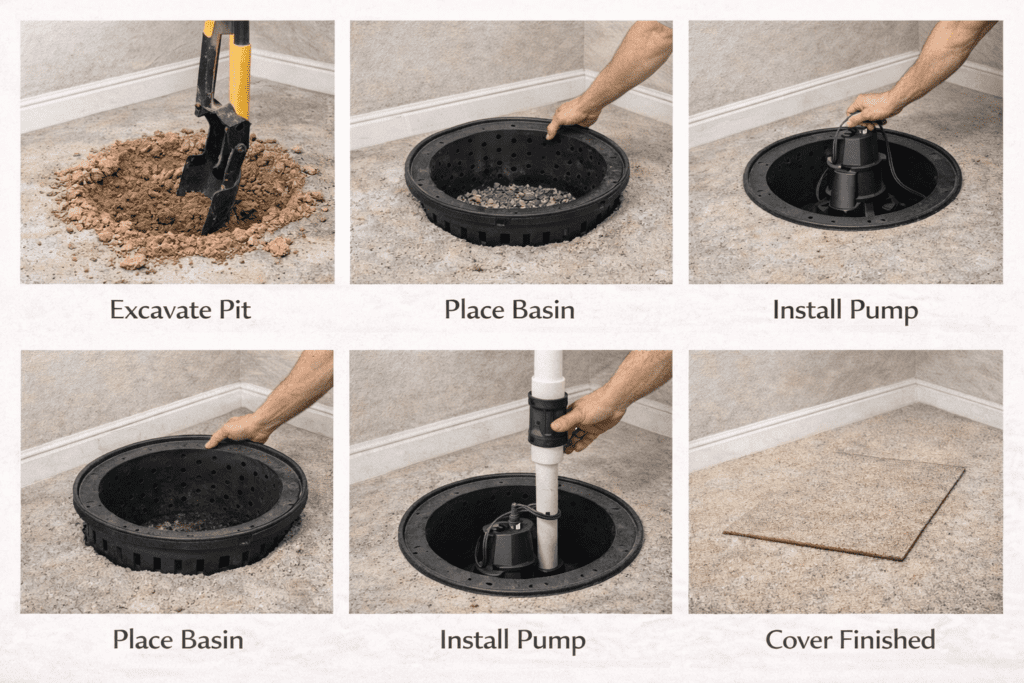
The installation process follows a specific sequence. First, the contractor marks the pit location based on drainage patterns and practical considerations. For finished basements, flooring removal comes next, followed by concrete cutting and excavation to proper pit depth—typically 24 to 30 inches below the floor.
The sump basin installation follows, with proper sealing around its perimeter to prevent soil infiltration. Connection to perimeter drainage systems occurs at this stage if your foundation includes drain tile. The pump installation includes proper float switch positioning, check valve installation, and discharge pipe routing.
Electrical work requires GFCI-protected circuits, typically on dedicated 15 or 20-amp breakers. The discharge pipe must slope continuously away from your foundation with proper freeze protection in cold climates. Finally, flooring repair and any enclosure construction complete the project.
Common Installation Mistakes to Avoid
Several critical errors can compromise your sump pump’s effectiveness. Undersized pits cause frequent pump cycling, which shortens motor life and increases energy costs. The pit should provide adequate water storage to prevent continuous operation during moderate water intrusion.
Improper discharge routing represents another frequent problem. Discharge pipes must expel water at least 10 feet from your foundation and should never drain back toward the house. In cold climates, freeze protection through buried lines or heated discharge pipes prevents ice blockages.
Electrical shortcuts create safety hazards and code violations. Extension cords, improper GFCI protection, and inadequate circuit capacity all pose risks. Professional electricians ensure safe, code-compliant power supply with appropriate surge protection.
Why Choose Professional Installation
Professional contractors bring experience identifying unique challenges in each installation. They understand local building codes, seasonal water table variations, and proven techniques for integrating pumps into finished spaces. Licensed contractors also provide warranties covering both labor and materials, protecting your investment.
Companies like Chiusano Design Build LLC specialize in finished basement projects that seamlessly incorporate essential systems like sump pumps without compromising design aesthetics. Professional installation typically costs $1,200 to $3,500 depending on system complexity, but this investment prevents the far greater costs of water damage or system failure.
Maintenance Requirements for Basement Sump Pumps
Regular maintenance prevents emergency failures and extends pump lifespan, making it essential for protecting your finished basement investment. A well-maintained sump pump operates reliably for 7 to 10 years, while neglected systems often fail prematurely—typically during severe weather when you need them most.
Create a maintenance schedule that includes quarterly testing, annual cleaning, and monitoring between these formal checks. This routine ensures early problem detection before minor issues escalate into system failures.
Quarterly Testing and Inspection
Every three months, test your sump pump by pouring several gallons of water into the pit. The pump should activate promptly, remove water quickly, and shut off completely when the water level drops. Listen for unusual noises such as grinding, rattling, or continuous running that signal mechanical problems.
Check the discharge pipe for leaks or blockages, especially after freeze-thaw cycles. Ensure the check valve operates correctly—water should not flow backward into the pit after the pump stops. Inspect electrical connections for corrosion or damage.
Annual Deep Cleaning
Once yearly, perform thorough pump cleaning. Disconnect power, remove the pump from the pit, and clean debris from the intake screen and impeller. Sediment, small stones, and organic matter accumulate over time, reducing efficiency and potentially causing clogs.
Clean the sump pit itself, removing accumulated debris and sediment. Check the pit liner for cracks or damage and ensure the lid fits properly to prevent debris entry and contain pump noise. Test the float switch by manually lifting it to verify proper activation.
Battery Backup Maintenance
If your system includes battery backup, check battery charge levels quarterly and test backup pump operation annually. Most marine batteries require replacement every three to five years regardless of use. Mark battery installation dates to track replacement schedules.
Clean battery terminals and check connections for corrosion. Some systems include automatic battery maintainers, but periodic verification ensures they’re functioning correctly. Consider testing backup operation during a non-emergency period to confirm reliability.
Seasonal Preparation
Before spring thaw and fall rainy seasons, conduct comprehensive system checks. These peak water intrusion periods demand reliable pump operation. Verify discharge line freeze protection measures are functioning and clear any blocked exterior discharge points.
Professional annual inspections provide expert evaluation of system condition and can identify developing problems you might miss. Many contractors offer maintenance packages that include cleaning, testing, and priority service during emergencies.
Is It Good to Have a Sump Pump in Your Basement?
Having a sump pump in your basement provides essential protection against water damage, foundation issues, and mold growth, making it not just good but often necessary for homeowners in areas with high water tables, poor drainage, or frequent heavy rainfall. The investment in a proper sump pump system—typically $1,200 to $3,500 installed—pales in comparison to the $10,000 to $50,000 cost of remediating a single severe flooding event.
Beyond immediate flood prevention, sump pumps contribute to long-term basement health by managing moisture levels and preventing the chronic dampness that leads to structural deterioration and indoor air quality problems.
Benefits Beyond Flood Prevention
Sump pumps reduce basement humidity by intercepting groundwater before it evaporates into your living space. Lower humidity prevents mold growth, musty odors, and the structural wood rot that compromises floor joists and support beams over time. For finished basements serving as living areas, this moisture control directly impacts indoor air quality throughout your entire home.
Foundation protection represents another significant benefit. Chronic water pressure against foundation walls—called hydrostatic pressure—causes cracks, bowing, and structural damage requiring expensive repairs. By relieving this pressure through proper drainage to your sump pump, you preserve foundation integrity and avoid costly structural work.
Property value considerations matter as well. Homes with proper basement water management systems appeal to buyers and often appraise higher than comparable properties without protection. Insurance companies may offer premium discounts for homes with sump pumps, particularly in flood-prone areas.
When Sump Pumps Are Most Essential
Certain conditions make sump pumps particularly critical. Homes with finished basements in flood-prone areas absolutely require reliable sump pump protection—the finished space investment demands this safeguard. Properties with below-grade living space that have experienced previous flooding need pumps to prevent recurrence.
High water table locations, where groundwater sits close to the surface, create constant pressure against foundations. Clay-heavy soils that drain poorly also increase water intrusion risk. If your neighbors have sump pumps, your home likely faces similar conditions requiring protection.
What Are the Negatives of a Sump Pump?
Sump pumps require ongoing maintenance, depend on electrical power, create some operational noise, and involve initial installation costs—factors homeowners should understand before installation. However, these drawbacks rarely outweigh the flood protection benefits, particularly for finished basement spaces representing significant investment.
Understanding these limitations allows you to plan appropriately with battery backup systems, maintenance schedules, and realistic expectations about pump operation.
Power Dependency and Outage Vulnerability
Standard sump pumps rely entirely on electrical power. During storms that knock out electricity, your pump sits idle precisely when water intrusion peaks. This vulnerability represents the most significant sump pump limitation. Battery backup systems address this weakness but add cost and maintenance requirements.
Power outages lasting several days can overwhelm even well-charged battery systems, particularly during major flooding events. Water-powered backup pumps offer alternatives but depend on municipal water supply and increase water bills during operation.
Maintenance Demands
Unlike set-and-forget systems, sump pumps require regular attention. Quarterly testing, annual cleaning, and monitoring between maintenance sessions demand time and diligence. Neglected pumps fail when needed most, typically during severe weather when service calls become difficult and expensive.
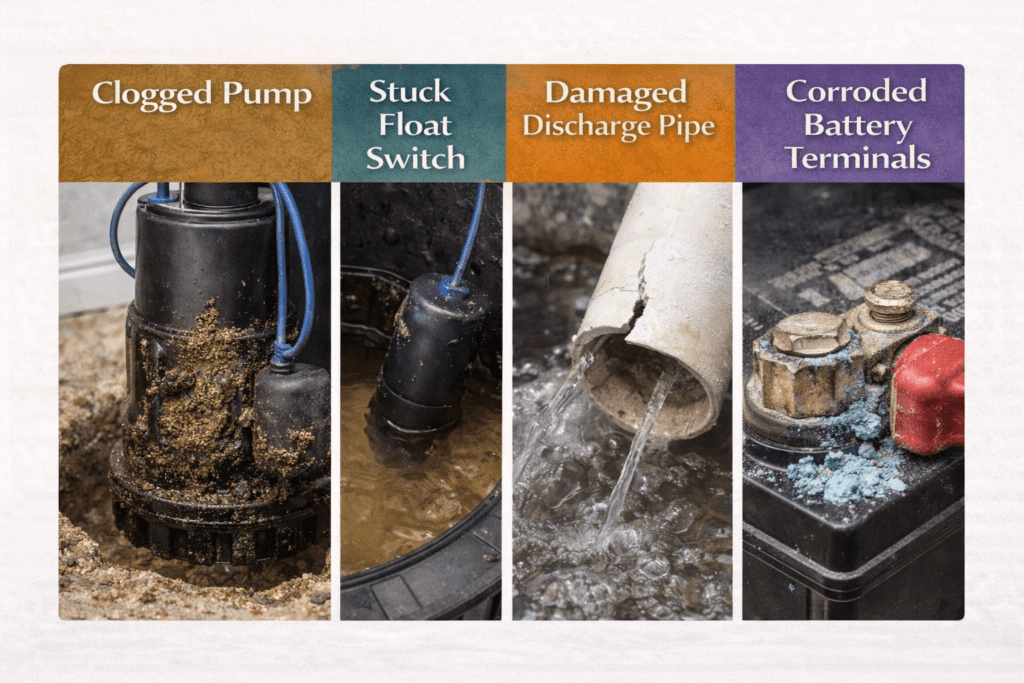
Component replacement over time adds ongoing costs. Float switches fail, impellers wear, check valves stick, and battery backups need replacement. Budget for periodic parts replacement and occasional professional service to maintain reliable operation.
Noise and Aesthetic Concerns
Even quiet submersible pumps create noticeable sound during operation. Water rushing through discharge pipes, pump motor noise, and the gurgling as water drains into the pit all generate sound that may disturb finished living spaces. Strategic placement and sound dampening help but don’t eliminate operational noise.
The pump pit itself presents aesthetic challenges in finished spaces. While various concealment options exist, the pump always requires accessible maintenance space that affects room layout and design flexibility. Some homeowners find these limitations frustrating in carefully planned finished basements.
Installation and Operational Costs
Initial installation costs range from $1,200 to $3,500 or more for quality systems with battery backup. Annual operational costs include electricity (typically $100 to $200 yearly), maintenance supplies, and occasional part replacement. Over a 10-year pump lifespan, total costs may reach $5,000 including initial installation and ongoing expenses.
These costs, while significant, remain far below the expense of managing a single serious flood event in a finished basement. The cost-benefit calculation consistently favors sump pump installation despite these drawbacks.
Frequently Asked Questions
Can a sump pump be installed in a finished basement?
Yes, sump pumps can be installed in finished basements either during the initial finishing process or through retrofitting existing spaces. Retrofitting requires cutting through finished flooring to access the concrete slab for pit installation, which involves more complexity and cost than installation during finishing. The process typically takes one to two days and costs between $1,500 and $4,000 including pump installation and flooring repair. Professional contractors can minimize visible impact by placing the pump in utility areas or carefully matching flooring materials during repair work.
Is it good to have a sump pump in your basement?
Having a sump pump in your basement is highly beneficial and often essential for protecting against water damage, mold growth, and foundation issues. The system provides critical flood prevention that saves homeowners from costly repairs averaging $10,000 to $50,000 per flooding event. Beyond immediate flood protection, sump pumps reduce basement humidity, preserve foundation integrity by relieving hydrostatic pressure, and can lower insurance premiums. The initial investment of $1,200 to $3,500 and ongoing maintenance requirements are minimal compared to the protection value, particularly for finished basement spaces.
Where is the best place to put a sump pump in a basement?
The optimal sump pump location is the lowest point in your basement where water naturally accumulates due to gravity, typically in a corner or along an exterior wall. This placement allows the pump to intercept water before it spreads across your basement floor and damages finished materials. Positioning near exterior walls offers advantages for discharge pipe routing by minimizing pipe length and reducing freeze risk in cold climates. The location should also provide easy electrical access for code-compliant GFCI-protected power supply and adequate accessibility for regular maintenance and testing.
How to hide sump pump in finished basement?
You can hide sump pumps in finished basements using custom cabinetry, built-in furniture, decorative covers, or utility closet installations. Custom cabinets with hinged top access provide the most polished concealment while maintaining easy pump access for maintenance. Built-in benches or window seats can incorporate pump access through lift-up sections, serving dual purposes without consuming extra floor space. Decorative covers ranging from storage ottomans to faux planters offer simpler solutions, though all concealment methods must maintain adequate ventilation and allow quick access. The key is balancing aesthetics with functionality rather than completely sealing the pump away from necessary maintenance access.
What are the negatives of a sump pump?
Sump pumps have several drawbacks including power dependency that makes them vulnerable during outages, ongoing maintenance requirements demanding quarterly testing and annual cleaning, operational noise that may disturb finished living spaces, and both initial installation and ongoing operational costs. Standard pumps rely entirely on electricity and fail during power outages precisely when flooding risk peaks, though battery backup systems address this limitation at additional cost. The system requires regular attention with component replacement over time including float switches, impellers, and backup batteries. Installation costs range from $1,200 to $3,500, with annual operational expenses around $100 to $200, though these costs remain far below the expense of managing flood damage in finished basements.
Protect Your Finished Basement Investment
A properly installed and maintained sump pump in finished basement spaces provides essential flood protection that preserves your renovation investment and protects your home’s structural integrity. Whether you’re planning a new basement finishing project or need to retrofit an existing space, professional installation ensures reliable operation that seamlessly integrates with your design aesthetic.
Chiusano Design Build LLC specializes in finished basement projects that incorporate critical systems like sump pumps without compromising your living space’s appearance or functionality. Their experienced team understands the unique challenges of balancing water management with beautiful, functional design. Contact Chiusano Design Build LLC at 845-201-9450 to discuss your basement finishing plans and ensure your investment receives the protection it deserves.