
What Is a Bump Out Addition? Everything You Need to Know Before Expanding Your Home
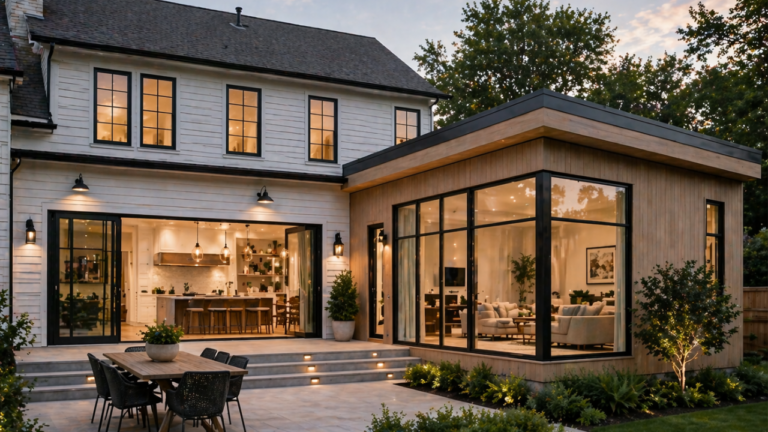
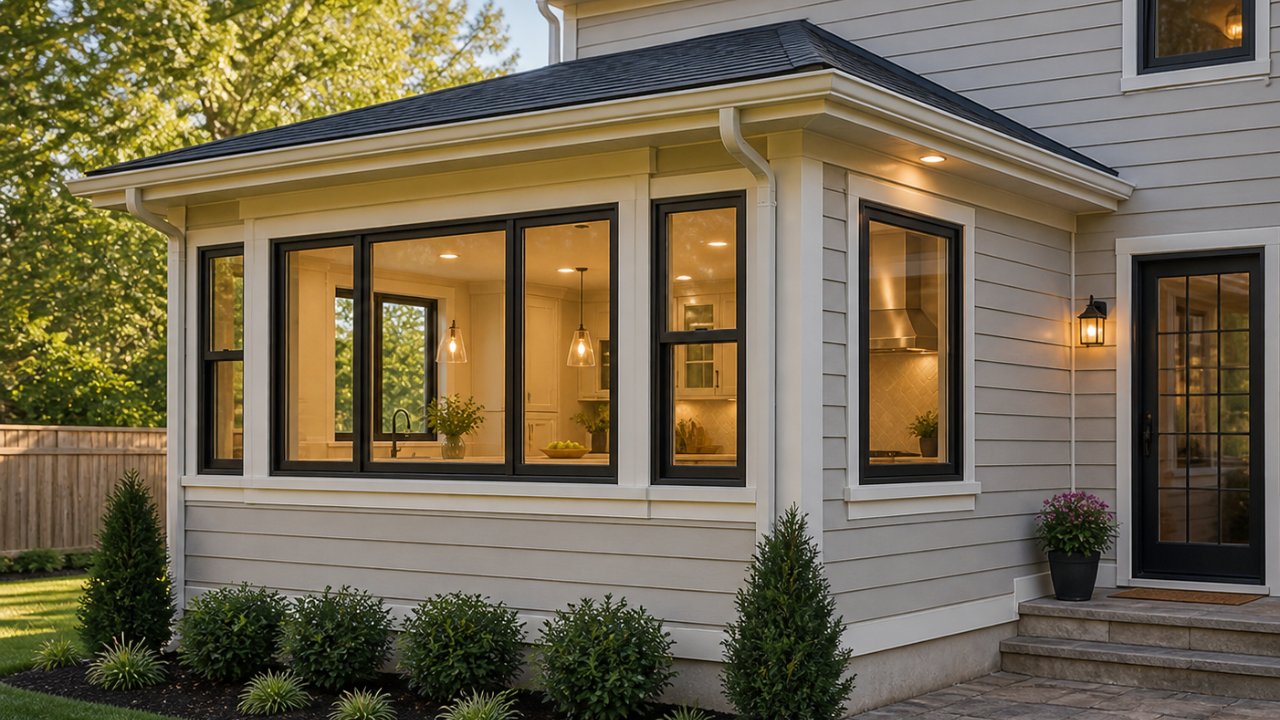
A bump out addition is a small home extension that projects 2-4 feet from an existing exterior wall, typically adding 25-75 square feet without requiring a new foundation or extensive structural modifications. Unlike full-scale room additions, bump outs provide targeted space solutions at a fraction of the cost, making them ideal for kitchens, bathrooms, dining rooms, and living areas that need just a bit more room.
This compact expansion strategy has become increasingly popular among homeowners seeking to maximize space without the investment and disruption of major construction projects. Whether you’re looking to enlarge a cramped kitchen, extend a bathroom vanity, or create a cozy breakfast nook, understanding bump out additions can help you make informed decisions about your home improvement goals.
Key Takeaways
- Size and scope: Bump outs typically extend 2-4 feet outward and add 25-75 square feet of functional living space
- Cost-effective solution: Generally 40-60% less expensive than full room additions due to limited foundation work and smaller footprint
- Common applications: Perfect for kitchen extensions, bathroom expansions, breakfast nooks, and window seat areas
- Foundation considerations: Most bump outs use cantilevered construction or shallow footings rather than full basements
- Permit requirements: Building permits are typically required, though the approval process is often simpler than full additions
- ROI potential: Bump outs can increase home value while improving daily functionality and aesthetic appeal
What Exactly Defines a Bump Out Addition?
A bump out addition is characterized by its shallow depth projection—usually extending no more than 4 feet from the existing wall—and its integration with the current roofline and structure. This distinguishes it from full room additions that typically require completely new foundations, independent roof systems, and separate HVAC considerations.
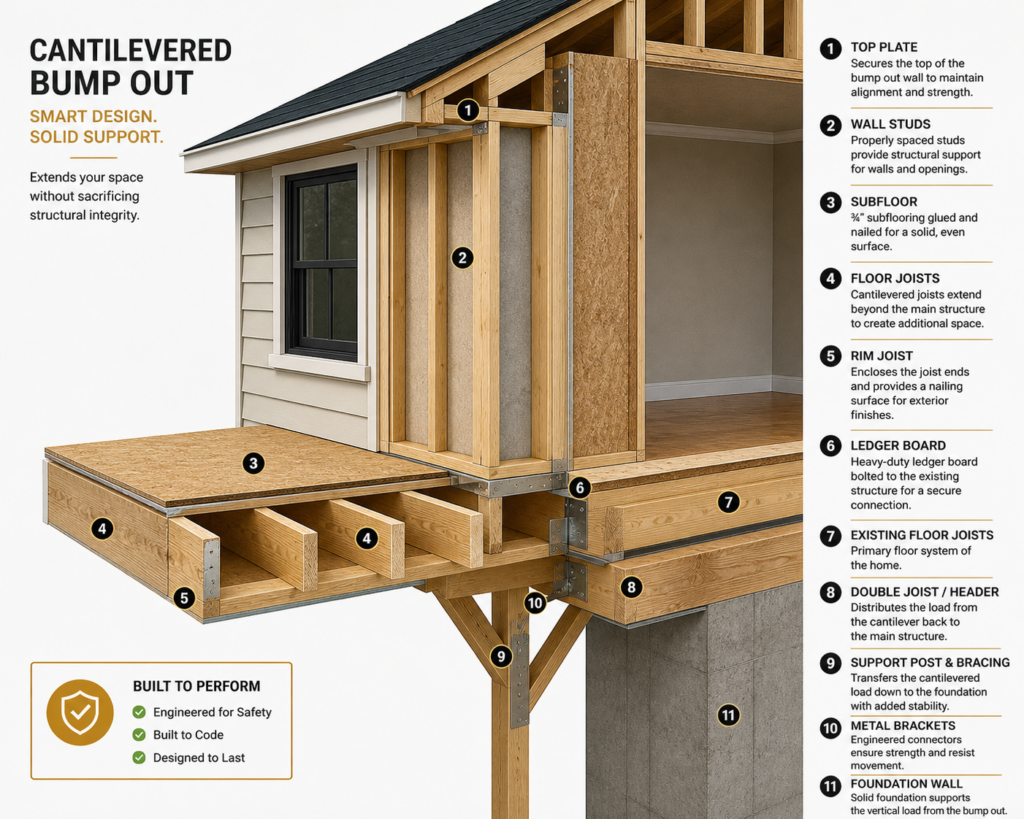
The defining feature of bump outs is their cantilevered design approach. Rather than building an entirely separate structure, contractors extend the existing floor joists outward and support them through strategic engineering. This method minimizes foundation requirements and reduces overall construction complexity while still providing valuable additional square footage.
The Technical Construction Behind Bump Outs
Structurally, bump outs leverage the existing load-bearing capacity of your home’s framing system. Engineers calculate how far floor joists can safely extend beyond their current support points, typically using the “rule of thumb” that joists can cantilever up to one-quarter of their total span distance. For example, if your floor joists span 16 feet, they could theoretically cantilever 4 feet.
However, real-world applications often require additional reinforcement through doubled or tripled joists, sister joists, or steel beam supports. The exterior walls of the bump out must also integrate seamlessly with existing siding, windows, and architectural details to maintain your home’s aesthetic coherence.
How Do Bump Outs Differ From Traditional Room Additions?
Understanding the distinction between bump outs and full additions is critical for plan home addition projects. The primary differences lie in scope, cost, structural requirements, and construction timeline.
| Feature | Bump Out Addition | Full Room Addition |
| Extension depth | 2-4 feet | 8-20+ feet |
| Foundation required | Minimal or cantilevered | Full foundation with footings |
| Average cost | $8,000-$30,000 | $40,000-$200,000+ |
| Construction timeline | 2-6 weeks | 3-6 months |
| Square footage added | 25-75 sq ft | 150-500+ sq ft |
| Permit complexity | Moderate | Extensive |
Full room additions require excavation, complete foundation construction, independent roof framing, and often separate HVAC zones. They’re essentially building a small house attached to your existing structure. Bump outs, by contrast, work within your home’s existing framework, making them faster, less invasive, and considerably more budget-friendly.
What Are the Most Common Applications for Bump Out Additions?
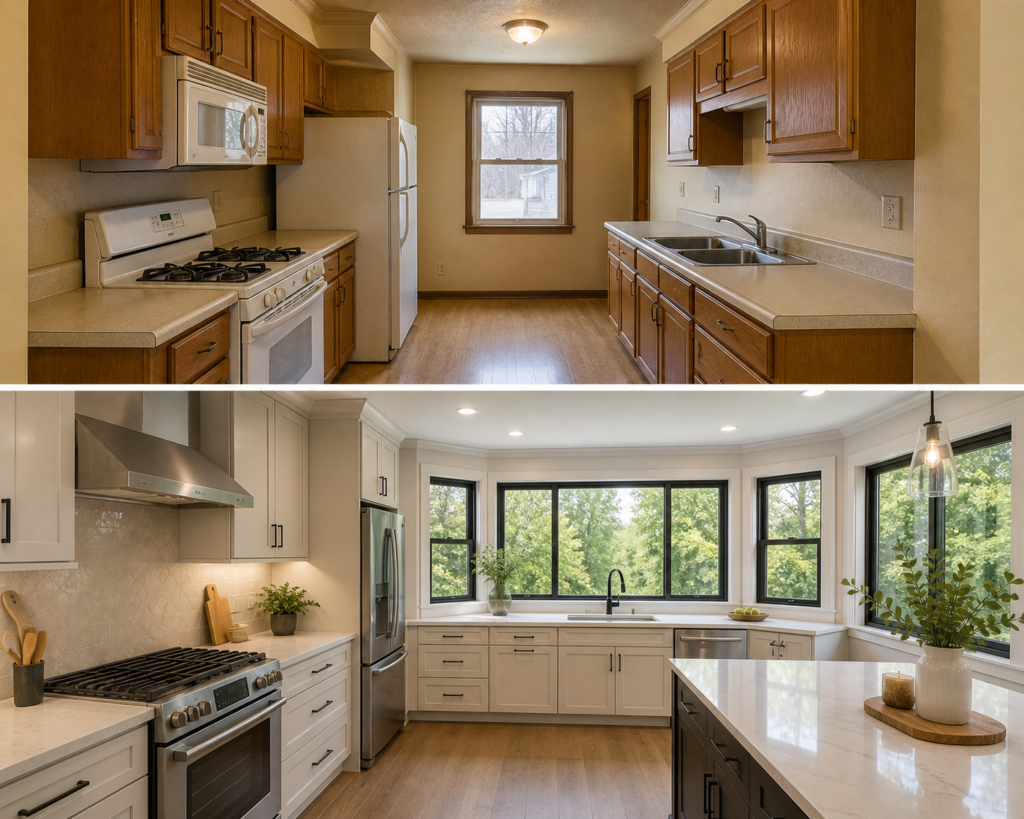
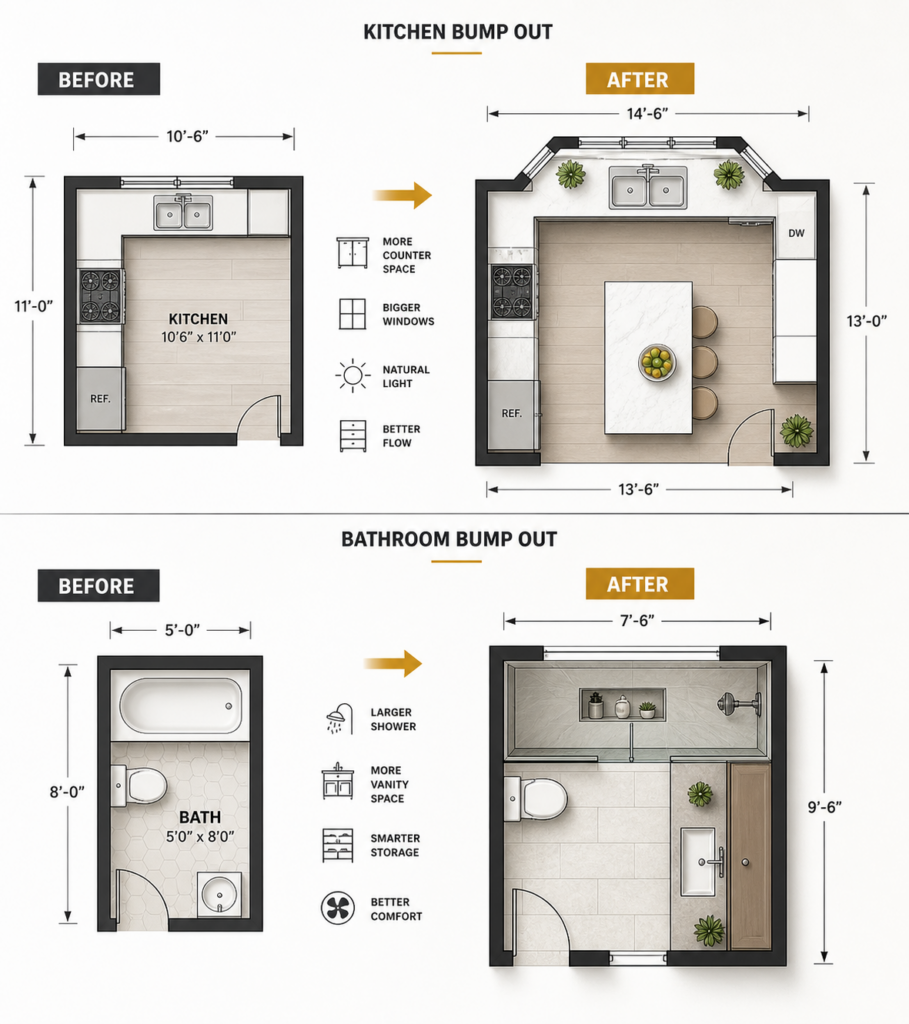
Kitchen bump outs represent the most popular application, accounting for approximately 45% of all bump out projects nationwide. Homeowners typically use this space to extend countertops, create breakfast nooks, add kitchen islands, or incorporate larger windows that bring natural light into cooking areas.
In kitchen applications, even a 3-foot extension can transform functionality. This additional depth allows for deeper countertops, built-in banquette seating, or the installation of a garden window that creates both visual interest and practical herb-growing space.
Bathroom Expansions Through Bump Outs
Bathroom bump outs solve common space constraints by providing room for double vanities, separate shower stalls, or additional linen storage. A 2-foot extension along one wall can accommodate a significantly larger vanity, while a corner bump out might create space for a luxurious soaking tub.
The vertical nature of bathrooms makes them particularly suitable for bump out additions. Since plumbing lines typically run vertically through walls, extending one exterior wall doesn’t necessarily require extensive replumbing throughout the home.
Living Space and Bedroom Enhancements
Dining room bump outs often create charming bay window areas or expanded entertaining space. Living room applications might include window seats, built-in shelving alcoves, or extended seating areas that make rooms feel more spacious without requiring full additions.
Bedroom bump outs frequently incorporate window seats with storage underneath, expanded closet systems, or simply provide additional floor space that makes furniture arrangement more flexible. These applications prove especially valuable in older homes where bedroom sizes may not accommodate modern furniture layouts.
How Much Does a Bump Out Addition Actually Cost?
National averages for bump out additions range from $8,000 to $30,000, with most homeowners spending approximately $15,000-$20,000 for a standard kitchen or bathroom extension. However, actual costs vary significantly based on size, complexity, materials, location, and finishing details. When considering remodeling cost factors, bump outs offer exceptional value per square foot.
Cost per square foot typically ranges from $200 to $400, which is substantially lower than the $300-$600 per square foot common for full room additions. This cost advantage stems primarily from reduced foundation requirements and the ability to integrate with existing structural systems.
Detailed Cost Breakdown by Component
| Cost Component | Percentage of Total | Typical Range |
| Foundation/structural support | 15-25% | $1,200-$7,500 |
| Framing and structural work | 20-30% | $1,600-$9,000 |
| Exterior finishing and siding | 15-20% | $1,200-$6,000 |
| Windows and doors | 10-15% | $800-$4,500 |
| Interior finishing (drywall, paint, flooring) | 15-20% | $1,200-$6,000 |
| Electrical and HVAC | 8-12% | $640-$3,600 |
| Permits and inspections | 3-5% | $240-$1,500 |
Regional Cost Variations and Premium Features
Geographic location significantly impacts pricing. Urban areas and regions with higher labor costs can see bump out prices increase by 25-40% above national averages. Coastal regions, areas with challenging soil conditions, or locations with strict building codes may incur additional structural engineering fees ranging from $1,500 to $4,000.
Premium features that increase costs include custom window configurations, high-end finishing materials, structural reinforcement for second-story bump outs, and complex roofline integrations. Features like radiant floor heating, custom cabinetry, or specialty windows can add $3,000-$8,000 to base costs.
What Are the Foundation and Structural Requirements?
Most bump outs utilize cantilevered construction, where existing floor joists extend beyond their current support points without requiring traditional foundation footings. This engineering approach works well for extensions up to 2-3 feet and represents the most cost-effective foundation solution.
However, larger bump outs or those on homes with questionable existing structural integrity may require shallow foundation supports. These typically involve either helical piers, concrete footings, or frost-protected shallow foundations that extend below the frost line but don’t require full basement excavation.
When Full Foundations Become Necessary
Certain circumstances mandate more extensive foundation work. Two-story bump outs almost always require dedicated foundation support due to increased load requirements. Bump outs extending beyond 4 feet typically exceed safe cantilever distances and necessitate independent foundation systems.
Soil conditions also play a critical role. Expansive clay soils, high water tables, or areas with significant freeze-thaw cycles may require engineered foundation solutions. A structural engineer’s assessment costs $500-$2,000 but ensures your bump out meets local building codes and provides long-term structural stability.
How Long Does Bump Out Construction Take?
Timeline expectations vary based on project scope and complexity, but most bump out additions complete within 2-6 weeks. This compressed schedule compared to full additions makes bump outs attractive for homeowners who want minimal disruption to daily routines.
A typical timeline breaks down as follows: permit acquisition (1-3 weeks, potentially concurrent with planning), demolition and framing (3-5 days), exterior finishing and weatherproofing (4-7 days), interior finishing and systems installation (5-10 days), and final inspections and touch-ups (2-3 days).
Factors That Impact Construction Duration
Weather conditions represent the most unpredictable variable. Since bump out construction requires opening exterior walls, rain, extreme cold, or other adverse weather can delay projects by days or even weeks. Professional contractors typically plan for weather contingencies and use temporary weatherproofing measures to protect your home during construction.
The availability of materials and specialized tradespeople can also affect timelines. Custom windows, particular siding materials, or scheduled electrical and plumbing inspections may introduce waiting periods. Understanding the best time to remodel can help avoid seasonal delays and contractor scheduling conflicts.
Do You Need Permits for Bump Out Additions?
Building permits are almost universally required for bump out additions since they involve structural modifications to your home’s exterior envelope. Even small bump outs typically require permits covering structural alterations, electrical work, and potentially plumbing modifications if the project involves bathrooms or kitchens.
The permit process generally involves submitting architectural plans, structural engineering calculations, and detailed specifications to your local building department. Approval timelines vary from 2-6 weeks depending on municipal workload and project complexity.
Permit Costs and Inspection Requirements
Permit fees typically range from $200 to $1,500, calculated as a percentage of project value or based on square footage. These fees include multiple inspection stages: foundation inspection (if applicable), framing inspection, electrical and plumbing rough-in inspections, insulation inspection, and final inspection.
Working without proper permits carries significant risks including fines, required project demolition, difficulties selling your home, and potential homeowner’s insurance complications. Professional contractors handle permit acquisition as part of their services, ensuring compliance with all local codes.
What Design Considerations Should You Address?
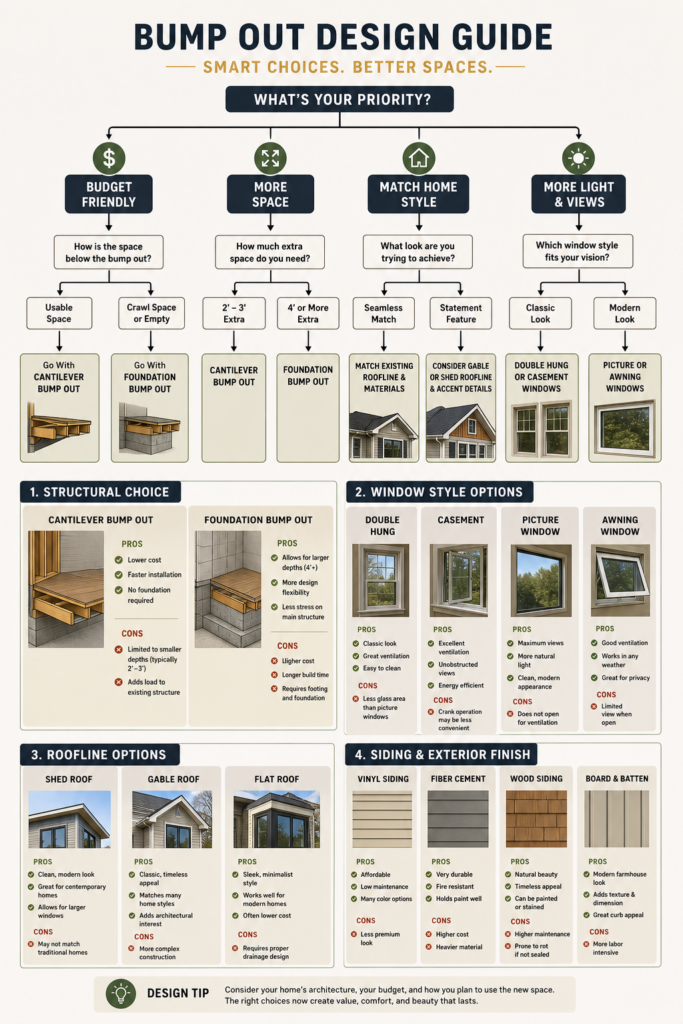
Successful bump out design balances functional requirements with aesthetic integration. The addition should look like an original part of your home rather than an obvious afterthought. This requires matching existing architectural details including siding materials, window styles, roofline angles, and exterior trim elements.
Interior design considerations include how the bump out affects room proportions, furniture placement, and traffic flow. A kitchen bump out that creates an awkward corner or interrupts natural movement patterns may reduce functionality despite adding square footage. Thoughtful planning ensures the space enhancement genuinely improves daily living.
Maximizing Natural Light and Views
Bump outs offer excellent opportunities for enhanced natural lighting through larger windows, bay window configurations, or even small greenhouse-style projections. Since you’re extending an exterior wall, you can incorporate window sizes and placements that wouldn’t work within existing wall constraints.
Consider sight lines both from inside looking out and from exterior curb appeal perspectives. A well-designed bump out can frame attractive views, bring light into previously dim spaces, and create visual interest in your home’s exterior profile.
How Do Bump Outs Impact Home Value and ROI?
Return on investment for bump out additions typically ranges from 60-85%, varying based on local real estate markets, project quality, and how well the addition addresses buyer preferences. Kitchen and bathroom bump outs generally provide the strongest returns since these rooms heavily influence home values.
The value proposition extends beyond pure dollar return. Bump outs improve daily functionality and quality of life while you occupy the home, making them worthwhile even if you don’t recoup 100% of costs upon resale. They represent a middle-ground solution between costly full additions and simply living with inadequate space.
Market Appeal and Buyer Perceptions
Well-executed bump outs enhance market appeal by addressing common buyer complaints about older homes—small kitchens, cramped bathrooms, and insufficient storage. They demonstrate that a home has been updated and maintained, which positively influences buyer perceptions even beyond the specific square footage added.
However, poorly designed or obviously tacked-on bump outs can negatively impact value. Professional design and execution ensure your investment enhances rather than detracts from your home’s market position. The importance of choosing right contractor cannot be overstated for achieving quality results that protect your investment.
What Challenges and Limitations Should You Expect?
Bump outs work best on homes with suitable existing structural conditions, appropriate exterior clearances, and compatible architectural styles. Homes with complex rooflines, multiple stories, or unconventional framing systems may face technical challenges that increase costs or limit design options.
Setback requirements represent a common limitation. Local zoning codes specify minimum distances structures must maintain from property lines. If your home already sits close to setback limits, a bump out might violate these requirements, making the project infeasible without variance approval.
Architectural Style Compatibility
Certain architectural styles accept bump outs more gracefully than others. Victorian, Craftsman, and traditional colonial homes often incorporate varied rooflines and projections that make bump outs look natural. Ultra-modern designs or homes with highly geometric facades may struggle to integrate bump outs without compromising architectural integrity.
Historic homes or those in historic districts face additional restrictions. Preservation boards may prohibit exterior alterations or require that additions maintain specific architectural characteristics. Understanding these constraints early in planning prevents costly redesigns or project abandonment.
How to Budget Effectively for Your Bump Out Project
Effective budgeting begins with comprehensive cost estimation including not just construction expenses but also contingency funds, temporary living adjustments, and potential indirect costs. Financial experts recommend budgeting an additional 15-20% beyond estimated costs to cover unexpected issues, change orders, or material price fluctuations.
Financing options for bump out additions include home equity loans, home equity lines of credit (HELOCs), cash-out refinancing, or personal savings. Since bump outs typically cost less than major additions, many homeowners can finance them through HELOCs or personal loans without extensive refinancing. Those seeking home remodeling on budget strategies might phase projects, starting with structural work and completing finishes gradually.
Cost-Saving Strategies Without Compromising Quality
Strategic cost management focuses on value engineering rather than cutting corners. Standard-size windows cost significantly less than custom sizes while providing equivalent functionality. Choosing quality but not ultra-premium materials balances durability with affordability. Timing construction during contractor slow seasons may yield better pricing.
DIY contributions can reduce costs, though homeowners should realistically assess their skill levels. While painting and basic finish work are accessible to many, structural framing, electrical work, and exterior waterproofing require professional expertise. Poor DIY execution often costs more to correct than hiring professionals initially.
Frequently Asked Questions About Bump Out Additions
How much does a bump out addition cost?
Bump out additions typically cost between $8,000 and $30,000, with most projects averaging $15,000-$20,000. The final cost depends on size, structural requirements, materials selected, and regional labor rates. Kitchen and bathroom bump outs tend toward the higher end due to electrical, plumbing, and fixture costs, while simple living space extensions may cost less. Cost per square foot generally ranges from $200-$400, significantly less expensive than full room additions.
Do you need a foundation for a bump out addition?
Many bump outs don’t require traditional foundations, instead using cantilevered construction where existing floor joists extend beyond current support points. This works for extensions up to 2-3 feet deep. However, larger bump outs, two-story additions, or projects on homes with inadequate existing structure may require shallow foundation supports such as helical piers or concrete footings. A structural engineer’s assessment determines the appropriate foundation approach for your specific project.
Is a bump out cheaper than an addition?
Yes, bump outs are substantially cheaper than full room additions, typically costing 40-60% less. While full room additions average $40,000-$200,000+, bump outs generally range from $8,000-$30,000. This cost advantage stems from minimal foundation requirements, smaller square footage, shorter construction timelines, and the ability to integrate with existing structural systems rather than building entirely new structures. The trade-off is limited space gain—25-75 square feet versus 150-500+ square feet for full additions.
How much would a 20×20 room addition cost?
A 20×20 room addition (400 square feet) would typically cost $80,000-$200,000 depending on complexity, materials, and location. At average rates of $200-$500 per square foot for full additions, this represents a major investment requiring complete foundation, independent roof system, HVAC integration, and often separate electrical panels. In contrast, a bump out adding just 50 square feet might cost $10,000-$20,000, demonstrating why homeowners seeking modest space increases often choose bump outs over full room additions.
Can you put a bathroom in a bump out addition?
Yes, bathrooms are common bump out applications, though plumbing requirements add complexity and cost. A 3-4 foot bump out can accommodate expanded vanities, while larger bump outs might include separate showers or soaking tubs. Successful bathroom bump outs require careful plumbing planning, adequate ventilation, proper waterproofing, and sometimes additional structural support for tubs and tile. Professional contractors ensure plumbing integration with existing systems and compliance with codes regarding drain slopes, vent requirements, and fixture spacing.
Taking the Next Step: Planning Your Bump Out Addition
Bump out additions represent one of the most cost-effective ways to enhance your home’s functionality without the expense and disruption of major construction projects. Whether you’re expanding a cramped kitchen, enlarging a bathroom, or creating a cozy window seat, these modest extensions deliver substantial quality-of-life improvements.
Success requires careful planning, realistic budgeting, professional expertise, and clear understanding of your goals. The best bump out projects begin with thorough assessment of your home’s structural capabilities, local zoning requirements, and your specific space needs. Working with experienced professionals ensures your project meets building codes, integrates seamlessly with existing architecture, and delivers lasting value.
Ready to explore how a bump out addition could transform your home? Chiusano Design Build LLC specializes in thoughtfully designed home expansions that maximize space while respecting your budget and timeline. Our experienced team handles everything from initial design through final inspection, ensuring your project exceeds expectations. Contact us at 845-201-9450 to schedule a consultation and discover how strategic space planning can enhance your daily living without the costs and complexity of full-scale additions.