

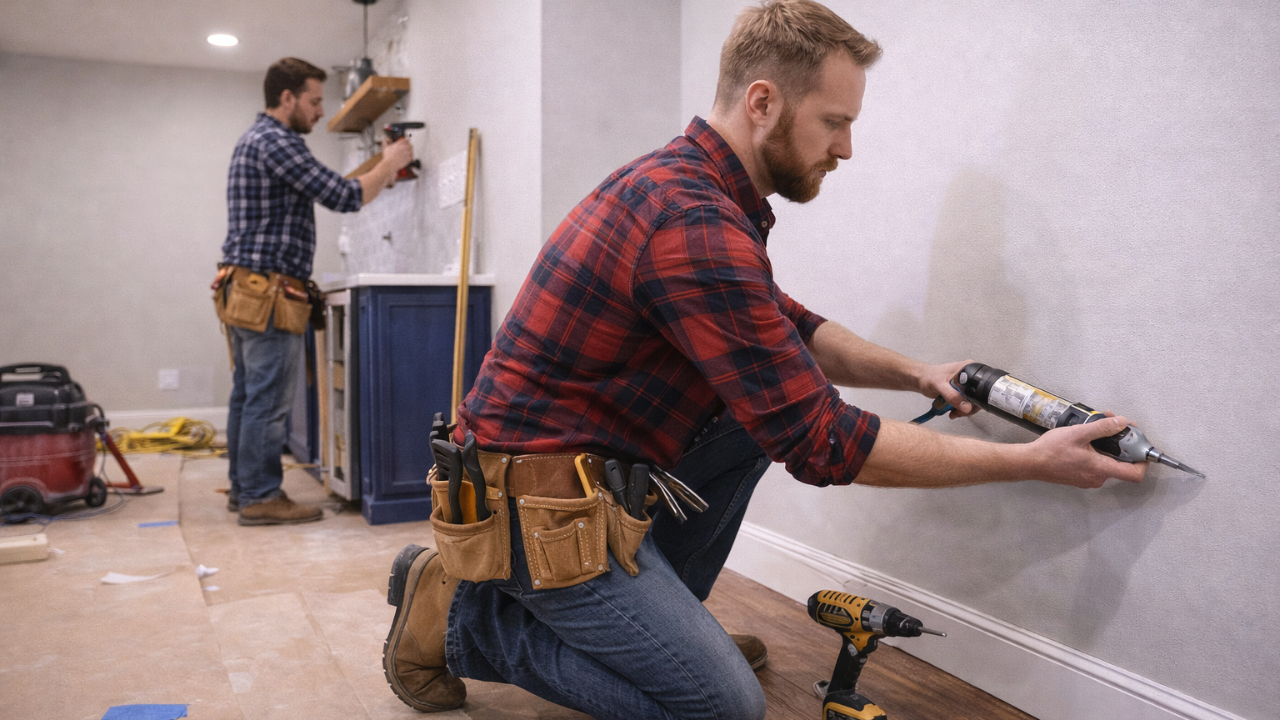
The Complete Guide to Hiring Finished Basement Contractors in 2026
Introduction: Why Choosing the Right Contractor Matters
Your basement represents nearly 40% of your home’s total square footage, yet remains one of the most underutilized spaces in residential properties. Professional basement contractors transform cold, damp storage areas into functional living spaces that add significant value and usability to your home. The difference between a beautifully finished basement that lasts decades and a problematic renovation that requires costly repairs often comes down to one decision: choosing the right contractor.
Unlike standard remodeling projects, basement finishing requires specialized knowledge of moisture control, insulation requirements, egress codes, and below-grade construction techniques. The stakes are high because basement problems can affect your entire home’s structural integrity and indoor air quality.
Key Takeaways
- Licensed contractors are mandatory – Verify active licenses, insurance coverage, and local bonding requirements before signing any agreements
- Basement specialists outperform generalists – Contractors with dedicated basement experience understand moisture management, insulation needs, and egress requirements
- Detailed contracts prevent disputes – Comprehensive agreements should specify materials, timelines, payment schedules, and change order procedures
- References reveal real performance – Speaking directly with past clients provides insights into communication, quality, and problem-solving abilities
- Permits protect your investment – Proper permitting ensures code compliance, maintains home value, and protects insurance coverage
- Budget flexibility is essential – Set aside 10-20% contingency funds for unexpected issues common in basement renovations
What Makes Basement Contractors Different from General Contractors?
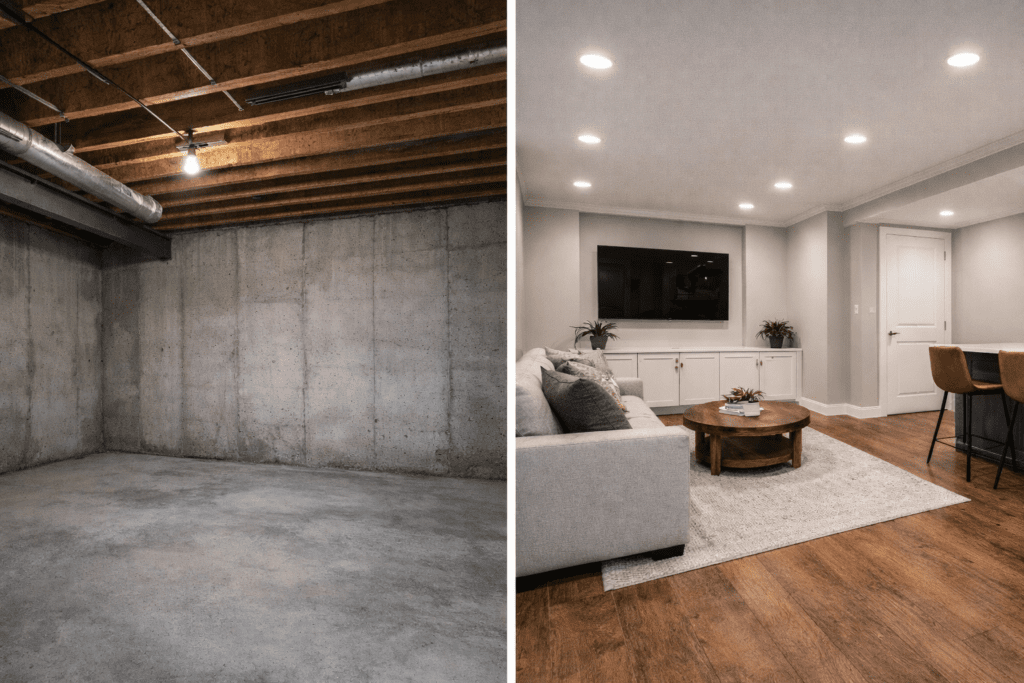
Basement contractors specialize in the unique challenges of below-grade construction, which differs significantly from above-ground remodeling. These professionals understand how to manage hydrostatic pressure, prevent moisture intrusion, and create comfortable living environments in spaces that are naturally cooler and more humid than the rest of your home.General contractors may handle kitchen remodels and room additions beautifully but lack the specialized knowledge required for basement finishing. Basement-specific expertise includes understanding foundation waterproofing, proper vapor barrier installation, appropriate insulation R-values for below-grade applications, and local egress requirements for bedroom installations.
Critical Basement-Specific Skills
Qualified basement contractors must demonstrate proficiency in several specialized areas. Moisture management stands as the single most important factor in basement finishing success, as even minor water intrusion can destroy finishes and create health hazards through mold growth.
These professionals also understand thermal bridging, where heat transfers through foundation walls and creates cold spots that lead to condensation. They know which insulation types work best in below-grade applications and how to install them without trapping moisture against foundation walls. Additionally, they navigate complex egress requirements that dictate window sizes, well dimensions, and emergency escape routes for basement bedrooms.
How Much Do Finished Basement Contractors Actually Cost?
Understanding contractor pricing helps you budget appropriately and identify suspiciously low bids that may indicate corner-cutting or hidden costs. Professional basement finishing typically ranges from $30 to $75 per square foot, with significant variation based on finish quality, design complexity, and regional labor rates.
Basic basement finishing with standard materials and simple layouts falls toward the lower end of this range, while high-end finishes, custom features, wet bars, or home theaters push costs higher. Labor typically represents 40-60% of total project costs, with materials, permits, and overhead comprising the remainder. For comprehensive cost breakdowns and planning tools, review this finished basement cost guide.
| Project Scope | Price Range per Sq Ft | Typical Features |
| Basic Finish | $30-$45 | Standard drywall, basic flooring, simple lighting, minimal plumbing |
| Mid-Range Finish | $45-$60 | Quality finishes, recessed lighting, bathroom addition, upgraded flooring |
| High-End Finish | $60-$75+ | Custom features, wet bar, home theater, luxury finishes, complex layouts |
Hidden Costs to Anticipate
Unexpected issues commonly add 15-25% to initial basement finishing estimates. Foundation repairs, upgraded electrical panels, HVAC modifications, and mold remediation frequently emerge during demolition and cannot be identified during initial inspections.
Egress window installation represents another significant cost that many homeowners overlook when planning basement bedrooms. These specialized windows with properly sized wells typically cost $3,000-$5,000 per window installed, including excavation and code-compliant well construction. If you’re considering converting an existing partially finished basement, you may face additional costs addressing outdated work or code violations.
What Questions Should You Ask Before Hiring?
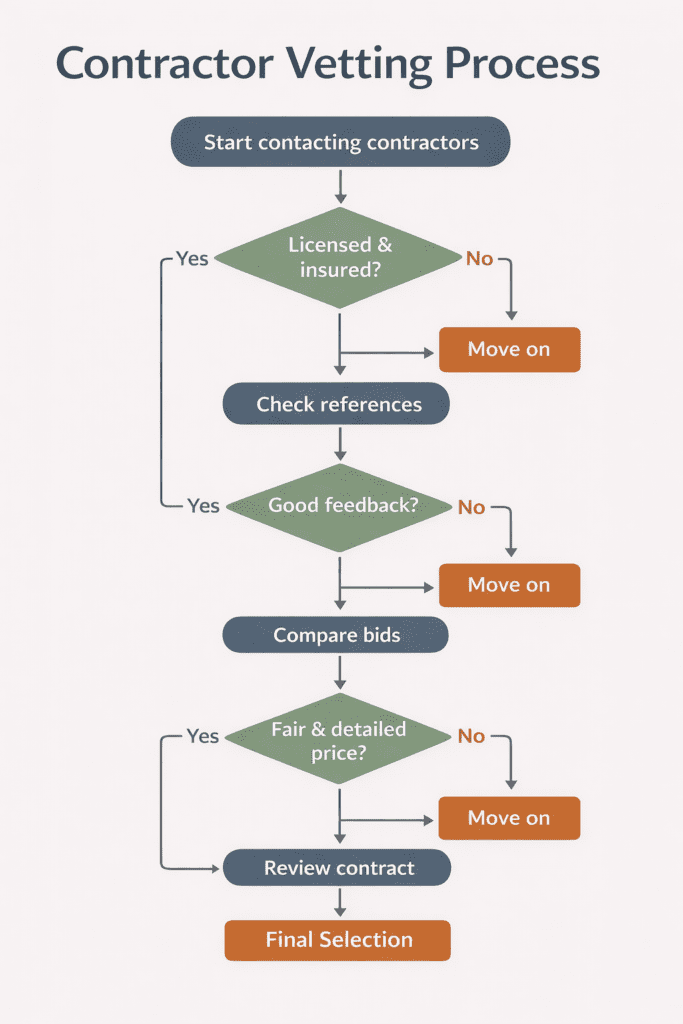
The interview process separates qualified professionals from contractors who lack basement-specific expertise or cut corners on critical details. Your questions should probe technical knowledge, business practices, and problem-solving approaches to reveal how contractors handle challenges that inevitably arise during basement renovations.Start with licensing and insurance verification, then move into specific basement experience. Ask contractors to describe their approach to moisture management, how they handle unexpected water issues, and what warranties they provide on waterproofing work. These questions reveal whether contractors truly understand basement-specific challenges or simply apply general construction knowledge to below-grade spaces.
Essential Contractor Interview Questions
- How many basement projects have you completed in the past 24 months? – Establishes current basement-specific experience and workload capacity
- What moisture management systems do you recommend for my basement? – Reveals understanding of waterproofing techniques and ability to assess site-specific needs
- Can you provide three recent client references with completed basements? – Demonstrates confidence in work quality and client satisfaction
- What permits will this project require, and who handles the application process? – Confirms code knowledge and proper permit procedures
- How do you handle change orders and unexpected issues? – Clarifies communication protocols and pricing for additional work
- What warranties do you provide on labor and materials? – Protects your investment and shows contractor confidence in workmanship
Red Flags That Should End Conversations
Certain responses or contractor behaviors immediately identify professionals you should avoid. Contractors who resist providing references, cannot produce current insurance certificates, or dismiss permit requirements lack either experience or integrity. Both represent unacceptable risks for homeowners.
Similarly, contractors who provide only verbal estimates, request large upfront payments exceeding 10% of project costs, or pressure immediate decisions demonstrate unprofessional business practices. Legitimate contractors understand that homeowners need time to compare bids, verify credentials, and make informed decisions. They provide detailed written estimates and respect your timeline.
How Do You Verify Contractor Credentials and Experience?
Credential verification protects homeowners from unqualified contractors, fraudulent operators, and liability exposure if workers are injured on your property. This due diligence takes minimal time but prevents catastrophic problems that can cost tens of thousands of dollars to resolve.
Start with your state’s contractor licensing board, which maintains databases of licensed contractors, disciplinary actions, and license statuses. Verify that contractors hold appropriate licenses for the work scope, maintain current status, and carry no serious violations or unresolved complaints. Most states provide online lookup tools that make this process straightforward.
Insurance and Bonding Verification
Request certificates of insurance directly from contractors’ insurance carriers rather than accepting copies that may be outdated or falsified. Contractors must carry both general liability insurance and workers’ compensation coverage appropriate for their business size and project scope.
General liability insurance protects your property from damage caused during construction, while workers’ compensation covers contractor employees injured on your property. Without proper coverage, homeowners may face liability for worker injuries or property damage that occurs during construction. Verify coverage limits meet or exceed $1 million for general liability and comply with your state’s workers’ compensation requirements.
| Insurance Type | Minimum Coverage | What It Protects |
| General Liability | $1,000,000 | Property damage, third-party injuries, completed operations |
| Workers’ Compensation | State Minimum | Employee injuries, medical costs, lost wages |
| Surety Bond | Varies by State | Contract completion, code violations, unpaid subcontractors |
Reference Check Best Practices
Speaking directly with previous clients reveals information about contractor reliability, communication quality, and problem-solving abilities that no website or promotional material can provide. Request at least three recent references with projects completed within the past 12-18 months to ensure feedback reflects current business practices and crew quality.
Ask specific questions about timeline adherence, budget management, site cleanliness, communication responsiveness, and how contractors handled unexpected issues. Also inquire whether clients would hire the contractor again and if they discovered any problems after project completion. These conversations often reveal patterns that help predict your likely experience.
Understanding the Contract: What Terms Matter Most?
A comprehensive contract protects both homeowners and contractors by establishing clear expectations, defining scope, and providing remedies if either party fails to meet obligations. Your contract should function as a detailed project roadmap that leaves no ambiguity about deliverables, timelines, or payment terms.
Never accept simple one-page agreements or handshake deals for basement finishing projects. Proper contracts span multiple pages and include detailed specifications, material grades, payment schedules, change order procedures, warranty terms, and dispute resolution processes. If contractors offer only simplified agreements, consider this a warning sign of unprofessional practices.
Critical Contract Components
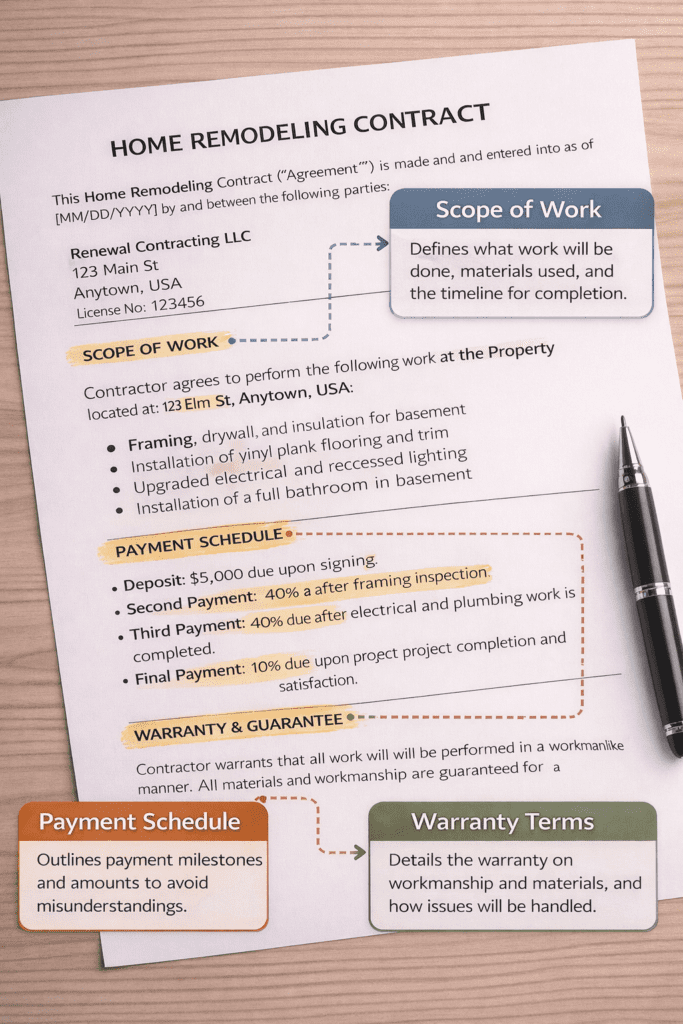
Detailed scope of work descriptions prevent misunderstandings about what contractors will and will not complete. This section should specify every aspect of the project including demolition, framing, electrical, plumbing, HVAC, insulation, drywall, flooring, trim, and paint. It should also identify materials by brand, model, and grade where applicable.
Payment schedules should tie disbursements to project milestones rather than calendar dates, protecting homeowners if work stalls or contractors disappear. Typical schedules include a small deposit (10% or less), progress payments at 25%, 50%, and 75% completion, and final payment upon successful completion and inspection approval. Never pay the full amount until work passes final inspection and you’ve verified quality.
Change Order Procedures
Even well-planned basement projects encounter unexpected conditions that require scope modifications. Your contract should establish formal change order procedures that require written descriptions, cost impacts, and timeline adjustments before contractors proceed with additional work.
This protects homeowners from surprise bills for work that contractors performed without approval. It also protects contractors from disputes over legitimate additional work that homeowners requested. Insist that all changes, regardless of size, follow this documented process to maintain clear records and prevent misunderstandings.
What Role Do Permits Play in Basement Finishing?
Building permits ensure code compliance, protect property values, and maintain insurance coverage validity. Most municipalities require permits for basement finishing projects that include electrical, plumbing, or structural modifications. Skipping permits to save time or money creates serious long-term risks that far outweigh short-term convenience.
Unpermitted work can void homeowners insurance policies, complicate home sales, result in expensive retrofits to meet code, and expose homeowners to liability if problems occur. Professional contractors understand permitting requirements and build permit costs and inspection timelines into their estimates. Contractors who suggest avoiding permits lack integrity and should be rejected immediately.
Common Basement Finishing Permits
- Building permit – Covers structural changes, framing, and general construction activities
- Electrical permit – Required for new circuits, outlets, lighting, and panel upgrades
- Plumbing permit – Necessary for bathroom additions, wet bars, or drainage modifications
- Mechanical permit – Applies to HVAC system extensions or modifications
- Egress permit – Required for bedroom additions requiring code-compliant windows
Inspection Processes and Timeline Impacts
Basement finishing projects typically require multiple inspections at various stages including rough framing, electrical rough-in, plumbing rough-in, insulation, and final completion. Contractors must schedule these inspections strategically to avoid work delays while ensuring each phase passes before proceeding to the next.
Failed inspections can significantly extend project timelines if contractors must correct code violations before re-inspection. This makes hiring experienced contractors who consistently pass inspections on first attempts particularly valuable. During your reference checks, specifically ask about contractors’ inspection pass rates and whether projects experienced delays due to failed inspections.
Should You Consider Handling Moisture Issues Before Hiring?
Pre-existing moisture problems significantly impact basement finishing feasibility and costs. Addressing active water intrusion before beginning cosmetic work prevents wasted investment in finishes that water damage will quickly destroy. Some contractors include waterproofing in their basement finishing scope, while others prefer homeowners resolve moisture issues separately before starting finish work.
Consider having basement waterproofing specialists assess your space and recommend solutions before soliciting finishing bids. This allows contractors to provide accurate estimates without building waterproofing contingencies into their bids. It also ensures moisture solutions meet your needs and budget before committing to the larger finishing investment. For homes with sump pump in finished basement installations, contractors must work around existing systems while maintaining functionality and access for maintenance.
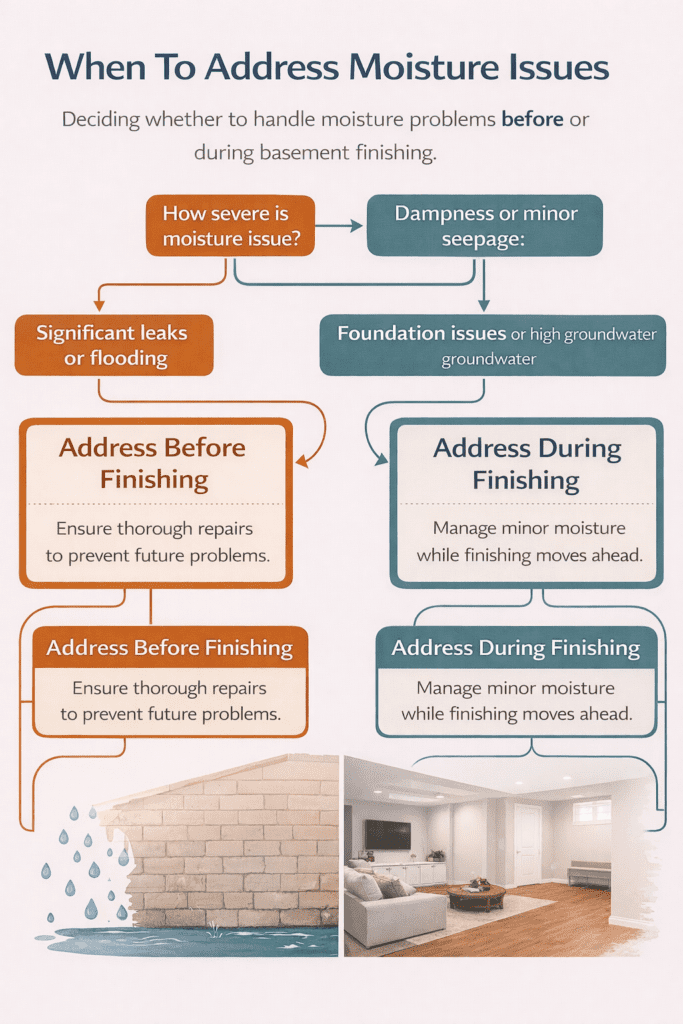
Waterproofing Approaches and Contractor Coordination
Interior drainage systems, exterior waterproofing, and vapor barrier applications each address moisture differently and require different timing relative to basement finishing. Interior drainage with sump pumps can often integrate with finishing work, while exterior excavation and waterproofing must complete before any interior work begins.
If you choose separate waterproofing and finishing contractors, ensure both professionals communicate about moisture solutions, drainage locations, and how finishing work will interface with waterproofing systems. Lack of coordination can result in finished spaces that compromise moisture management or waterproofing systems that interfere with finished room layouts.
How Does Basement Finishing Impact Home Value?
Professionally finished basements typically add 60-75% of project costs to home values, making them one of the better-return remodeling investments. However, returns vary significantly based on finish quality, design choices, local market conditions, and comparable home features in your area.
Markets where most comparable homes include finished basements see higher returns because unfinished basements become competitive disadvantages. Conversely, markets where basements are uncommon or homes typically sell at maximum price points regardless of basement status may see lower returns. Understanding your local market helps set realistic expectations about investment recovery. For detailed value analysis and return on investment calculations, explore this comprehensive finished basement value resource.
Features That Maximize Value
Certain basement features consistently add more value than others while appealing to broader buyer pools. Additional bedrooms with proper egress, full bathrooms, and flexible multi-purpose spaces top most homebuyers’ wish lists and justify premium pricing compared to basic recreation rooms.
Home offices with proper lighting and privacy have gained significant value since remote work became commonplace. Home gyms, media rooms, and guest suites also rank highly. Specialized features like wine cellars or home bars appeal to narrower audiences but can justify premium pricing in appropriate markets. Avoid hyper-personalized designs that limit functional flexibility for future owners.
Frequently Asked Questions
Is it cheaper to DIY or hire contractors?
Hiring professional contractors typically costs 40-60% more than DIY basement finishing but delivers superior results, code compliance, and valuable warranties. DIY approaches work best for homeowners with construction experience, proper tools, and realistic timelines. However, most homeowners underestimate DIY difficulty and time requirements, leading to incomplete projects or quality issues that require professional correction.
Consider hiring contractors for complex systems like plumbing, electrical, and HVAC regardless of your skill level. These systems require code compliance, proper permitting, and specialized knowledge that DIY approaches rarely achieve successfully. Focus DIY efforts on demolition, painting, and finish carpentry where mistakes create minimal risk and rework costs remain manageable.
What is the 30% rule in remodeling?
The 30% rule suggests that remodeling costs should not exceed 30% of your home’s current market value to maintain reasonable investment proportions and avoid over-improving for your neighborhood. This guideline helps homeowners avoid spending more on renovations than they can reasonably recover through increased home value or quality of life improvements.
For basement finishing specifically, consider that returns typically reach 60-75% of investment, meaning the 30% rule provides some cushion for over-improvement. However, local market conditions, comparable home features, and your long-term ownership plans should influence this decision more than rigid percentage rules.
What not to say to a general contractor?
Avoid admitting unlimited budgets, expressing extreme time pressure, or mentioning you’ve already rejected multiple contractors as these statements weaken negotiating positions and may result in inflated pricing. Also avoid criticizing competitors excessively or claiming expertise you don’t possess, as these behaviors damage trust and professional rapport.
Focus conversations on your project requirements, expectations, and desired outcomes rather than budget limitations or personal circumstances. Allow contractors to propose solutions and pricing based on project specifications rather than preconceived budget ranges that may anchor estimates artificially high or low.
Is $50,000 enough to renovate a home?
$50,000 typically covers 600-900 square feet of mid-range basement finishing including standard materials, basic bathroom additions, and straightforward layouts. This budget allows for quality finishes but limits design complexity and high-end features like custom bars, theaters, or luxury fixtures.
The actual coverage depends heavily on regional labor rates, existing conditions requiring remediation, and finish quality preferences. Obtain detailed estimates from multiple contractors to understand how far your specific budget extends in your market and what compromises may be necessary to meet financial constraints.
How far will $100K go in remodeling?
$100,000 typically funds complete finishing for 1,200-1,500 square foot basements with mid-to-high-end finishes, or smaller basements with luxury features like home theaters, wet bars, full kitchens, or high-end bathrooms. This budget accommodates quality materials, complex designs, and professional installation across all trades.
At this investment level, focus on maximizing functionality and creating spaces that serve your family’s specific needs rather than simply maximizing square footage. Consider hiring design professionals to optimize layouts and ensure your investment creates spaces you’ll use regularly rather than impressive but impractical showcase areas.
Making Your Final Contractor Decision
Trust, communication quality, and demonstrated expertise should weigh more heavily than price alone when making your final contractor selection. The lowest bid frequently indicates cut corners, inferior materials, or contractors who underbid projects and later inflate costs through excessive change orders.
Compare bids based on value rather than price by analyzing included materials, warranty terms, timeline commitments, and past client experiences. A mid-range bid from a highly-rated contractor with exceptional references typically delivers better outcomes than low bids from contractors with limited basement experience or questionable business practices. Your basement represents a significant investment in your home’s functionality and value that deserves protection through careful contractor selection.
Ready to Transform Your Basement? Partner With Experienced Professionals
Choosing the right finished basement contractor determines whether your project becomes a valued home improvement that serves your family for decades or a problematic renovation requiring costly corrections. Professional contractors bring specialized knowledge, proper licensing, comprehensive insurance, and proven processes that protect your investment while delivering the functional living space your home deserves.
The research and vetting process takes time, but this due diligence prevents the catastrophic mistakes that plague homeowners who choose contractors based solely on price or availability. Your basement finishing project deserves the same careful planning and contractor selection you would apply to any major home investment.
Chiusano Design Build LLC specializes in basement finishing throughout the Hudson Valley region, bringing decades of experience in below-grade construction, moisture management, and code-compliant remodeling. Our team understands the unique challenges of basement environments and delivers beautiful, functional spaces built to last. Contact us today at 845-201-9450 to discuss your basement finishing vision and receive a comprehensive project proposal that outlines exactly how we’ll transform your underutilized basement into valuable living space.