


Thinking of Remodeling Your Dutchess County Home? Here’s What I Wish I Knew Before I Started
Before I tore down my kitchen wall, I imagined a quick upgrade. Reality hit the moment I stepped over rubble to make coffee in the bathroom sink. Remodeling is exciting, but it’s also an emotional and financial rollercoaster. I learned the hard way that a home remodel can upend your daily life (at one point I had no kitchen for 8 weeks) and surprise you with costs you never saw coming.
And in the Dutchess County – with its abundance of historic homes and quirky local building rules – remodeling brings unique challenges. From navigating permit paperwork on a 1920s house to finding a contractor who isn’t booked out for months, it’s a journey.
In this post, I’ll share insider insights, lessons learned, and a few “wish I knew” tips to help make your Dutchess County renovation as smooth and stress-free as possible.
Key Takeaways:
- Don’t rely solely on the contractor’s quote—hidden costs like permits, code upgrades, or old wiring often arise. Always plan for a 10–20% contingency fund to cover surprise expenses.
- If you think your remodel will take 3 months, plan for 6. Permit delays, supply chain issues, and seasonal weather (especially in Dutchess County) regularly extend project timelines.
- A low bid can lead to costly mistakes. Look for licensed, insured, local contractors with strong reputations. Ask the right questions, read reviews, and don’t rush the hiring process.
- Changing your mind mid-project adds up fast. Finalize design decisions early, create a cohesive plan, and stick to it to avoid delays and added costs.
- In the Dutchess County, blending modern upgrades with historic charm is key. Understand your home’s architectural style and respect preservation rules to boost long-term value and authenticity.
Understanding the Real Cost of Remodeling in Dutchess County Valley
If you’re like me, you start with a contractor’s quote and a budget in mind. But be warned: the real cost often goes beyond that number. Hidden expenses lurk behind initial bids – things like permit fees, surprise repairs, or upgraded materials. For example, in New York the building permit alone can add hundreds or even thousands to your costs. One Dutchess County village charges $100 plus $20 per $1,000 of work – so a $100,000 renovation would owe about $2,100 just in permit fees. And that’s before any unforeseen issues.
Experts recommend setting aside a contingency fund of about 10–20% of your budget to cover common “surprises” like water damage, termite fixes, or code upgrades. I learned why when we opened up a wall and found ancient wiring that had to be replaced.
It’s also tempting to choose the lowest bid contractor or cheapest materials to save money – but “cheapest” can cost more later. Shoddy workmanship or low-quality fixtures often mean repairs down the road. In fact, one survey found 13% of homeowners regretted using cheap materials and 15% regretted choosing the wrong contractor for their remodel. I get it now: paying a bit more for a trusted local remodeler like Chiusano Design Build (with solid Dutchess County experience) can save you money in the long run by doing the job right. The bottom line: budget more than you think you need. A project quoted at $50,000 might end up higher once hidden costs and upgrades are factored in. It’s better to be pleasantly surprised under budget than scrambling for extra funds mid-renovation.
Timelines Are Longer Than You Think
Permit approvals can introduce delays – older homes or properties in historic districts may need special clearances, which don’t happen overnight. As one real estate expert notes, even a delay in obtaining permits “will lengthen project timelines and impact the bottom line”. In historic Dutchess County neighborhoods, you might even need approval from a preservation commission for exterior changes, which adds time.
All told, expect your remodel to take longer than the “HGTV version.” Major whole-home renovations can easily run 9–12 months (or more) in reality. Even a new kitchen or bathroom often faces delays from inspections or waiting on that perfect tile. My advice? Start planning 3–6 months in advance of when you hope to start construction. That gives you time to line up permits, materials, and a contractor’s schedule. And build in a time cushion for the unexpected. As one builder put it, renovating an old house is like “breaking into a mystery cave” – you don’t know what’s beneath the surface. If you aim to finish by Thanksgiving, assume Christmas and you’ll be less stressed. Trust me.
Choosing the Right Contractor is Everything
First, ensure any contractor you consider is licensed and insured – this is non-negotiable. A good contractor will readily show proof of insurance and a license in New York. Get multiple estimates and don’t automatically go with the lowest bid. If one quote is dramatically lower than others, that’s a red flag – it might mean they’ve overlooked something or plan to cut corners. I learned to ask for an explanation of everything in a quote and a detailed scope of work.
Also, check references and reviews. Talk to past clients or check with the local Home Builders Association or consumer protection office for complaints. In the Dutchess County, it’s a tight-knit community – a contractor with decades of local experience and happy clients (maybe your neighbors) is worth their weight in gold. I also recommend interviewing the contractor: ask who will be on site each day, how they handle unforeseen issues, and how many projects they juggle at once. Red flags include asking for a huge payment up front, unwillingness to put the agreement in writing, or lack of a clear timeline.
Design Decisions Add Up Fast
Work with your designer or builder to finalize as much as possible before demo day – from the layout down to the doorknobs. If all your finishes and fixtures are decided (and ordered), you won’t be tempted by feature creep later. It’s also wise to get any custom items (cabinets, specialty tiles) ordered well in advance so they don’t delay the project. By having a cohesive plan and exercising some design discipline, I managed to come in only slightly over my original budget – a win in my book!
Respecting Dutchess County’s Architectural Character
Be aware that if your house is in a designated historic district or is a known historic property, you may face additional rules. Some Dutchess County towns require a Certificate of Appropriateness from a local Historic Preservation Commission before you alter a landmark building’s exterior. This means you might need to choose materials or designs that fit the period (no vinyl windows on a 1800s stone house without approval, for instance). Not every old home has strict rules – many areas encourage preservation without draconian regulations – but it’s wise to check local building codes and consult the town historian or preservation board if applicable.
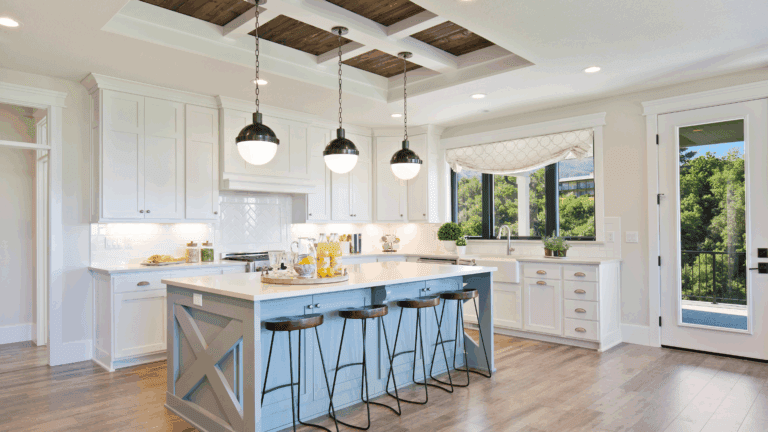
A positive trend: many homeowners are embracing the historic style. Renovators are “blending modern amenities while retaining charming historic details” in Dutchess County homes. I took this to heart – our new kitchen has all the modern comforts but we chose a classic farmhouse sink and kept the antique built-in cupboard. The result feels authentic to the home’s roots. When in doubt, I found inspiration in popular local architectural styles.
Smart Upgrades That Actually Add Value
Not all renovations are created equal – some upgrades will delight future buyers (or appraisers), while others might be purely personal. According to Energy Star, using efficient windows and fixtures can cut energy costs by around 13% annually on average. These kinds of green upgrades are not just savings for you: buyers are increasingly looking for them. A recent survey found that energy-efficient windows, appliances, and HVAC systems are among the top features that appeal to homebuyers today.
Another smart update was embracing a more open floor plan – but with caution. We removed a non-structural wall to connect the kitchen and dining room, creating an open-concept space that feels larger and is great for entertaining. Open layouts have been popular for years, but interestingly, post-pandemic tastes are shifting a bit. Some homeowners now crave defined, private spaces for offices or playrooms instead of one big open area. We chose a semi-open design: the kitchen and dining are open to each other, but we kept the living room separate as a cozy retreat. The takeaway: consider the layout that best fits your lifestyle (and future market trends). A flexible design – say, adding French doors to close off an office when needed – can offer the best of both worlds.
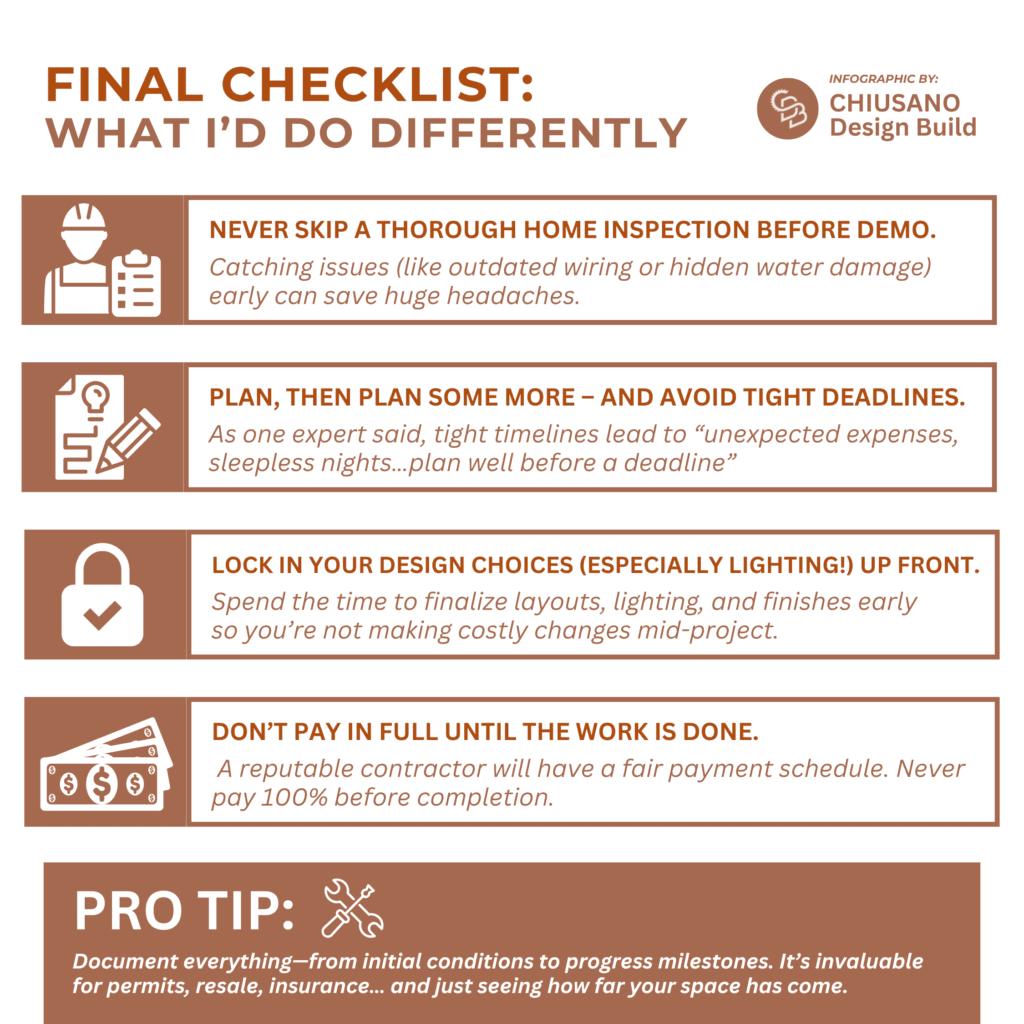
Final Checklist – What I’d Do Differently
Looking back, here are a few “I wish I’d known” takeaways before starting my Dutchess County remodel:
Ready to Remodel Your Dutchess County Home?
Remodeling is a big undertaking – but with the right preparation, it can be one of the most rewarding investments you make. My experience taught me that planning early, hiring local experts, and respecting the character of your home are keys to a successful renovation. So if you’re feeling inspired (and a bit wiser than I was), now is the time to start organizing your dream project. Remember, the best remodels start well before the first swing of the hammer – get your ideas, budget, and team in place early.
When you’re ready, consider reaching out to trusted Dutchess County professionals who know the ins and outs of our area. Chiusano Design Build is one local company that prides itself on clear communication, quality workmanship, and experience with the unique needs of Dutchess County homes.
We’re here to guide you every step of the way, from initial planning to the final walk-through. Your vision, combined with our expertise, can truly transform your home with far less stress.
Ready to take the first step? We invite you to get in touch for a friendly chat and a free estimate – let’s make your Dutchess County dream home a reality. Get Your Free Estimate with Chiusano Design Build and start planning today!
Frequently Asked Questions
1. What should I budget for a home remodel in Dutchess County?
Remodeling costs vary, but major renovations in our area typically range from $100–$200 per sq. ft. due to higher labor and material costs. Nationally, full-home remodels average $50K–$60K. Add a 10–20% buffer for unexpected issues, and always get multiple local estimates.
2. How long does a full renovation take?
For a 2,000–2,500 sq. ft. home, expect 6–12 months, depending on scope. Large or whole-house remodels often take 9+ months. Delays from permits, materials, or surprises are common—plan extra time beyond your contractor’s estimate.
3. Should I renovate all at once or in phases?
All at once is faster, more cohesive, and often more cost-effective—but you may need to move out and fund the full budget upfront. Phased remodeling is easier on your finances and lets you stay home, but it takes longer and may cost more overall. Choose what fits your lifestyle and finances best.
4. Do I need a permit for remodeling?
Usually, yes. Anything structural, electrical, plumbing, or major requires a permit. Cosmetic updates (like paint or flooring) often don’t. Check with your local building department, since rules vary town to town. Always play it safe—unpermitted work can cause fines or legal trouble later.


3 Comments
Comments are closed.