

When Is the Best Time to Start a Home Renovation Project in Dutchess County, NY?
“In home remodeling, when you start matters almost as much as how you do it.” Timing can make or break a renovation. In New York’s Dutchess County, where seasons swing from hot summers to freezing winters, planning your project around the calendar is crucial. The region’s snowy winters and rainy springs can affect everything from pouring concrete to drying paint, and even the speed of getting permits.
By understanding Dutchess County’s seasons, local permitting timelines, and contractor availability cycles, you can avoid costly delays and frustrations. In this guide, we’ll walk through the pros and cons of renovating in each season, how far ahead to plan, and other timing tips so your project runs smoothly from start to finish. Read here to know more if you are thinking of remodeling your Dutchess County home.
Key Takeaways:
- Dutchess County seasons affect renovations: Cold, snowy winters and wet springs can slow exterior work, while milder weather in spring and fall is ideal for many projects. Plan around these climate factors to avoid weather-related delays.
- Contractor demand fluctuates: Summer is peak construction season when contractors are busiest (and often charge more), whereas fall and winter offer greater contractor availability and sometimes lower rates. Booking a reputable contractor well in advance is essential in busy months.
- Material costs and lead times vary: High demand in summer can mean longer wait times for materials (like windows or cabinets) and little bargaining room on price. In the off-season, you may find discounts on some building materials or appliances as suppliers clear inventory for the new year.
- Permitting timelines matter: Town building departments get inundated during peak construction season, which can slow down permit approvals. Starting paperwork early (and avoiding midsummer rush) can save weeks or months of waiting.
- Plan ahead and don’t rush: Ideally, begin planning 3–6 months before your target start date to line up design plans, permits, materials, and a contractor. Having a clear scope and budget (with a contingency buffer) before you swing a hammer will help you avoid common remodeling mistakes and last-minute surprises.
Why Timing Matters in Dutchess County Renovations
Timing isn’t just a footnote in a home renovation plan – it’s a driving factor in its success. Dutchess County homeowners quickly learn that starting a project in the wrong season can lead to unexpected headaches:
- Weather impacts work: Exterior and structural projects are especially sensitive to weather. For example, trying to replace a roof or pour a new foundation in the dead of winter is risky – frozen ground and snow can halt digging or concrete work. Similarly, spring’s heavy rains may wash out plans for outdoor projects if you’re not prepared. Dutchess County’s climate sees cold, sometimes severe winters and highly variable weather in spring and fall, so choosing the right season can mean the difference between smooth progress and repeated rain delays.
- Seasonal demand and costs: Contractor availability and pricing change with the seasons. Summer tends to be the busiest construction period, so crews are in high demand – and high demand can mean higher labor costs. In fact, during peak seasons when everyone is scheduling work, you might pay a premium to secure a top contractor. Conversely, in slower periods (late fall or winter), contractors often have gaps to fill. This can translate into more flexible scheduling and even occasional off-season discounts to keep crews working. Timing your project for an off-peak season could save money without sacrificing quality.
- Material prices and lead times: The time of year can also affect how quickly you can get materials and how much they cost. During the summer building boom, suppliers might be stretched thin – meaning longer lead times for items like custom windows, cabinets, or appliances. You might find yourself waiting 8–12 weeks or more for backordered materials if you join the summer rush. In the fall and winter, by contrast, manufacturers and retailers often run year-end sales or have excess inventory, which can lower costs on materials and fixtures for savvy homeowners. Planning purchases around these cycles (for instance, buying materials in winter for a spring project) could shave dollars off your budget.
- Permitting and regulations: Don’t forget the bureaucratic side of renovations. Building permits and inspections are required for most major home projects in New York. In peak seasons, local building departments in the Dutchess County see a surge in applications. That can slow things down: what might take a couple of weeks in winter could stretch to a month or more in summer when staff are backed up. In some busy markets, permit turnaround times have doubled when construction activity heats up. Starting your permit applications early – and timing your project so that reviews happen in a quieter period if possible – will help avoid administrative delays that leave your project in limbo.
Spring: A Fresh Start for Exterior and Structural Work
Spring in the Dutchess County can be an excellent launching point for many renovation projects, especially after the winter thaw. As the days get warmer and longer, contractors gear up for a new season of work. Here’s what to consider if you plan to start in spring:
Tips for Spring Projects:
• Book early. Start contacting contractors in the winter (January or February) to line up spring work. Reputable pros often have their spring slots claimed well in advance. If you wait until April, you might be looking at a much later start date than you hoped.
• Prepare for rain. Ask your contractor how they handle rain delays and mud. They might use tarps, temporary shelters, or fast-drying materials to keep on schedule. Still, build a little padding into the timeline – a long stretch of rain could pause exterior work for days.
• Secure permits in winter. If you’ll need building permits for that new deck or addition, submit applications over the winter. That way, come spring, you’re ready to break ground without waiting on paperwork.
• Think long-term. A spring start means your project might wrap up by summer. Plan it so that once warm weather hits, you’re not stuck in a construction zone. For example, get that new roof done in April so you can comfortably tackle an interior paint job in May and enjoy summer in your updated home.
Summer: Peak Season for Full-Scale Interior and Outdoor Projects
When summer rolls into the Dutchess County, so does peak remodeling season. Long days and generally reliable weather make summer an attractive time for contractors and homeowners alike to dive into projects big and small. However, the summer season has its own challenges that call for savvy planning.
Tips for Summer Projects:
• Plan (and book) ahead. If you aim for a summer start, secure your contractor in late winter or spring. Many pros get booked months in advance for the summer rush. Also order materials early – those new kitchen cabinets or custom windows should be purchased well ahead so they arrive on time, as lead times can stretch in peak season.
• Budget for peak pricing. Be aware that you might get higher quotes for labor in summer. Try to negotiate or see if a slightly earlier or later start (like May or September) could save some cost. And always keep a contingency fund – 10-20% of your budget set aside – because peak season or not, surprises happen.
• Be strategic with family life. Coordinate your project schedule with your personal calendar. If possible, schedule demolition or other disruptive work when your family is away (camp, vacation, etc.). Set up a temporary kitchen if renovating the kitchen – perhaps outdoors – so you can still function during the project.
• Stay on top of permits. Submit permit applications early and be proactive in communicating with inspectors. In busy months, sometimes a polite check-in can help ensure you’re on the schedule. Also, some local offices might have limited staff due to summer holidays – factor that in.
• Mind the heat. Ensure your contractor has a plan for working safely during hot spells (hydration, maybe adjusting work hours). For certain installations (flooring, paint, etc.), extremely high humidity or temperature can affect the finish, so a good contractor will monitor weather conditions and adjust as needed.
Fall: The Underrated Sweet Spot for Remodeling
Autumn in the Dutchess County is more than just picturesque foliage – it’s arguably prime time for many home renovations. After the summer rush fades, fall offers a window of opportunity that savvy homeowners and contractors relish. Here’s why fall is often considered the sweet spot for remodeling, and how to make the most of it:
Tips for Fall Projects:
• Start in early fall if possible. Aim to kick off projects by September or early October at the latest for anything exterior. This gives a comfortable buffer before winter. If you’re doing an addition or roof, you want it buttoned up (roof on, windows in) before temperatures plummet.
• Prioritize projects. Use fall to tackle things that must happen before winter. For example, fix that leaky roof or gutters now rather than face ice dams later. You can also schedule chimney repairs, exterior painting touch-ups, or driveway paving in fall – the cool dry air is great for curing materials. Save purely cosmetic indoor projects for winter if you run out of time.
• Enjoy contractor flexibility. With contractors more available, take the opportunity to interview a few and get multiple quotes in the fall. You might find you have more leverage to negotiate scheduling or pricing when crews aren’t slammed with work. Also, workers tend to appreciate the pleasant weather – a happy crew often means quality work, done efficiently.
• Leverage off-season deals. Keep an eye out for autumn sales on appliances, cabinetry, and other big-ticket items. As noted, many suppliers offer end-of-year discounts in late fall. If your renovation involves new appliances or materials, scoring them on sale in October/November can save you a nice chunk of change.
• Plan around holidays. If you have a significant project that could disrupt your home, try to get the messy parts done by mid-November. No one wants their kitchen out of commission or contractors underfoot during the Thanksgiving week or as guests arrive. Build a schedule with your contractor that shows key milestones before holiday deadlines. And if your project will run through the holidays, discuss a work hiatus during those days. Most contractors will accommodate, essentially pausing the job so you can have your home to yourself when it counts.
Winter: Budget-Friendly, But Best for Interior Work Only
Winter in the Dutchess County might seem like a time to put renovations on hold – and for anything outside, that’s largely true. The cold months (December through February) are considered off-season for most construction. However, winter can be an unexpected opportunity for certain types of projects, especially if you’re looking to save money and focus on your home’s interior.
Tips for Winter Projects:
• Focus on interior priorities. Use winter to tackle those indoor improvements you’ve been meaning to do. Think kitchens, baths, basement finishing, new lighting installations, interior painting, or even detailed work like custom built-in shelves. These projects keep crews comfortably inside and away from the elements.
• Plan for spring. If your heart is set on a major addition or exterior remodel, spend the winter doing all the behind-the-scenes work. Finalize your design plans, get the architectural drawings, apply for permits (municipal offices are often less busy in winter, so permits might even be quicker), and choose your materials. By March or April, you’ll be ready to hit the ground running. Essentially, make winter your planning season so you’re first in line when the weather breaks.
• Take advantage of deals. Don’t shy away from asking contractors if they have off-season rates – some will be candid and perhaps give you a small discount or extra service. Also, shop around holiday sales (Black Friday, New Year) for appliances or fixtures if your renovation requires them. You might snag 10-15% off or get free upgrades because retailers are looking to clear stock before new models arrive.
• Ensure a clean and contained work area. In winter, you can’t just do dusty work with all windows open. Make sure your contractor will use plastic zip-walls, air scrubbers, and other means to contain dust and fumes. If you’re refinishing hardwood floors, ask about low-VOC finishes or plan to stay elsewhere for a couple of days if the smell will be strong. Your home is likely sealed up tight in winter, so dust control is key.
• Be flexible with schedule around holidays and storms. Winter weather can still cause minor hiccups – a blizzard might delay workers from arriving for a day or two. And most teams take some time off around Christmas/New Year. Build a little extra time into the plan to account for these pauses. It’s better to have a project finish in mid-January as expected than to promise yourself it’ll be 100% done by December 24th and then stress if it’s not. Communicate with your contractor about any “no-work” dates you want (like no work Christmas week, etc.) and plan accordingly.
How Far in Advance Should You Plan?
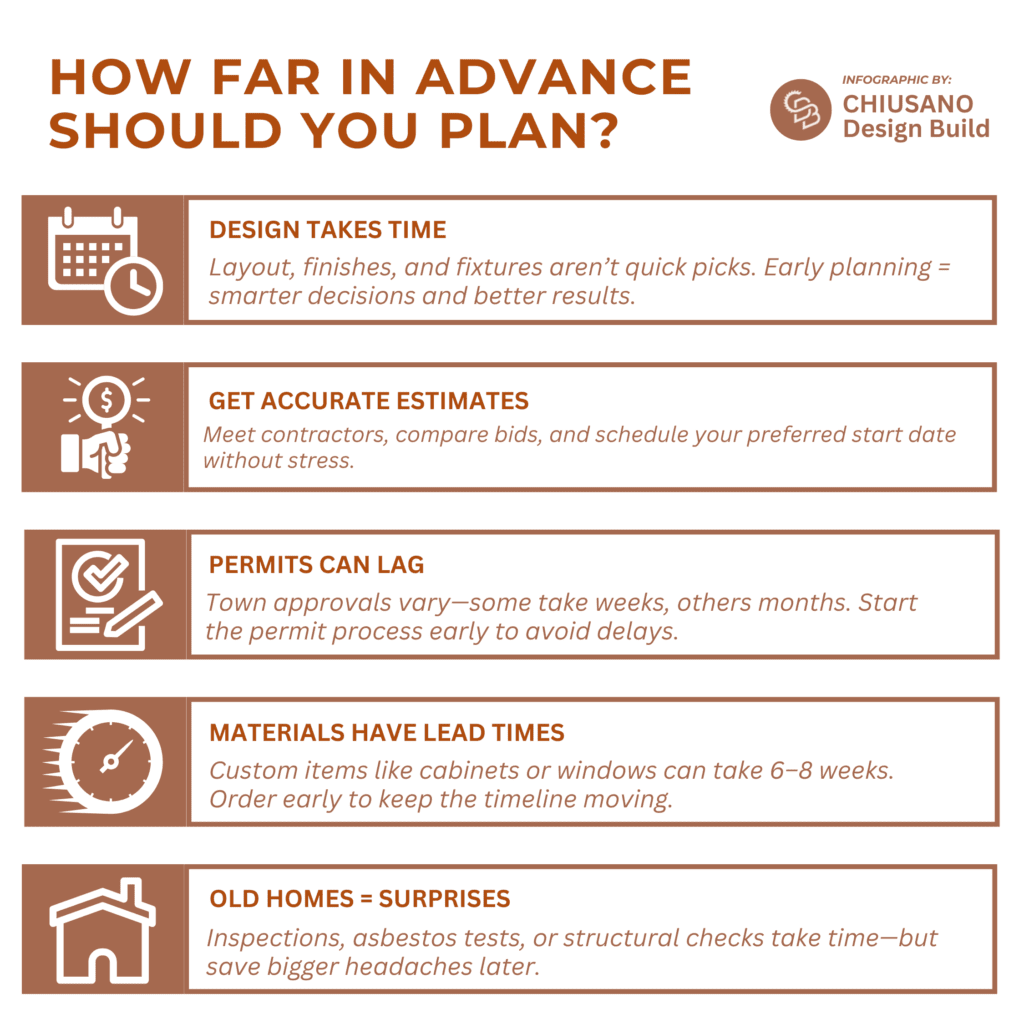
To put it in perspective, recent homeowner surveys show that planning often takes longer than the actual construction. In 2023, for example, a typical kitchen renovation averaged about 9.6 months of planning (design, selecting finishes, securing permits) but only 5.1 months of actual build time.
Signs You’re Ready to Start Your Renovation
How do you know when you’ve done enough planning and it’s “go time” for your renovation? It’s an important question – jumping in too early can lead to regrets, while waiting too long could mean missing ideal timing. Here are some clear signs that you’re truly ready to kick off your home renovation project:
- Your goals (and scope) are clearly defined. You’re not just saying “I feel like updating the house” – you have specific objectives and a vision. Whether it’s “renovate the kitchen for more storage and open it to the dining room” or “finish the basement to add a family room and office,” you’ve identified what you want to achieve. You’ve likely sketched ideas or gathered inspiration photos for how it should look and function. Importantly, you’ve distinguished your must-haves from your nice-to-haves.
- You have a realistic budget (with a contingency). Renovation budgeting isn’t just wishful thinking – you’ve crunched the numbers. By now, you’ve probably gotten contractor estimates or priced out materials, and you have a solid ballpark of what the project will cost. Crucially, you’ve also built in a contingency fund of around 10-20% for surprises. This extra cushion means that if, say, the electricians discover old wiring that needs replacement, you can cover it without panic.
- Your team is in place. A successful renovation requires the right people. You should have chosen a contractor (or design-build firm) that you trust and have good communication with. Maybe you’ve also hired an architect or designer for the planning phase, if needed. In any case, you’ve done your homework: checked references, seen their work, and clarified who’s responsible for what. The contract is signed. Everyone is on the same page about the timeline and start date.
- You’ve handled the preliminaries. Before a renovation starts, a lot of little (and not-so-little) ducks need to be in a row. Are the permits approved and in hand? Check. Have you cleared out the work areas (e.g., moved furniture, emptied cabinets)? Check. Did you arrange a storage pod or space for your stuff if rooms will be unusable? Lined up a place to stay if the renovation is extensive (or at least figured out how to live through it)? Check. Maybe you’ve spoken to neighbors if necessary (alerting them that a project will be ongoing – a kind courtesy especially if you share walls or driveways).
- You’re mentally prepared (and timing is right for you). A often overlooked but important factor: are you and your family prepared to endure the noise, dust, and disruption that comes with a renovation? Being “ready” means understanding the project timeline and having plans to minimize stress – like knowing where you’ll cook if the kitchen is out of commission, or setting up a temporary kid’s play area if their room is getting redone. You feel ready to handle the inconvenience because you know it’s temporary and for a great cause.
Need Help Choosing the Right Time to Remodel?
Every home renovation project is unique – and finding the perfect time to start can feel overwhelming, especially when juggling seasonal considerations, family schedules, and budget constraints. The good news is, you don’t have to figure it all out alone. If you’re still unsure about when you should kick off your remodel in the Dutchess County, why not consult with experts who plan and execute these projects year-round?
At Chiusano Design Build, we specialize in guiding homeowners through the renovation journey from start to finish. Our team has decades of local experience, meaning we know Dutchess County’s climate quirks, permitting processes, and contractor scheduling patterns like the back of our hand. We can help you weigh the pros and cons of each season as it relates to your specific project. Should you redo that kitchen in the summer when you can cook outside, or wait for a winter deal on cabinets? Is it better to replace your roof in spring, or will the fall be more open on our calendar? These are the kinds of questions we’re happy to discuss based on practical knowledge.
Schedule a Free Consultation with Chiusano Design Build to talk about your renovation ideas and timing questions. We’ll offer honest advice on the best time to start, how far in advance to get ready, and what to expect each step of the way. This no-obligation meeting is a chance to tap into our local expertise – whether you ultimately choose to start in the blooming days of spring or the quieter winter months, we want you to feel confident in your plan.
Home Renovation Timing FAQs
Q: What’s the best season to renovate a kitchen in Dutchess County?
A: Fall is ideal — cooler weather, better contractor availability, and you’re done before the holidays. Winter can work too, with potential cost savings. Summer is good if you’re away. Spring’s okay only if you plan well in advance.
Q: Can I do exterior renovations in winter?
A: Not recommended. Cold temps, snow, and frozen ground make most exterior work risky or impractical. Focus on planning or indoor projects instead. Emergency fixes or tree clearing may be possible.
Q: How far in advance should I book a contractor?
A: Book 3–6 months ahead. For busy seasons, even earlier. More lead time = more availability, better planning, and less stress.
Q: Is fall better than summer for remodeling?
A: Often, yes. Fall brings better contractor access, mild weather, and fewer delays. Summer works too if you plan early, but fall offers smoother scheduling and fewer peak-season headaches.