Home Restoration vs Renovation Difference: What Hudson Valley Homeowners Need to Know Before Starting Any Project
Restoration and renovation are not interchangeable terms, and choosing the wrong path can cost you both money and the soul of your home. This guide breaks down the home restoration vs renovation difference, explains when each approach makes sense, and helps Hudson Valley homeowners make a confident, informed decision before a single nail is driven.
You’ve got a 1920s Colonial in Rhinebeck, or maybe a mid-century cape in Kingston that’s been in the family for decades. Something needs to change, but you’re not sure if you want to change the home or bring it back. That distinction matters more than most people realize. Getting it wrong doesn’t just affect your budget; it can permanently alter the character of a property that took generations to build. Before you call a contractor, it pays to understand exactly what you’re asking for.
Key Takeaways
- Restoration means returning a home to its original condition using period-appropriate materials and techniques.
- Renovation means improving or updating a home, which may change its layout, finishes, or function.
- Historic or architecturally significant homes typically benefit more from restoration than renovation.
- Renovation tends to add modern value and livability; restoration tends to preserve cultural and aesthetic integrity.
- The two approaches can sometimes be combined, but only when done with clear intention and expertise.
- The right choice depends on your home’s age, condition, local regulations, and your long-term goals.
Why Does the Difference Between Restoration and Renovation Actually Matter?
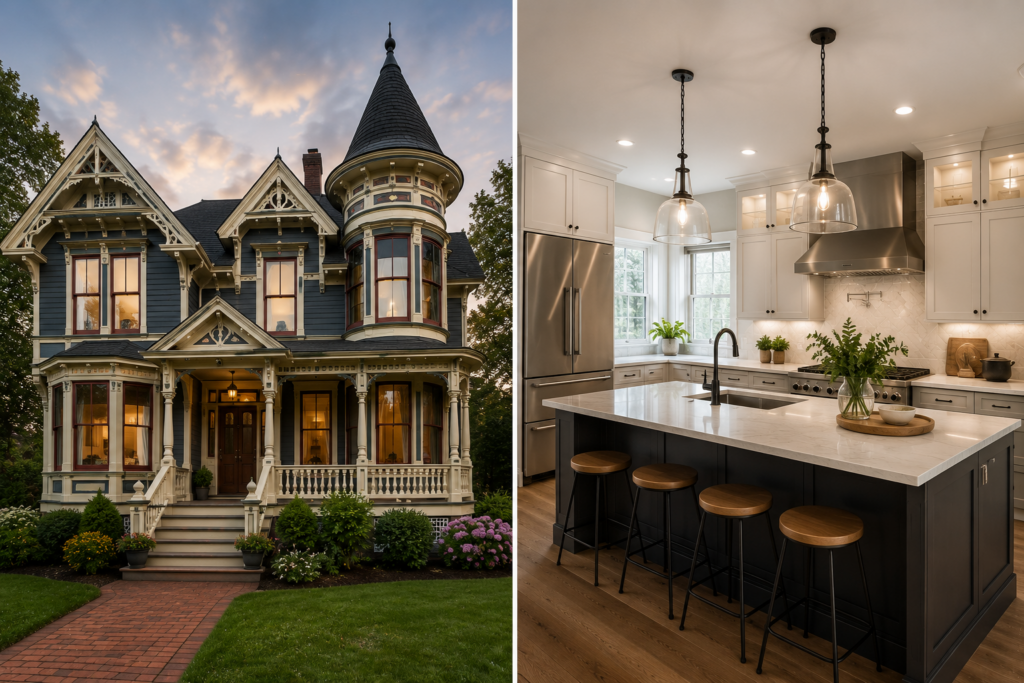
Homeowners in the Hudson Valley face a unique challenge. This region is packed with historic housing stock: Federal-style farmhouses, Gothic Revival cottages, Arts and Crafts bungalows. Many of these homes carry design details that simply cannot be replicated with modern materials. When you renovate one of these properties without understanding what you’re doing, you risk stripping out the very things that made it valuable in the first place.
The practical stakes are real. A homeowner who renovates a pre-Civil War property by replacing original wide-plank floors with engineered hardwood, or by ripping out original plaster to install drywall, may increase short-term convenience while permanently reducing both historical integrity and long-term resale value. On the flip side, someone who insists on full restoration when the home just needs a functional kitchen upgrade may be overcomplicating a project that didn’t need that level of precision.
Understanding the difference is not just an academic exercise. It shapes your contractor selection, your material sourcing, your permit requirements, and your timeline. It also shapes how you talk to your contractor about what you actually want.
What Does Home Restoration Actually Mean?
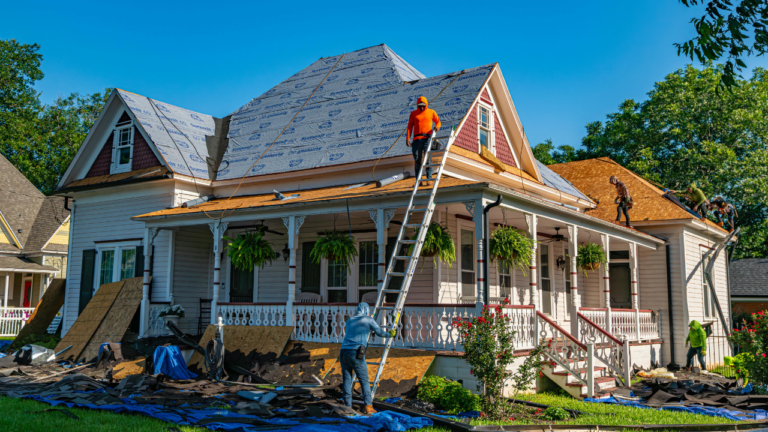
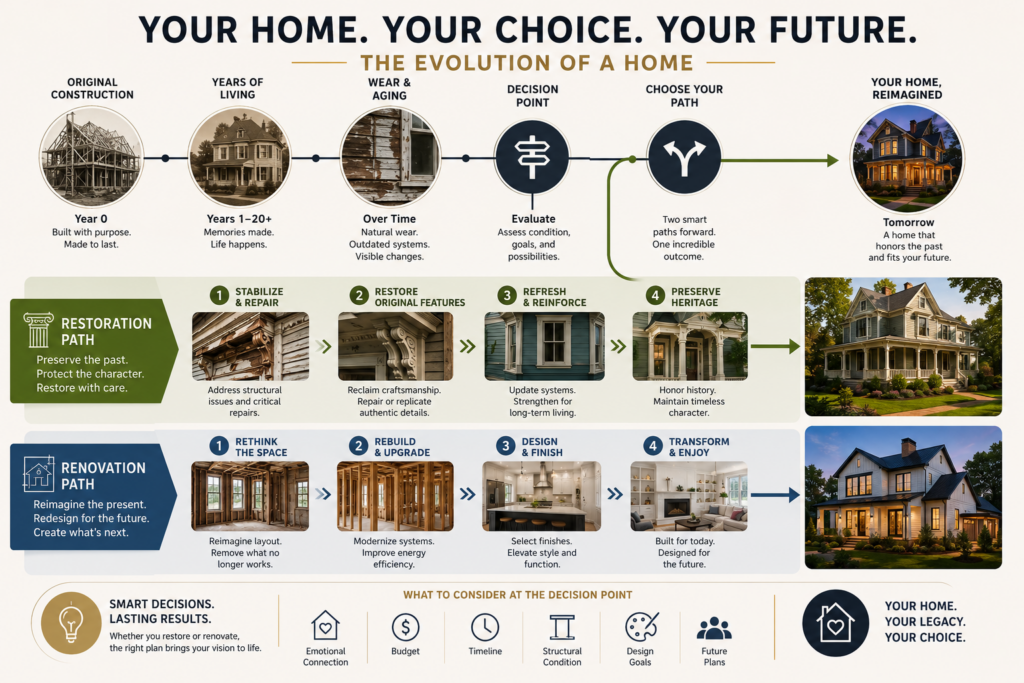
What is home restoration, exactly? At its core, restoration is the practice of returning a structure to a specific earlier period of its existence. The goal is to repair, stabilize, and replicate original conditions, not to modernize them. This means sourcing materials that match the era, using construction techniques appropriate to the time, and often working within strict preservation guidelines if the property is listed or eligible for historic status.
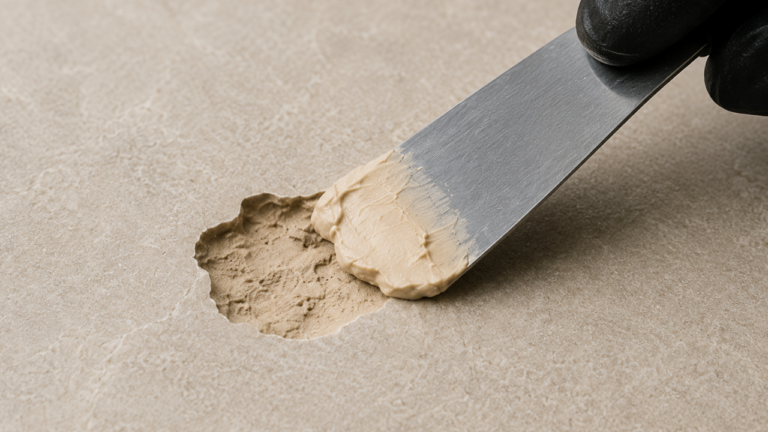
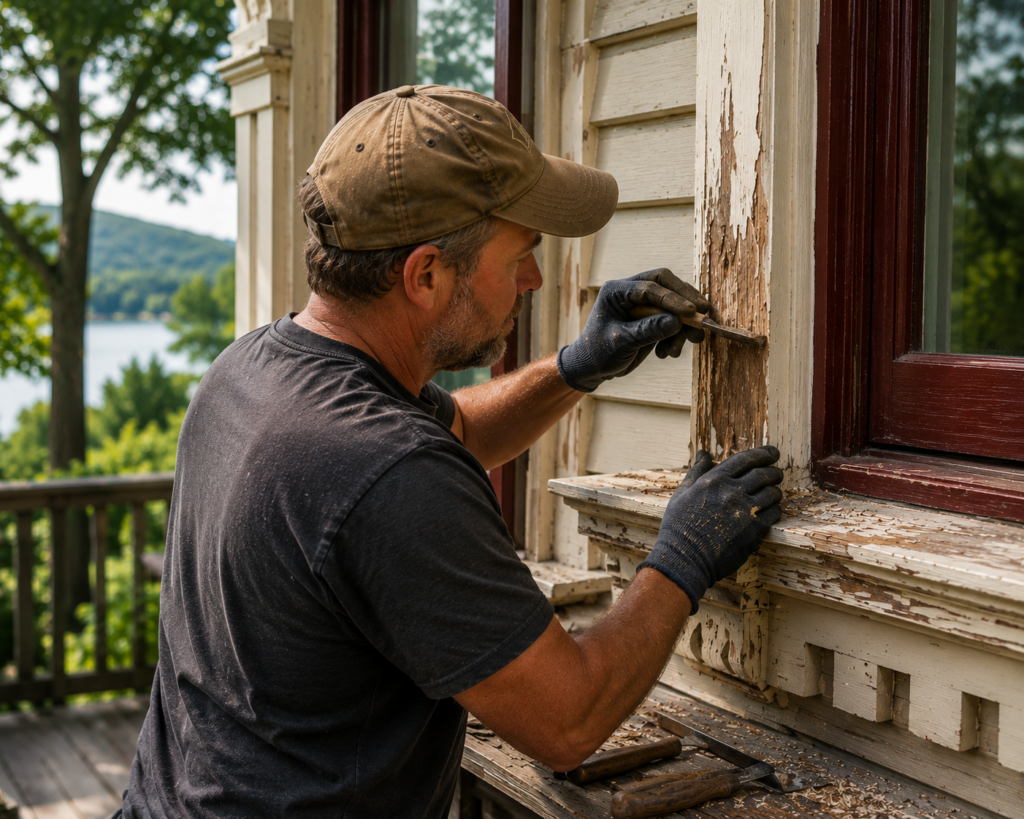
Restoration work might include repairing original windows rather than replacing them, matching original paint colors from period-accurate palettes, rebuilding deteriorated architectural millwork to match existing profiles, or repointing original brick masonry with lime-based mortar instead of modern Portland cement. Every decision is filtered through one question: does this choice preserve or accurately recreate what was originally there?
According to the National Park Service’s Standards for the Treatment of Historic Properties, restoration is defined as the act of accurately depicting the form, features, and character of a property as it appeared at a particular period of time by means of the removal of features from other periods and the reconstruction of missing features from the restoration period. These standards are frequently referenced by local preservation boards across New York State, including those in Dutchess and Ulster counties.
What Does Renovation Mean, and How Is It Different?
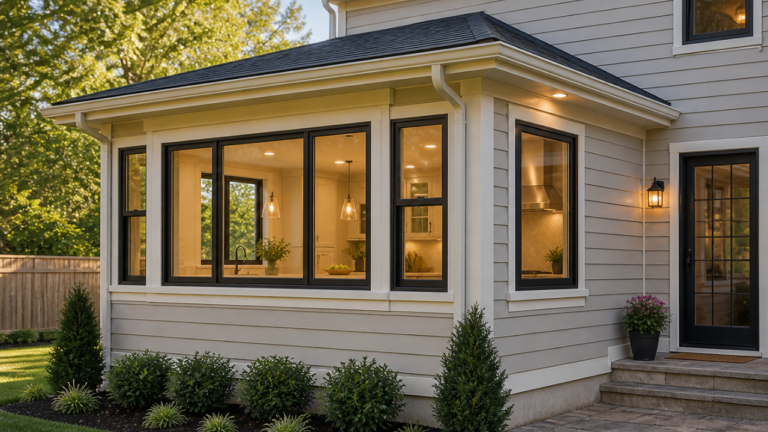
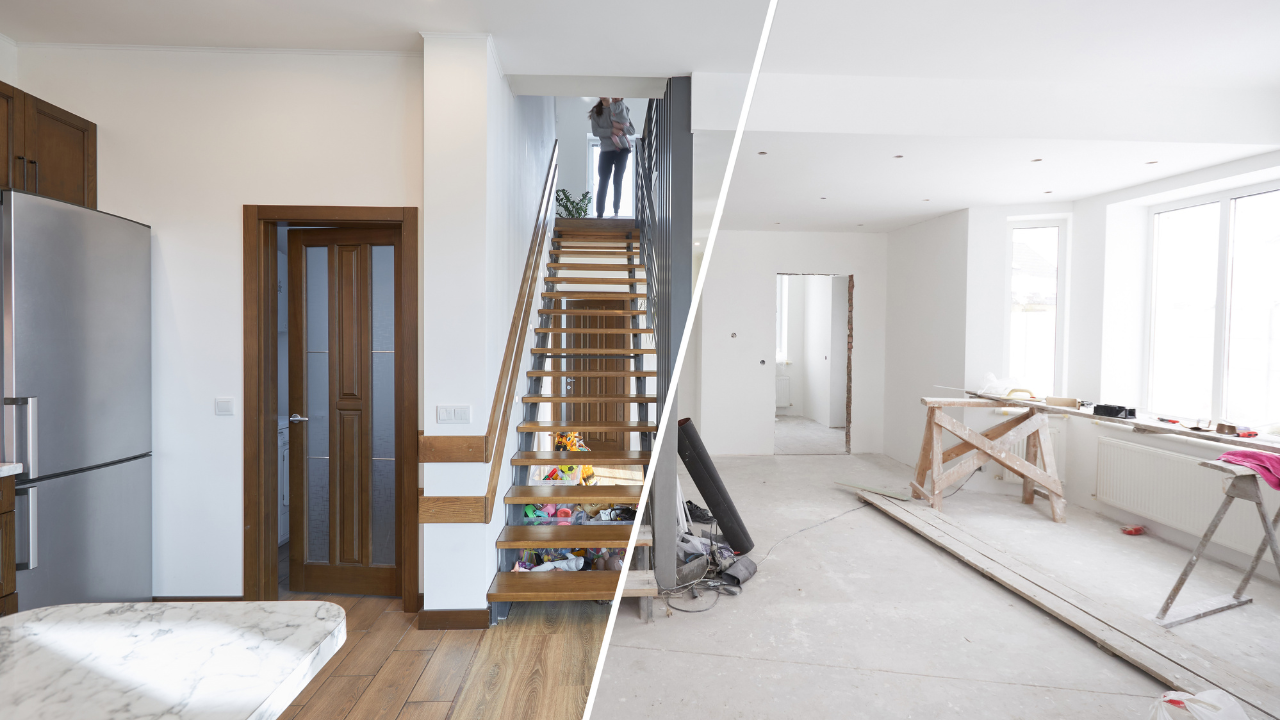
A renovation is an improvement or update to an existing space. Unlike restoration, renovation does not try to replicate the past. It may involve changing the layout, adding square footage, upgrading systems like HVAC and electrical, or simply refreshing finishes to meet contemporary tastes. A kitchen gut-renovation, a bathroom addition, or a basement conversion all fall into this category.
Renovation is forward-looking by nature. It asks: how do we make this home work better for the people living in it today? That’s a completely legitimate goal. For many homeowners, especially those buying a dated but structurally sound property, renovation delivers the most practical return on investment by combining the bones of an older home with the livability of a modern one.
Kitchen and bathroom renovations consistently rank among the highest-return home improvement projects in national remodeling cost vs. value reports. In the Northeast region specifically, a mid-range kitchen remodel typically recoups between 60% and 80% of its cost at resale, making renovation a financially strategic move for homes where the original design no longer reflects current market preferences.
How Do You Know Which One Your Home Actually Needs?
The answer usually lives somewhere in the overlap of three factors: the home’s age and historic significance, the condition of its existing materials and systems, and your personal goals for the property. A home that’s structurally compromised but architecturally significant may need restoration to stabilize and protect its original features before anything else can happen. A 1970s ranch that needs a new layout to accommodate a growing family is clearly a renovation candidate.
Historic designation plays a big role in Hudson Valley specifically. Properties listed on the New York State or National Register of Historic Places may be subject to preservation review for any exterior changes. In those cases, restoration isn’t just a stylistic preference; it may be a legal requirement. Tax incentives also come into play, since both New York State and the federal government offer historic tax credits for qualified restoration work on income-producing properties.
New York State’s Historic Homeownership Rehabilitation Tax Credit offers eligible homeowners a credit equal to 20% of qualified rehabilitation expenditures, applicable to owner-occupied historic properties. When combined with the federal Historic Tax Credit program, homeowners undertaking certified restoration projects on qualifying properties can offset a meaningful portion of their total project cost.
The Real Cost Difference Between Restoration and Renovation
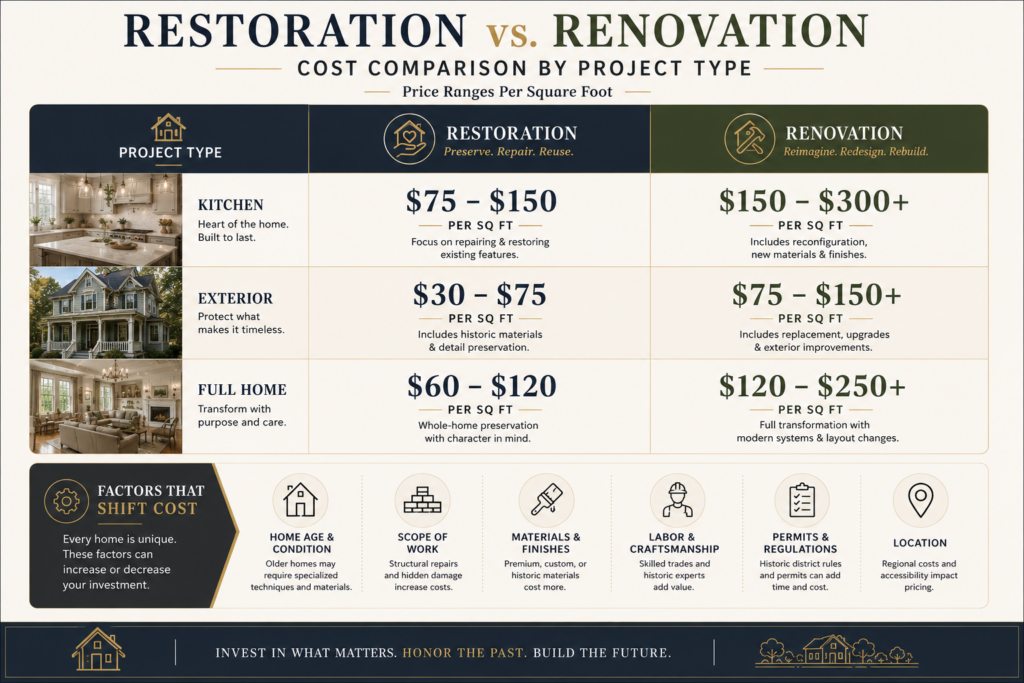
Cost is often where homeowners get surprised. Many people assume restoration will always be cheaper because you’re “fixing” rather than “building.” That’s not typically how it works. Skilled restoration craftspeople are specialists. The work is slower, the materials are harder to source, and the tolerances for error are tighter because you’re trying to match something that already exists.
Restoration projects on historic homes in the Northeast can range from $100 to $300 or more per square foot depending on the scope, the condition of existing materials, and the level of period accuracy required. Renovation projects in comparable markets often fall in the $80 to $200 per square foot range for standard work, though high-end renovation finishes can exceed those figures. The overlap in cost ranges means price alone is rarely the deciding factor.
What restoration does offer is a different kind of value. Homes that retain their original character, original millwork, original materials, often command premium prices in markets like the Hudson Valley where buyers are actively seeking authentic historic properties. Imagine walking into a home where the original heart pine floors are intact, the plaster ceiling medallions are restored, and the original six-over-six windows have been repaired and weatherstripped properly. That’s a different product than a renovation, and it attracts a different buyer willing to pay for it.
Professional home restoration services understand this distinction at a technical level and can help you evaluate whether your specific property warrants the investment in true restoration or whether a well-executed renovation will better serve your needs and your budget.
Can You Restore and Renovate at the Same Time?
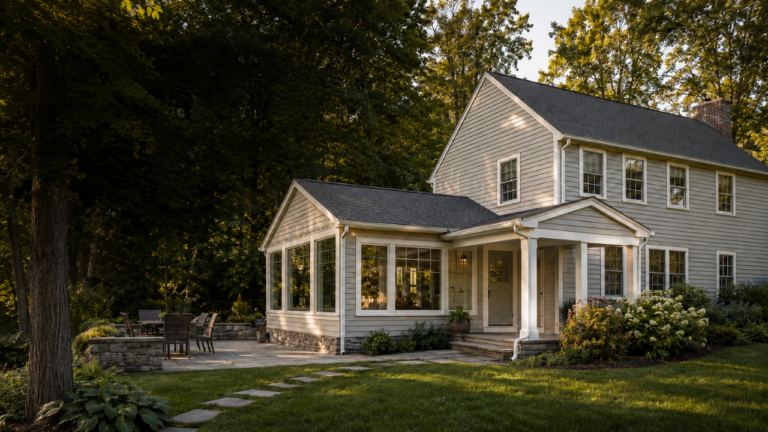
Yes, and in the Hudson Valley this hybrid approach is actually quite common. A homeowner might restore the exterior envelope of a Federal-style farmhouse, including the original clapboard siding, shutters, and entry door, while completely renovating the kitchen and bathrooms inside with modern appliances and contemporary cabinetry. The exterior respects history; the interior respects how people actually live now.
The key to making this work is intention and sequencing. You need a contractor who understands both disciplines and can manage the transition between them without letting one philosophy bleed inappropriately into the other. A restoration specialist who tries to apply period accuracy to a kitchen renovation will produce impractical results. A renovation contractor who doesn’t understand historic materials will damage original features they didn’t intend to touch. This is exactly why working with an experienced local design-build firm matters so much on these kinds of projects.
The National Trust for Historic Preservation acknowledges the concept of “compatible use” in historic properties, which permits modern functional improvements inside a historic structure provided the changes are reversible, do not damage original fabric, and do not compromise the historic character-defining features of the exterior or primary interior spaces. This framework is increasingly applied by preservation consultants working on hybrid restoration-renovation projects.
Frequently Asked Questions
What is the difference between home restoration and home renovation?
Home restoration focuses on returning a property to its original condition using period-appropriate materials and methods. Home renovation focuses on improving or updating a home, often using modern materials and techniques, without the goal of recreating any specific historical period. Restoration preserves; renovation transforms. Both are legitimate approaches, but they require different expertise and serve different objectives.
When should you choose restoration instead of renovation?
Restoration makes the most sense when a home has significant architectural or historic character that would be diminished or lost through modernization. It’s also the right choice when local preservation ordinances require it, when original materials are still sound enough to repair rather than replace, or when the homeowner’s primary goal is maintaining authenticity and cultural integrity. In Hudson Valley, where historic housing is part of the region’s identity, restoration is often both a practical and an emotional decision.
Can a home restoration include modern upgrades?
It can, provided the upgrades are integrated thoughtfully. Electrical systems, insulation, plumbing, and HVAC can all be brought up to modern standards without compromising a home’s historic character if the work is done by contractors familiar with preservation techniques. The guiding principle is that modern upgrades should support the historic structure, not alter it. Hidden mechanical improvements are generally acceptable; surface-level changes that alter character-defining features are not.
Is home restoration more expensive than a renovation?
Restoration can be more expensive per square foot because it requires specialized labor, custom or salvaged materials, and a slower, more methodical process. That said, the total cost depends heavily on scope, existing conditions, and what the homeowner is trying to achieve. A focused restoration of specific original features can be quite targeted in cost, while a full-home renovation with high-end finishes can easily exceed the cost of careful restoration work.
Does restoration preserve the original character of a home better than renovation?
By design, yes. Restoration is specifically intended to protect and recover original character-defining features. Renovation, even when done sensitively, generally involves some degree of change. For homeowners who place high value on historical authenticity, architectural integrity, or the specific aesthetic of a particular period, restoration is the only approach that truly honors those priorities. Renovation can be beautiful and functional, but it tells a different story than the one the original builder intended.
Making the Right Choice for Your Hudson Valley Home
The home restoration vs renovation difference comes down to a single core question: are you trying to recover what was or create what could be? Neither answer is wrong. Both paths can lead to a home you love, a home that serves your family well, and a home that holds its value in the Hudson Valley market. What matters is knowing which path you’re on before the project begins, and having a team that knows how to walk it with you.
Think about what it means to open the door of a home that looks exactly as it did when it was built, but functions perfectly for life in 2025. That’s the promise of a well-executed restoration. Or imagine a home that takes the best bones of an earlier era and wraps them in a layout and finish level that fits the way your family actually lives. That’s a renovation done right. The best projects happen when homeowners are clear about which outcome they want from the start.
At Chiusano Design Build, we work with Hudson Valley homeowners across Dutchess, Ulster, and Orange counties to help them understand exactly what their property needs and what each path will cost them in time, money, and outcome. Whether you’re looking at a Victorian in Newburgh, a farmhouse in Millbrook, or a mid-century ranch in Poughkeepsie, we bring the experience to guide that decision honestly. Schedule a restoration consultation with our team today, or call us directly at 845-201-9450. The right conversation now saves you from the wrong project later.