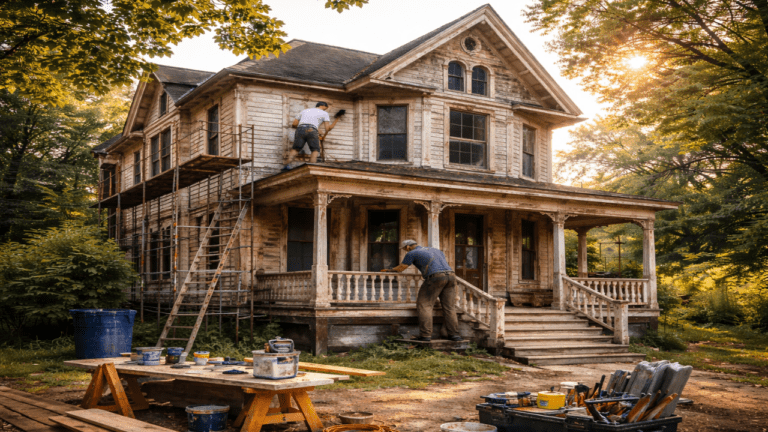
Fire Damage Restoration Steps in Hudson Valley: A Complete Guide to Getting Your Home Back
Fire damage restoration is a multi-phase process that begins the moment the fire is out. This guide walks Hudson Valley homeowners through every critical step, from emergency stabilization and smoke removal to structural repairs and final rebuilding, so you know exactly what to expect and how to protect your property and your family throughout the process.
A fire leaves more than char and ash. It leaves uncertainty. Standing in a home you’ve built your life around, looking at blackened walls and breathing air thick with the smell of smoke, the question isn’t just “what happened?” It’s “what do I do now?” That’s exactly what this guide answers. Whether the damage is isolated to one room or spread through multiple floors, understanding the fire damage restoration steps in the right order can be the difference between a full recovery and a costly, drawn-out nightmare.
Key Takeaways
- Fire restoration follows a specific sequence; skipping steps leads to hidden damage that surfaces later and costs far more to fix.
- Smoke and soot damage can extend far beyond the burned area and must be addressed professionally to prevent long-term health and structural problems.
- Most standard homeowner insurance policies cover fire damage restoration, but documentation in the first 24 hours is critical to a successful claim.
- Hudson Valley homes, especially older construction in areas like Kingston, Newburgh, and Rhinebeck, often face unique challenges like balloon framing and historic materials that require specialist handling.
- Restoration and rebuilding are not the same thing; many homes can be partially or fully restored without full demolition, which can reduce cost and preserve original character.
- Working with a licensed local restoration contractor familiar with Hudson Valley building codes significantly speeds up the permitting and inspection process.
What Happens to a Home During a Fire, and Why the Damage Goes Deeper Than You Think
Most homeowners assume fire damage is visible damage. If the flames didn’t reach a room, that room must be fine. That assumption leads to some of the most expensive surprises in the restoration process. Smoke travels through every gap, duct, and crack in a structure. Heat warps materials that never caught fire. Water from fire suppression soaks into walls, subfloors, and insulation within minutes, and that moisture, if not treated quickly, becomes a mold problem within days.
Understanding the full scope of what fire does to a structure is the first step toward an effective recovery plan. It’s also the reason that what is home restoration means something far more comprehensive than patching scorched drywall. It’s a coordinated, sequenced effort to address every layer of damage from the surface down to the foundation.

Step One: Is It Safe to Enter? Emergency Stabilization Comes First
Before any restoration work begins, the property must be assessed for structural safety. Fire weakens load-bearing members, compromises roof systems, and can leave walls that look intact but are structurally compromised. A licensed contractor or structural engineer should conduct this evaluation before anyone spends time inside the building, including the homeowner.
Emergency stabilization typically involves boarding up openings, tarping compromised roof sections, and shoring up weakened walls. This work is often completed within 24 to 48 hours of the fire being extinguished. Failing to act quickly at this stage can void certain insurance coverages and allow additional damage from weather exposure, particularly in Hudson Valley where rain, wind, and temperature swings are unpredictable year-round.
Utilities also need to be formally shut off and inspected before restoration crews work inside. Gas lines, electrical panels, and plumbing systems are all subject to fire and heat damage that isn’t always visible. Your local fire marshal or building inspector will typically be involved in clearing the property for safe entry.
Step Two: Document Everything Before a Single Thing Is Moved
Once safety is confirmed, the next priority is documentation, and this step needs to happen before restoration crews touch anything. Walk every room with a camera or phone and photograph all visible damage from multiple angles. Open closets. Photograph contents. Record video walkthroughs. Every damaged item, every affected surface, and every structural defect needs to be on record.
This documentation is the foundation of your insurance claim. Your adjuster will conduct their own inspection, but the more thorough your independent record, the stronger your position when negotiating the scope and value of the claim. If possible, create a written inventory of damaged personal property with approximate values at the same time you’re photographing the space.
Step Three: Water and Moisture Removal Before Mold Gets a Foothold
Mold can begin colonizing wet building materials in as little as 24 to 48 hours under the right conditions. Hudson Valley’s humid summers and damp shoulder seasons make post-fire moisture control especially urgent. Industrial dehumidifiers, air movers, and in some cases thermal drying systems need to be deployed quickly, often before smoke remediation even begins, because wet conditions interfere with the adhesion of cleaning agents and sealants used later in the process.
Water extraction is not just about what’s visible on the floor. Moisture meters and thermal imaging cameras are used by qualified restoration teams to locate water trapped inside wall cavities, under flooring, and within insulation bays. This step may feel invisible, but it’s one of the most consequential in the entire sequence. Skipping it or rushing it leads to mold growth that can cost tens of thousands of dollars to remediate later.

Step Four: Smoke and Soot Remediation, the Phase Most Homeowners Underestimate
Smoke doesn’t just stain. It chemically bonds to surfaces, penetrates porous materials, and cycles through HVAC systems to deposit residue in rooms nowhere near the fire. Soot is acidic and continues to corrode metal, etch glass, and degrade fabric the longer it remains in contact with surfaces. Every hour of delay in beginning remediation increases the scope and cost of cleaning.
Professional smoke remediation involves a combination of dry sponge cleaning, chemical sponges, HEPA vacuuming, ozone treatments, and thermal fogging depending on the type of smoke residue present. Wet smoke from slow-burning fires leaves a sticky, smeared residue that is significantly harder to clean than dry smoke from fast-burning fires. Protein-based smoke, which is common in kitchen fires, is nearly invisible but produces a powerful, persistent odor and requires specialized enzymatic treatments.
The HVAC system deserves special attention during this phase. Ductwork that carried smoke through the home needs to be cleaned and inspected, and in some cases, replaced. Running the system before this step is complete spreads contamination through rooms that might otherwise have been unaffected.
Step Five: Structural Assessment and Selective Demolition
Once the environment is stabilized and surfaces are cleaned, a structural engineer and your restoration contractor assess what can be saved and what needs to come out. This is where the complete home restoration guide becomes especially valuable for homeowners dealing with older properties, because the decision between restoration and replacement isn’t always straightforward.
Selective demolition removes only the materials that are structurally unsound, too contaminated to clean, or unable to be restored to their original function. In Hudson Valley’s older housing stock, this often means working carefully around original materials like old-growth timber, plaster walls, and historic millwork that can frequently be cleaned and restored rather than replaced, preserving the character and value of the home.

Step Six: Reconstruction and Rebuilding the Affected Areas
With demolition complete and a clear picture of what remains, the rebuilding phase begins. This is the stage most homeowners associate with restoration, but it’s actually the final mile of a long journey. New framing, insulation, drywall, roofing, electrical, plumbing, and finishes are installed in coordination with local building inspections at each required phase.
The cost of fire damage restoration varies significantly based on damage scope, home size, and local labor rates. In the Hudson Valley region, minor to moderate fire damage restoration projects typically range from $10,000 to $50,000, while extensive structural fires involving full or partial rebuilds can run from $80,000 to well over $200,000. The cost of home restoration is always shaped by site-specific conditions, insurance coverage, and the materials required to match existing construction.
This is also the phase where homeowners can consider strategic upgrades. If walls are already open, it’s a logical time to improve insulation, upgrade electrical panels, add fire-resistant materials, or reconfigure layouts. Many homeowners find that while the fire was devastating, the rebuilding phase gave them an opportunity to improve the home in ways they’d always wanted to.
Step Seven: Final Cleaning, Air Quality Testing, and Move-In Clearance
Before the home is cleared for occupancy, a final round of deep cleaning removes construction dust and any remaining residue. Air quality testing is conducted to confirm that particulate levels, VOCs, and any remaining odor compounds are within safe thresholds. This is non-negotiable for families with children, elderly residents, or anyone with respiratory conditions.
A final walkthrough with the contractor and, ideally, your insurance adjuster ensures all agreed-upon work is complete and the property is returned to a livable, safe, code-compliant condition. Professional home restoration services include this final sign-off as part of the project, not as an afterthought.
Frequently Asked Questions
What should I do immediately after a fire damages my property?
Prioritize safety above everything else. Do not re-enter the building until the fire department or a structural professional confirms it’s safe. Once you have the all-clear, contact your insurance company to report the claim, document all visible damage with photos and video before anything is disturbed, and reach out to a licensed restoration contractor to begin emergency stabilization. Acting within the first 24 hours dramatically limits secondary damage from weather, moisture, and continued smoke exposure.
What are the steps involved in the fire damage restoration process?
The process follows a specific sequence: structural safety assessment and emergency stabilization, damage documentation for insurance, water and moisture extraction, smoke and soot remediation, structural evaluation and selective demolition, reconstruction of affected areas, and final cleaning with air quality verification before move-in clearance. Each step builds on the one before it, which is why skipping ahead or rushing any phase can compromise the entire restoration.
How long does fire damage restoration usually take?
Timeline depends heavily on damage scope. Minor fire damage confined to a single room might be fully restored in two to four weeks. Moderate damage involving multiple rooms typically takes one to three months. Significant structural damage requiring partial or full rebuilding can extend the timeline to six months or longer, particularly when insurance negotiations, permit timelines, and material lead times are factored in. Hudson Valley municipalities each have their own permitting processes, and an experienced local contractor can help navigate those efficiently.
Can smoke and soot damage be completely removed?
In most cases, yes, when professional-grade remediation methods are applied promptly. Surfaces like drywall, carpet, and heavily porous materials that have absorbed significant smoke may need to be replaced rather than cleaned, but structural elements, hardwood floors, cabinetry, and millwork can frequently be restored to their original condition. The key variable is time; the longer smoke residue sits, the more deeply it bonds and the more difficult complete removal becomes.
Will my property need to be rebuilt, or can it be restored?
Most fire-damaged homes fall somewhere between full restoration and full rebuild. A qualified structural assessment will clarify which elements are salvageable. In Hudson Valley, where many homes have significant historic character and original craftsmanship, restoration is often the preferred approach both for cost and for preserving the property’s value and character. The scope of rebuilding depends on how deeply the fire compromised structural systems, and a detailed assessment is always the starting point for that decision.
Your Home Can Come Back From This
A fire is one of the most disorienting things a homeowner can experience. The damage feels total even when it isn’t, and the path forward feels unclear even when it’s actually quite defined. What makes the difference is having a team that knows every fire damage restoration step cold, understands the specific construction and climate realities of Hudson Valley properties, and can manage the entire process from emergency board-up through final inspection.
Chiusano Design Build has helped homeowners across the Hudson Valley rebuild and restore properties after fire damage, working through every phase with transparency, craftsmanship, and a deep familiarity with local codes and construction. If you’re facing fire damage and need to understand your options, the best move is to start the conversation now.
Schedule a restoration consultation with Chiusano Design Build today, or call directly at 845-201-9450. There’s no obligation, and having an expert walk your property early is always the right first step toward a full recovery.