Historic Home Restoration Tips That Actually Preserve What Makes Your Home Worth Saving
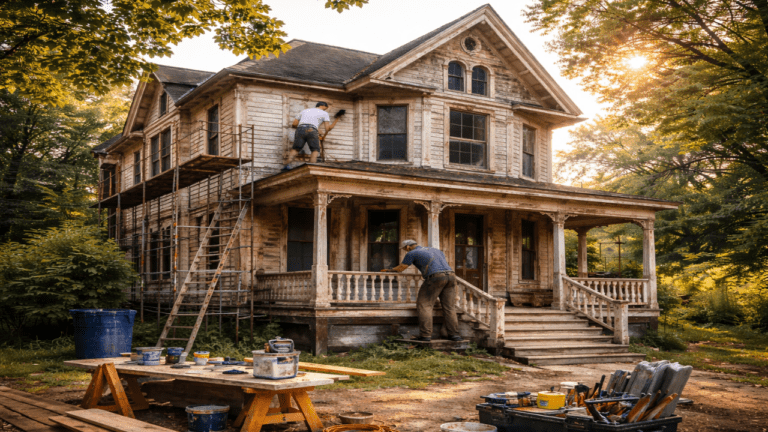
Restoring a historic home in the Hudson Valley requires a careful balance of preservation, modern code compliance, and material authenticity. This guide covers the most practical historic home restoration tips, from structural assessments and permit requirements to sourcing period-appropriate materials and protecting original architectural details, so your home’s character survives the renovation process intact.
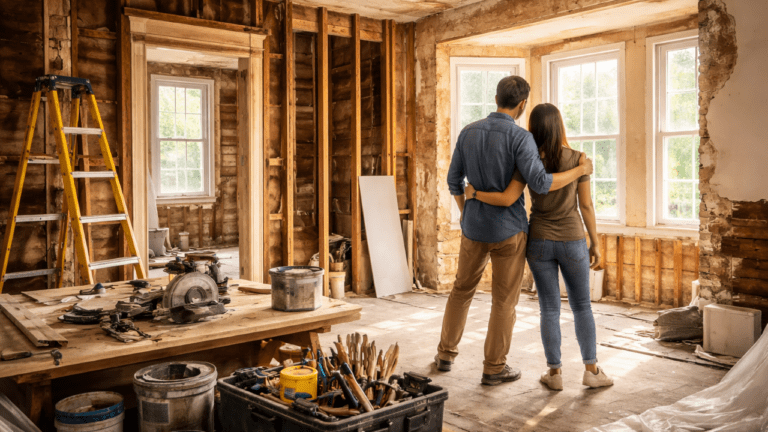
You bought this home because something about it stopped you cold. Maybe it was the wide-plank floors, the original moldings, or the way the light hits the old wavy glass in the windows on a winter afternoon. Now you’re standing in the middle of it wondering how to fix what’s broken without destroying what made it special in the first place. That tension is exactly what makes restoring a historic home so different from any other renovation project.
Key Takeaways
- A thorough structural and systems assessment before any cosmetic work saves significant money and prevents costly mistakes later.
- Matching original materials and joinery techniques is the single most important factor in preserving historic character.
- Many Hudson Valley historic homes fall under local landmark or state review board oversight, which affects what permits you need before starting work.
- Window repair is almost always preferable to replacement in a historically designated property, both for preservation and regulatory reasons.
- Working with a contractor experienced in historic restoration is categorically different from hiring a general remodeler.
- Documentation before demolition protects you legally and helps craftspeople recreate details that get damaged during the process.

Why Does Historic Home Restoration Demand a Different Approach Entirely?
A general contractor working on a standard renovation is solving a completely different set of problems than someone restoring a pre-1920 home in the Hudson Valley. Standard renovation logic, rip it out, replace it with something better, faster, and cheaper, actively destroys historic value. The goal of restoration is to intervene as little as possible while making the home safe, functional, and livable for modern use.
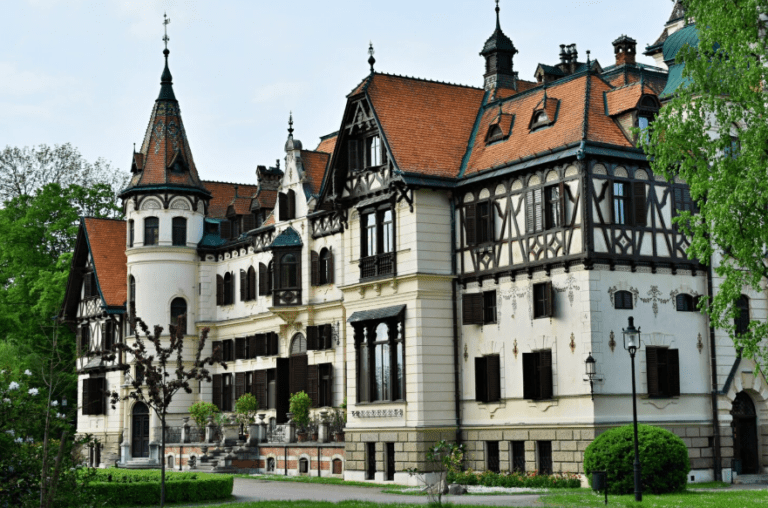
Hudson Valley homes carry a particularly layered history. The region has Federal-style farmhouses, Victorian-era Italianates, Dutch Colonial structures, and early-twentieth-century Craftsman bungalows, all within a relatively compact geographic area. Each architectural period has its own material vocabulary, proportional logic, and construction method. Treating them interchangeably is where most restoration projects go wrong.
According to the National Trust for Historic Preservation, historic homes that retain their original architectural features can command a premium of 10 to 20 percent over comparable non-historic properties in the same neighborhood. In a region like the Hudson Valley where heritage tourism and historic character are significant economic drivers, that premium can be even higher.
Where Should You Start Before Touching a Single Wall?
The most common mistake homeowners make is starting with what they can see. Peeling paint and sagging porch railings are visible and emotionally urgent, but they are almost never the most critical problem. Before any cosmetic work begins, you need a complete picture of what’s happening structurally and mechanically inside the building envelope.
Start with a structural assessment from someone experienced in historic construction. Older balloon-frame and timber-frame buildings behave differently under load than modern platform-frame construction. An inspector who only works on contemporary homes may miss critical issues or, just as problematically, flag things as defects that are actually normal characteristics of period construction. After the structural review, have a licensed electrician and plumber assess the existing systems.
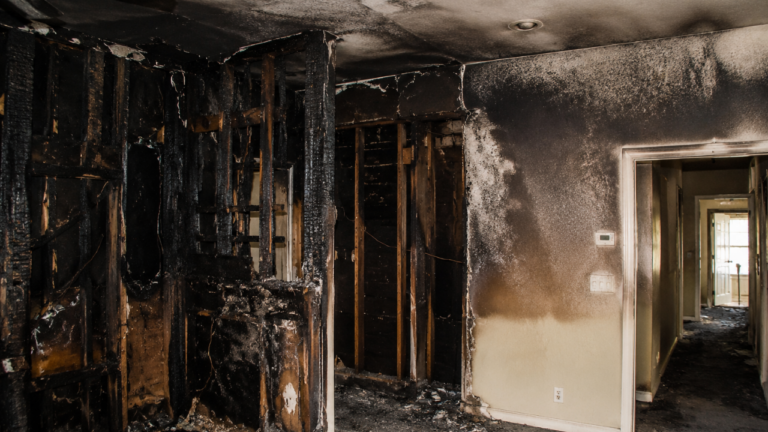
Knob-and-tube wiring, which remains in a significant percentage of pre-1940 homes in the Northeast, is not inherently dangerous when intact, but it cannot be covered by insulation and requires careful evaluation before any insulation upgrades. Many homeowner insurance policies will not cover a home with active knob-and-tube wiring without an inspection and written assessment from a licensed electrician.
Once you have a clear picture of the structural and systems conditions, document everything before demolition begins. Photograph molding profiles, hardware placements, window and door dimensions, and any decorative details at every angle. This documentation becomes your blueprint for recreation if elements are damaged and your protection if a permit dispute arises later. For a deeper look at how the full process unfolds, the Complete Home Restoration Guide from Chiusano Design Build walks through each phase in detail.

What Materials and Techniques Actually Hold Up in a Historic Restoration?
Material selection is where the philosophical commitment to preservation becomes concrete. The goal is always to repair in kind, meaning you replace damaged material with the same material using the same or equivalent method. This principle is not just about aesthetics. It’s about how buildings age and move together. When you introduce modern materials into a historic structure, you often create mismatches in expansion rates, moisture behavior, and paint adhesion that cause premature failure.
For exterior woodwork, this typically means using old-growth lumber, finger-jointed or solid wood trim, and oil-based primers rather than latex on bare wood. For masonry, it means using a lime-based mortar that matches the original softness rather than modern Portland cement mortars, which are harder than historic brick and will cause the brick faces to spall over time. Getting these choices wrong is expensive to correct.
The Secretary of the Interior’s Standards for the Treatment of Historic Properties, the governing framework used by most state historic preservation offices and the National Park Service, distinguishes between four treatment approaches: preservation, rehabilitation, restoration, and reconstruction. Each has specific material and technique requirements that affect what work qualifies for state and federal historic tax credits.
Interior finishes follow the same logic. If original wide-plank floors are salvageable, they should be repaired and refinished rather than covered. Original plaster walls, where structurally sound, outperform drywall in acoustic performance and fire resistance. When plaster must be replaced, a skilled plasterer can match historic profiles and textures in ways that drywall finishing simply cannot replicate. If you want a broader foundation before diving into a specific project, What Is Home Restoration provides a clear framework for understanding the full scope of what’s involved.

How Do You Protect Original Character When Modern Systems Need Upgrading?
Imagine walking through your restored home knowing that every modern convenience is running invisibly through walls and floors that look exactly as they did a century ago. That outcome is achievable, but it requires planning the routing of new systems before any finish work is done, and it requires a contractor who treats the existing fabric of the building as something to work around rather than through.
HVAC is typically the largest challenge in historic homes. Forced-air systems require ductwork that is difficult to route without cutting through historic ceilings and walls. Mini-split systems, radiant in-floor heating, or high-velocity small-duct systems often offer better paths through a historic structure. Each has trade-offs in cost, efficiency, and visual impact that need to be weighed against the specific layout of your home.
High-velocity small-duct HVAC systems, which use two-inch flexible tubing rather than conventional ductwork, can typically be installed in a historic home with openings of just two to three inches in walls or ceilings, significantly reducing the demolition required compared to conventional forced-air systems. These systems also tend to achieve higher air circulation efficiency in homes with older, less airtight construction.
Insulation presents a similar tension. Modern energy codes push toward higher R-values, but many insulation strategies that work well in new construction can trap moisture in old walls and cause rot in balloon-frame structures. Vapor-open insulation strategies, including certain spray-applied mineral wool or cellulose options, are generally more appropriate for historic structures than vapor-impermeable foam insulation applied to the interior of exterior walls. The How to Restore an Old House guide covers these technical decisions in practical, accessible terms for homeowners working through the planning phase.
What Do You Need to Know About Permits and Historic Oversight in the Hudson Valley?
The Hudson Valley contains dozens of locally designated historic districts and individually landmarked properties, as well as properties listed on the State and National Registers of Historic Places. These different designations carry different regulatory implications, and many homeowners are surprised to discover that their property falls under review board oversight even for exterior work that would not normally require a permit.

Local historic preservation commissions in municipalities across the region, including those in Kingston, Rhinebeck, Cold Spring, Tarrytown, and Newburgh, have the authority to review applications for Certificates of Appropriateness before exterior work can begin. The standards applied vary by municipality, but most draw on the Secretary of the Interior’s Standards as their baseline. Getting a Certificate of Appropriateness denied after you’ve already contracted work is a costly and stressful situation that a knowledgeable contractor can help you avoid. The Professional Home Restoration Services team at Chiusano Design Build navigates this process regularly and understands what local boards expect to see in applications.

Frequently Asked Questions About Historic Home Restoration
What is the biggest challenge when restoring a historic home?
The biggest challenge is almost always hidden conditions. You cannot fully know what’s inside walls, under floors, or within a foundation until the work begins, and in a historic home those discoveries can be significant: deteriorated framing, buried fill materials, mixed-era wiring and plumbing, or previous amateur repairs that created new problems. Experienced restoration contractors build contingency into their scopes of work specifically because of this. Working with someone who has seen a wide range of conditions in older homes dramatically reduces the chance that a discovery derails your timeline or budget.
How can I maintain the original character of a historic home during renovations?
The most reliable method is thorough documentation before any work is disturbed, combined with a clear commitment in your contract to repair in kind. Photograph every original detail, take measurements of molding profiles, and if possible pull small samples of paint layers so a colorist can identify historic color sequences. Then make sure your contractor understands that the preservation of existing material is the priority, and that replacement is the last resort rather than the default approach.
Should I replace old windows in a historic home?
In most cases, no. Original wood windows in a historic home are almost always repairable, and when properly restored with new weatherstripping, glazing compound, and storm windows, they can perform comparably to many modern replacement units. Replacement windows rarely match the proportions, glass character, or profile of original units, and they are irreversible changes that historic preservation commissions will often reject outright. The energy argument for replacement is also frequently overstated: air infiltration through gaps in frames and sashes is a weatherstripping and sealing problem, not a glazing problem, and it can be addressed without replacing the window.
What materials should be used when restoring a historic home?
Repair-in-kind is the governing principle: match what was originally used as closely as the existing supply chain allows. For exterior wood, use solid wood rather than composite or fiber cement wherever feasible. For masonry repointing, use a lime-based mortar softer than the brick or stone it’s binding. For interior plaster repairs, use traditional three-coat plaster or a high-quality skim coat that matches the existing texture. When original materials are genuinely unavailable, the goal is to find the closest equivalent that will age and perform compatibly with what remains.
How do I know if my historic home requires special permits or approvals?
Start by checking with your municipal building department and ask specifically whether your property is within a locally designated historic district or carries individual landmark status. A National Register listing does not by itself restrict what you can do to your property unless you are applying for federal or state historic tax credits, but a local landmark designation typically does require a Certificate of Appropriateness for exterior changes. Your county planning office and the New York State Office of Parks, Recreation and Historic Preservation are also useful resources for understanding your property’s status.
Ready to Restore Your Historic Home the Right Way?
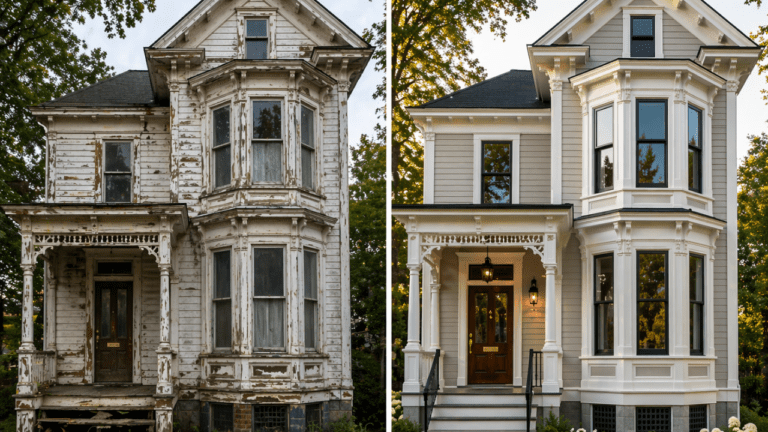
There’s a real difference between a historic home that survives a renovation and one that comes through it better than before. The difference lives in the details: the right materials, the right sequence, the right contractor who understands that what you’re working on is irreplaceable. Every original molding saved, every window restored rather than swapped out, every decision made with the building’s history in mind adds up to a home that holds its character for another hundred years.
Chiusano Design Build has been working with historic properties throughout the Hudson Valley for years, bringing the kind of hands-on expertise and genuine respect for original craftsmanship that these homes demand. Whether you’re at the very beginning of planning or already deep in a project that needs experienced guidance, the team is ready to help you navigate every phase.
Call 845-201-9450 to talk through your project, or Contact Us online to schedule a consultation. Your home’s story is worth getting right.