How to Paint Tile in Hudson Valley: What Actually Works (And What to Skip)
Painting tile is a budget-friendly way to refresh dated bathrooms, kitchens, and laundry rooms without a full renovation. This guide covers everything Hudson Valley homeowners need to know: the right paints and primers, proper surface prep, application techniques, and realistic expectations about durability. Whether you’re tackling a DIY refresh or deciding when to call a pro, this is your complete resource.
You’ve stared at those pink ceramic tiles long enough. Maybe they came with the house, maybe they felt fine a decade ago, and now every time you walk into that bathroom, they pull the whole room down. A full tile replacement sounds expensive and disruptive, and honestly, sometimes it is. Painting tile isn’t a magic fix, but done correctly, it can buy you years of better-looking surfaces without gutting the room. The difference between a job that lasts and one that peels by spring comes down almost entirely to preparation and product selection.
Key Takeaways
- Surface prep is the single most important factor in how well painted tile holds up over time.
- Not all paints work on tile — you need products specifically formulated for ceramic, porcelain, or natural stone.
- Primer is non-negotiable; skipping it almost guarantees early peeling.
- Painted tile works best in low-moisture areas; shower tile requires extra caution and specific products.
- Cure time matters more than dry time — most tile paints need 3 to 7 days before regular water exposure.
- Painted tile can look beautiful, but it is a temporary solution compared to professional retiling.
Why Do Homeowners Paint Tile in the First Place?
In older Hudson Valley homes — particularly those built in the 1950s through 1980s — original tile colors tend to be avocado green, harvest gold, or dusty rose. These colors were fashionable for their era, but they make modern staging, rentals, and everyday living harder to enjoy. Full tile replacement in a bathroom can run well into the thousands of dollars by the time you account for demolition, new tile, grout, and labor.
A standard bathroom tile replacement in the Northeast typically costs between $1,500 and $4,500 depending on tile selection, square footage, and labor rates. Painting tile, by contrast, can be completed for $100 to $300 in materials for a small to mid-size bathroom, making it one of the most cost-effective cosmetic upgrades available to homeowners working within a tight renovation budget.
That price gap makes painting an attractive option, especially for renters, homeowners preparing to sell, or anyone who wants a quick refresh while saving toward a bigger renovation down the road. The key is going in with realistic expectations: painted tile is a cosmetic improvement, not a structural one, and it will require maintenance or eventual replacement over time.
What Materials Do You Actually Need?
Cutting corners on materials is the fastest way to end up with a peeling, blotchy surface within six months. Here’s what a proper painted tile job requires:
- Tile-specific primer — a bonding primer formulated for non-porous surfaces (brands like Zinsser Bulls Eye 1-2-3 or KILZ Adhesion are commonly used)
- Tile paint or epoxy paint kit — products like Rust-Oleum Tub & Tile or Giani tile paint are designed to flex with the substrate and resist moisture
- Fine-grit sandpaper — 220-grit for scuffing the surface before priming
- TSP cleaner or degreaser — removes soap scum, grease, and mineral deposits
- Painter’s tape and plastic sheeting — for protecting fixtures, flooring, and adjacent surfaces
- A high-density foam roller and small brush — for smooth, streak-free application
- Clear topcoat sealer — extends durability, especially in wet areas
How Do You Prep Tile Before Painting It?
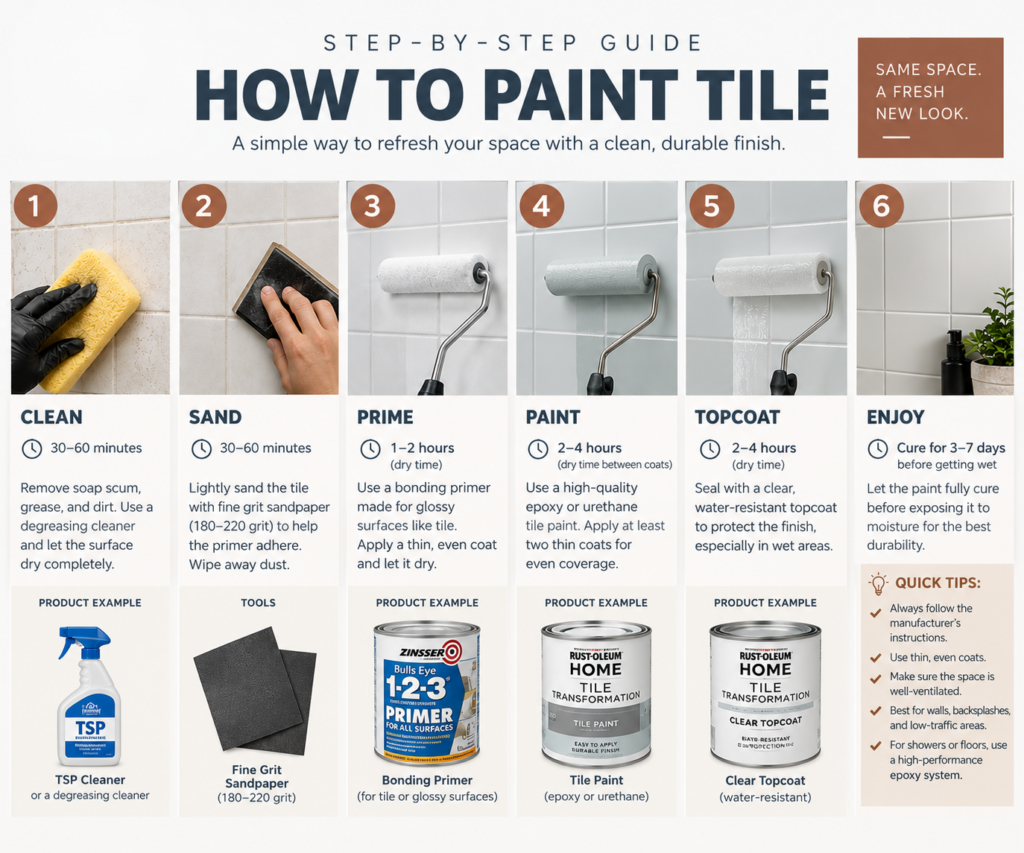
Preparation is where most DIY tile painting jobs either succeed or fail. The tile surface must be completely clean, lightly abraded, and fully dry before any primer touches it. Skipping any one of these steps reduces adhesion significantly, and no amount of quality paint will compensate for poor prep.
Start by cleaning the tile thoroughly with a TSP substitute or a dedicated tile degreaser. Pay close attention to grout lines, corners, and any areas near the tub, sink, or stove where soap residue or cooking grease accumulates. Rinse thoroughly and let the surface dry completely, ideally for 24 hours in a well-ventilated space.
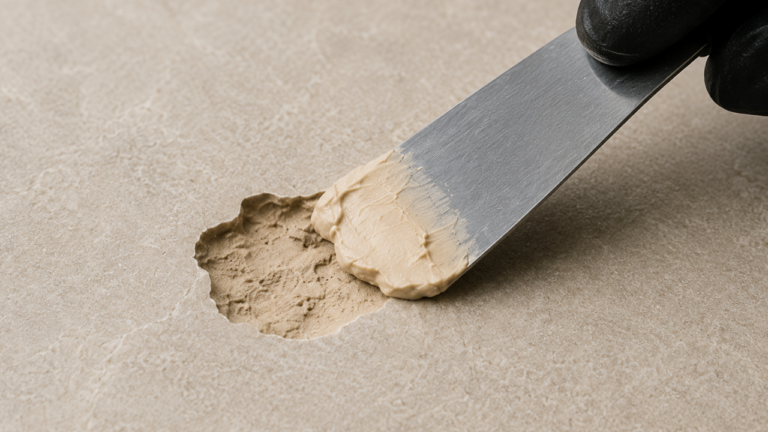
Once dry, use 220-grit sandpaper to lightly scuff the entire tile surface. You’re not trying to remove the glaze entirely, just dull it enough to give the primer something to grip. Wipe down the surface with a damp cloth afterward to remove all dust, then let it dry again before priming. If your tile has any chips or cracks, this is the time to address them — learning how to fix chipped tile before painting will give you a much cleaner finished result.
What’s the Right Way to Apply Primer and Paint?
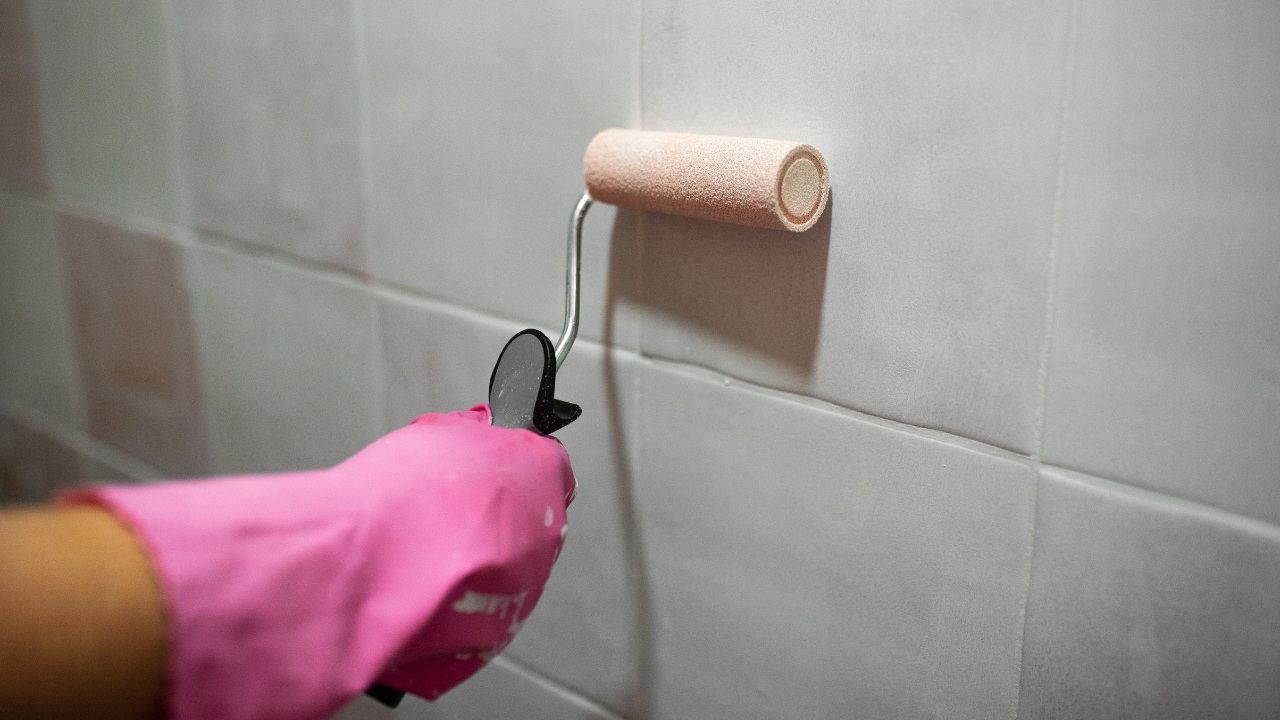
Apply your bonding primer in thin, even coats using a high-density foam roller. Thick coats trap air, create bubbles, and peel faster. Two thin coats are always better than one heavy one. Allow the first coat to dry fully per the manufacturer’s instructions before applying the second, and resist the urge to rush this stage.
Most bonding primers require between 1 and 4 hours of dry time between coats, depending on temperature and humidity. In humid climates or during Hudson Valley’s wetter spring and fall seasons, primers and paints can take up to 30% longer to cure fully, which is worth accounting for when scheduling your project timeline.
Once your primer coats are fully cured, apply your tile paint in the same thin, even layers. Two to three coats are typical, with light sanding using 400-grit paper between coats for maximum adhesion. Use a small angled brush to cut in along grout lines and edges, then follow with the foam roller across the flat tile faces. Keep a wet edge as you work to avoid lap marks.
Finish with a clear protective topcoat once the final paint coat is fully dry. This step is especially important in kitchens and bathrooms, where the surface will face daily moisture, cleaning products, and physical contact. A polyurethane or epoxy-based sealer adds meaningful durability to your finished surface.
How Long Does Painted Tile Actually Last?
When properly prepped, primed, and sealed, painted tile in low-moisture areas like laundry rooms or entryways can last 5 to 10 years before showing significant wear. In wet areas like bathrooms, realistic longevity is closer to 3 to 5 years with routine cleaning and occasional touch-ups. Painted shower tile tends to have the shortest lifespan due to constant direct water exposure and temperature fluctuation.
Longevity depends heavily on how the surface is used and cleaned. Abrasive scrubbing pads, harsh chemical cleaners, and constant steam are all enemies of painted tile. If you want your painted surfaces to stay looking fresh, stick to soft cloths, gentle pH-neutral cleaners, and good ventilation after every shower. Understanding how to clean tile grout properly also helps extend the life of the surrounding painted surface, since mold or moisture along grout lines can undermine adhesion over time.
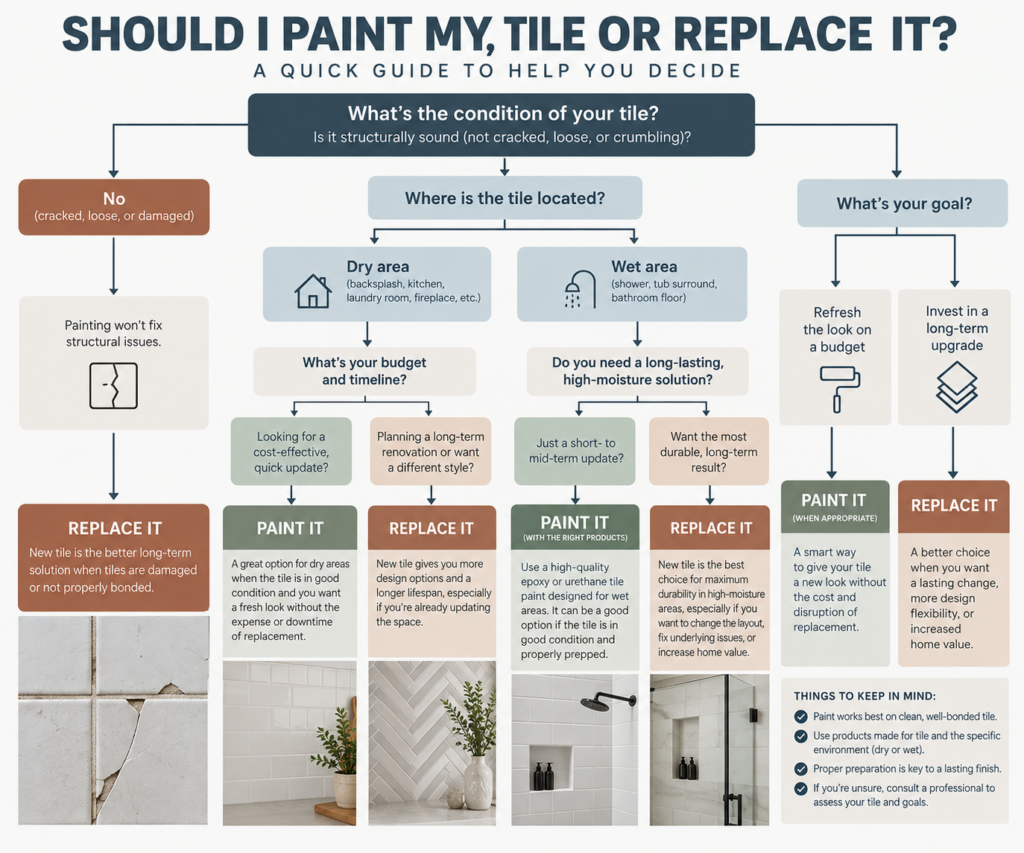
The honest answer is that painted tile is a bridge, not a destination. It can give a dated space several more years of usable life while you plan a more comprehensive renovation, but it won’t perform the same as a freshly tiled surface. If you’re already dealing with cracked, loose, or actively deteriorating tile, painting over it won’t solve the underlying problem.
When Should You Skip Painting and Hire a Professional?
There are situations where the DIY tile painting route makes complete sense, and situations where it quietly sets you up for more work later. If your tile is structurally sound, your grout is intact, and the problem is purely cosmetic, painting is a legitimate option. But if tiles are cracking, grout is missing in sections, water has gotten behind the wall, or you’re working in a primary shower that gets daily use, you’re better served by addressing the underlying tile work properly.
Water intrusion behind bathroom tile is a leading cause of structural damage in residential homes, and painting over compromised tile can delay detection of moisture problems that may ultimately cost thousands more to repair. Contractors and inspectors frequently note that painted tile in wet areas can mask water damage for months or years before the problem becomes visible.
For homeowners who want a lasting solution, Professional Tile Work is worth the investment. New tile, properly set and sealed, will outlast any painted surface by decades, adds genuine resale value, and solves problems rather than covering them. It’s the kind of work that earns its cost back over time.
Frequently Asked Questions
What type of paint should you use on tile?
You need paint specifically formulated for ceramic, porcelain, or stone tile surfaces. Standard latex wall paint won’t adhere properly and will peel quickly. Look for epoxy-based tile paints or dedicated tub-and-tile refinishing kits, which are designed to bond to non-porous surfaces and withstand moisture and light cleaning without chipping or flaking prematurely.
Do you need to sand tile before painting it?
Yes, lightly sanding the tile surface is an important part of prep. Tile has a glazed, non-porous finish that repels adhesion, so a light scuff with 220-grit sandpaper gives the primer something to bond to. You’re not trying to strip the tile down to bare ceramic, just dulling the surface enough to break that glassy repellency before primer goes on.
What primer works best for painted tile?
A bonding primer specifically designed for non-porous or hard-to-stick surfaces is essential. Products like Zinsser Bulls Eye 1-2-3, KILZ Adhesion, or primers included in epoxy tile refinishing kits are commonly recommended. Standard drywall primer will not adhere to tile properly, so the product you choose here makes a significant difference in how long the final painted surface holds up.
How long should painted tile cure before getting wet?
Most tile paint products are touch-dry within a few hours, but that’s very different from being cured. Full cure typically takes 3 to 7 days, depending on the product and environmental conditions. During this time, the surface should stay dry and away from soap or cleaning products. Introducing water too early is one of the most common reasons painted tile starts peeling within weeks of application.
Can you paint shower tile, floor tile, and backsplash tile?
Technically yes, but each surface comes with different considerations. Backsplash tile is the most forgiving since it stays relatively dry and only faces indirect moisture. Bathroom wall tile outside the shower also works well. Shower tile and floor tile are more challenging because they face constant water, foot traffic, and cleaning, all of which shorten the lifespan of painted surfaces significantly. Using a high-quality epoxy kit and a durable topcoat gives you the best chance in high-use areas.
Ready for a Tile Upgrade That Lasts? Here’s Your Next Step
Painting tile can absolutely work, and this guide gives you everything you need to do it right. Clean thoroughly, sand lightly, prime properly, apply thin coats, and give the surface time to cure before it faces water. If you do all of that, you’ll get a result that looks great and holds up for years in the right conditions.
That said, if your tile is showing signs of wear beyond cosmetics, or if you’re ready to invest in a surface that will look just as good a decade from now as it does on day one, it’s worth talking to someone who does this work every day. Chiusano Design Build has been serving Hudson Valley homeowners with expert tile and renovation work for years. Whether you have a small bathroom refresh in mind or a full kitchen redesign, their team can walk you through your options honestly, without overselling you on work you don’t need.
Give them a call at 845-201-9450 or Contact Us online to get started. A short conversation now can save you a lot of time, money, and frustration down the road.