How Long Does Home Restoration Take in Hudson Valley?
Home restoration timelines in Hudson Valley vary widely depending on the scope of damage, project type, and contractor availability. Minor restorations may wrap up in a few weeks, while full structural or historic home restorations can span six months to over a year. Understanding what drives these timelines helps homeowners plan realistically and avoid costly surprises.
Most homeowners asking this question aren’t just curious. They’re dealing with something stressful: a flooded basement, fire-damaged walls, a roof that finally gave out after one too many Hudson Valley winters, or an aging historic home they’ve decided to bring back to life. The last thing you want is a vague answer. You need a realistic picture of what’s ahead so you can make real decisions about your home, your family, and your budget.
Key Takeaways
- Minor restorations (cosmetic repairs, single-room damage) typically take 2 to 6 weeks.
- Mid-scale restorations involving structural work or multiple rooms generally run 2 to 6 months.
- Large-scale or historic home restorations can take 6 months to 18 months or more.
- Hidden damage discovered mid-project is one of the most common causes of timeline extensions.
- Permit processing in New York State can add weeks to any project, especially in municipalities with historic district oversight.
- Working with an experienced local design-build firm helps compress timelines by keeping planning, design, and construction under one roof.

Why There’s No Single Answer to This Question
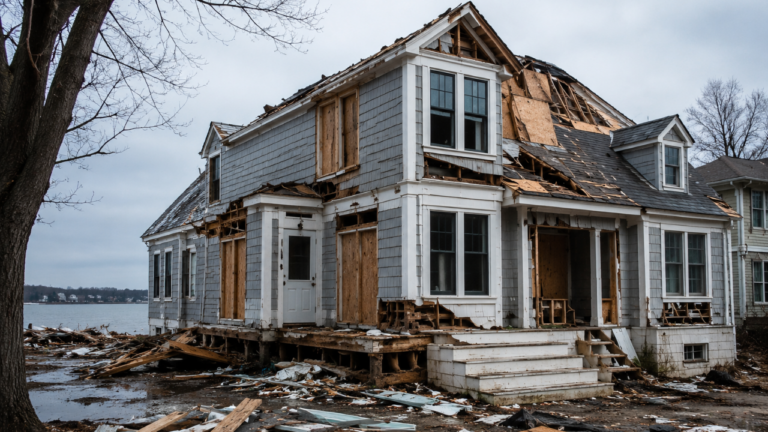
If you’ve searched for a simple answer and found wildly different numbers everywhere you look, that’s not a bug. Restoration is genuinely one of the most variable categories in residential construction. A water-damaged bathroom and a structurally compromised 1890s farmhouse are both “home restorations,” but they have almost nothing else in common when it comes to scope, cost, or time.
The range exists because restoration, by definition, starts with what’s already there. Unlike new construction, you’re working within an existing structure that may hold surprises behind every wall. That’s what separates restoration from a standard renovation, and it’s why understanding what home restoration is before you begin can save you real frustration down the line.
According to industry data, roughly 35% of restoration projects exceed their original timeline by at least 20%, with hidden structural damage and permit delays cited as the two leading causes. In older housing markets like the Hudson Valley, where many homes predate modern building codes, that percentage trends even higher.
What Are the Real Timelines by Project Type?
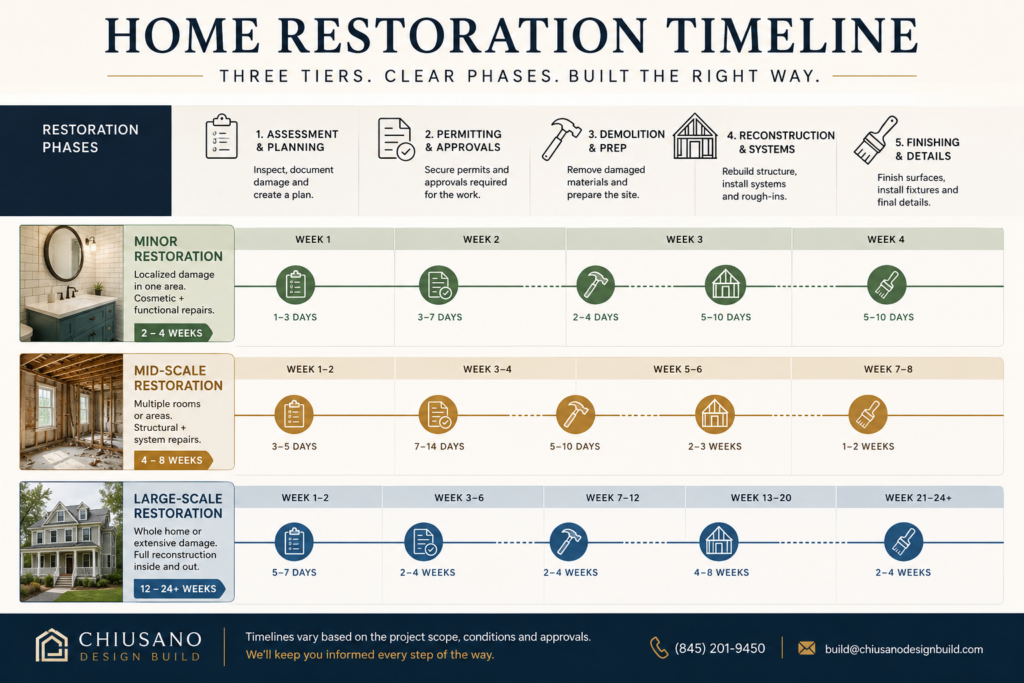
Breaking this down by project category gives you a much more actionable starting point than any single average figure. Here’s how the most common restoration scenarios actually play out for Hudson Valley homeowners.
Minor Restorations: 2 to 6 Weeks
Projects in this range typically contain damage to a single room or system: a burst pipe that damaged one bathroom, localized mold remediation, or cosmetic repair after minor storm impact. Assuming no hidden damage is uncovered and materials are readily available, these projects can often be completed within two to six weeks from the start of work. Labor availability in the Hudson Valley region, particularly in peak spring and summer seasons, can push even minor projects toward the longer end of this range.
Mid-Scale Restorations: 2 to 6 Months
This is where most homeowners land when they come to a firm like Chiusano Design Build. Projects in this category might include multi-room water damage, partial fire damage restoration, basement waterproofing paired with finishing work, or the restoration of several interconnected systems like electrical, plumbing, and insulation in an older home. The complexity isn’t just in the work itself but in the sequencing: drying and remediation have to precede reconstruction, inspections have to happen at specific stages, and subcontractors need to be coordinated carefully.
Large-Scale and Historic Restorations: 6 to 18+ Months
Full structural restorations, especially of historic properties, routinely take 12 to 18 months or longer. The Hudson Valley is home to a significant number of pre-Civil War stone houses, Victorian-era homes, and early 20th-century craftsman properties, many of which require specialized materials, historically appropriate methods, and approval from local historic preservation boards. In some municipalities, the permitting and review process alone can add two to four months before a single nail is driven.
What Factors Have the Biggest Impact on Your Timeline?
Knowing the general ranges is helpful, but what you really want to understand is which variables are in your control and which ones aren’t. The complete home restoration process involves a long chain of decisions, approvals, and labor coordination, and any weak link can stretch your timeline considerably.
The Scope of Damage
This one is obvious but worth naming clearly. The more systems affected and the deeper the damage penetrates into structural components, the longer everything takes. Surface-level damage is a different conversation from damage that has compromised load-bearing walls, the foundation, or major mechanical systems.
Permit and Inspection Requirements
New York has robust building code requirements, and municipalities within the Hudson Valley vary significantly in how they handle permit timelines. Some building departments process permits in a few weeks; others routinely take 6 to 10 weeks, particularly for projects requiring variance approvals or historic district review. This is one of the most underestimated delays homeowners encounter, and it happens before any physical work begins.
Material Availability and Lead Times
Supply chain disruptions have extended material lead times significantly in recent years, with some specialty items like custom windows, period-appropriate millwork, or specific roofing materials carrying lead times of 8 to 16 weeks. For historic restorations where substitutions aren’t an option, these lead times can define the project schedule more than the labor itself. Experienced contractors factor this into the planning phase to avoid holding completed work while waiting for a single backordered item.
Hidden Damage Discovered Mid-Project
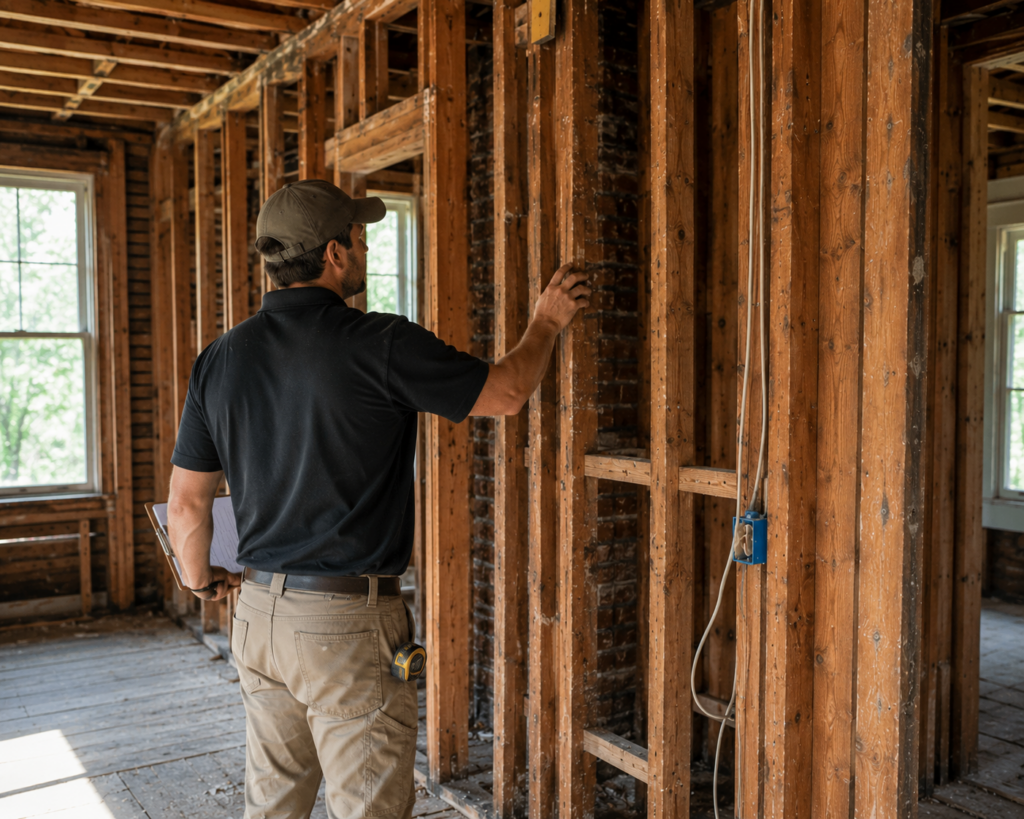
This is the variable that surprises homeowners most often. Walls opened during a plumbing repair reveal knob-and-tube wiring that needs full replacement. Flooring removal exposes subfloor rot that extends far beyond the original water damage zone. In older homes especially, finding unexpected issues mid-project isn’t rare; it’s almost expected. A good contractor will walk you through likely scenarios during the assessment phase so you’re mentally and financially prepared if they surface.
How Does the Hudson Valley Context Change Things?
Restoration in the Hudson Valley isn’t the same as restoration in a newer suburban market. The region’s housing stock skews significantly older, with many homes built before modern construction methods became standard. That means more surprises, more specialist involvement, and more nuance in the planning phase. It also means that the true cost of restoration often runs higher than national averages suggest, both in time and dollars.
Climate is another factor. Hudson Valley winters are hard on buildings, and many restoration projects are triggered by seasonal damage from ice dams, freeze-thaw cycles, or wet spring conditions that accelerate existing moisture problems. Contractors working in this region plan for weather-related delays, particularly for exterior work scheduled in late fall through early spring.
Homeowners in communities like Rhinebeck, Cold Spring, Beacon, Newburgh, Kingston, and Catskill each deal with their own municipal building departments, and local knowledge of those processes matters. Working with a firm that has deep roots in the region, understands the local permitting landscape, and has relationships with local inspectors is a genuine advantage, not just a marketing talking point.
What Can You Do to Keep Your Project on Track?
While some delays are unavoidable, there’s quite a bit within your control. Homeowners who move quickly on decisions, stay responsive during the project, and work with an integrated team consistently see faster timelines than those managing disconnected contractors who don’t coordinate with each other.
Choosing a design-build firm means the planning and construction phases are handled by the same team, which eliminates a major handoff point where delays often accumulate. You’re also more likely to catch material and permit issues early if your contractor starts those processes in parallel with the design phase rather than sequentially after it. Exploring home restoration services offered by firms with integrated teams can give you a clearer picture of how that model works in practice.
Frequently Asked Questions
What factors affect how long a home restoration project takes?
The biggest factors are the extent and type of damage, how many systems are involved (structural, mechanical, cosmetic), local permit processing times, material lead times, and whether hidden damage is discovered mid-project. In the Hudson Valley specifically, the age of the home and whether it falls within a historic district can add meaningful time to both the planning and approval phases.
How long does it take to restore a home after fire, water, or storm damage?
It depends heavily on severity. A contained water event in one room might take 3 to 6 weeks to fully resolve. Extensive fire damage affecting multiple rooms and structural elements can take 6 to 12 months or longer, especially when insurance coordination, code compliance, and material sourcing are layered in. The initial assessment and drying or cleanup phase alone can take 1 to 3 weeks before reconstruction even begins.
Can I stay in my home during the restoration process?
For minor restorations, many homeowners remain in place, particularly when work is confined to a single room or exterior area. For major structural work, fire or mold remediation, or anything involving HVAC, electrical, or plumbing disruption across the home, temporary relocation is typically the safer and more practical option. Your contractor should give you an honest recommendation during the initial assessment based on the specific scope of work.
How can I speed up a home restoration project?
The most effective moves are making design decisions early and sticking to them, responding quickly to contractor questions during active work, and choosing a firm that handles design and construction in-house. Avoiding changes to the scope mid-project is also significant, since scope changes almost always introduce delays that cascade through scheduling and material ordering. Pre-ordering materials with long lead times before permits are even finalized (where feasible) can also shave weeks off the overall timeline.
What happens if hidden damage is found during restoration?
A reputable contractor will document the newly discovered damage, present you with updated scope and cost options, and pause non-critical work until you’ve made an informed decision on how to proceed. In most cases, addressing hidden damage immediately is the right call since leaving it unresolved can compromise the rest of the restoration work. Experienced contractors in the Hudson Valley region factor likely discovery scenarios into their initial assessments so clients aren’t caught completely off-guard.
Ready to Get a Real Answer for Your Home?
Timelines aren’t just numbers on a page. They affect where you live, how you budget, and how quickly you can stop worrying about your home and start enjoying it again. The most honest thing anyone can tell you is that a real timeline requires a real assessment of your specific property, not a guess based on a Google search.
Imagine walking through your restored home six months from now, knowing that every system is sound, every surface reflects the character of what the home was always meant to be, and the stress of the damage is fully behind you. That outcome is achievable, but it starts with a conversation and a clear plan.
Chiusano Design Build works with homeowners across the Hudson Valley to create restoration plans that are honest about scope, realistic about timelines, and built around what actually matters to you. If you’re ready to get a clear picture of what your project involves and how long it will realistically take, Contact Us today or call us directly at 845-201-9450. One conversation can replace a lot of uncertainty with a plan you can actually move forward on.