What to Know Before Restoring a Home in Hudson Valley
Before starting a home restoration in Hudson Valley, homeowners need to understand the difference between restoration and renovation, how to assess structural and historical conditions, what permits are required, and how to budget realistically. This guide covers every critical decision point so you can move forward with confidence and avoid the costly mistakes that derail most projects.
Restoring a home sounds romantic — peeling back layers of time, uncovering original character, bringing something beautiful back to life. But the reality? It’s one of the most complex construction projects a homeowner can take on. The Hudson Valley is full of historic homes with incredible bones, but those same bones often hide decades of deferred maintenance, outdated systems, and structural surprises that no one warned you about. Knowing what you’re getting into before the first nail is pulled is the difference between a project that transforms your home and one that drains your budget.
Key Takeaways
- Home restoration and renovation are legally and practically different — knowing which one applies to your project affects permits, costs, and timelines.
- A thorough pre-project inspection is non-negotiable. Hidden issues like lead paint, asbestos, or foundation settling can multiply your budget if discovered mid-project.
- Permits are almost always required for restoration work in the Hudson Valley, especially for historically designated properties.
- Realistic budgeting means building in a contingency fund — typically 15 to 25 percent of your total project cost.
- Choosing a contractor with specific restoration experience, not just general remodeling experience, is critical to protecting the historic value of your home.
- Understanding what home restoration is versus what it isn’t will save you from scope creep and misaligned expectations from the start.
Why Hudson Valley Homes Demand a Different Approach
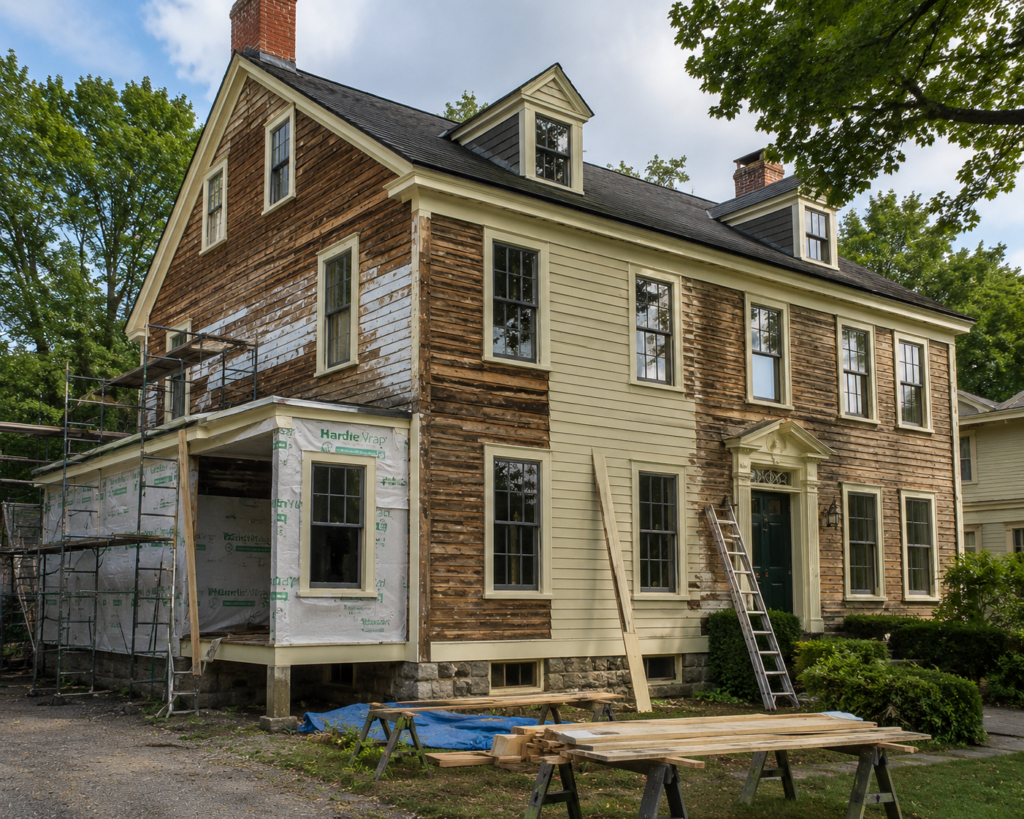
The Hudson Valley isn’t like newer suburban markets where most homes were built with standardized materials and modern codes. This region is home to a dense concentration of pre-war, Victorian, Colonial, and Craftsman-era properties that span well over a century of construction history. That heritage is exactly what makes these homes so desirable — and exactly what makes restoring them so nuanced.
Many properties in Hudson Valley municipalities like Rhinebeck, Cold Spring, and Kingston fall within or adjacent to historic districts, which means restoration work may be subject to review by local historic preservation boards. These boards can require materials, methods, and finishes that match the home’s original period — sometimes significantly increasing both cost and timeline compared to a standard remodel.
Climate is another factor that compounds the complexity. Hudson Valley winters are harsh, humid summers accelerate wood rot, and freeze-thaw cycles do real damage to masonry and foundations over decades. A home that looks structurally sound from the street may have significant moisture infiltration, shifting foundations, or deteriorating mortar that only a trained eye will catch during a proper assessment.
What Should You Actually Inspect Before Starting?
The inspection phase of a restoration project is where you separate wishful thinking from reality. A standard home inspection report is not enough. You need specialists who understand historic construction methods and can evaluate systems and materials that don’t appear in modern builds.
Start with the foundation. In older Hudson Valley homes, you’re likely dealing with stone, brick, or early concrete foundations that behave very differently from poured concrete. Look for bowing, horizontal cracking, efflorescence (white mineral deposits), or evidence of water intrusion. These aren’t cosmetic issues; they’re structural ones.
Homes built before 1978 are very likely to contain lead-based paint, and those built before 1980 may contain asbestos in insulation, floor tiles, or pipe wrapping. Disturbing either material without proper abatement protocols is not only dangerous — it’s illegal. Professional abatement can add anywhere from $1,500 to $30,000 or more to a project depending on the scope and extent of contamination.
Electrical and plumbing systems deserve serious scrutiny too. Knob-and-tube wiring and cast iron drain stacks are common in homes that haven’t been updated. Neither is necessarily an emergency on its own, but both will likely need to be addressed — and bringing them up to current code during a restoration is far more cost-effective than treating them as separate future projects.

Restoration vs. Renovation: Does the Distinction Matter?
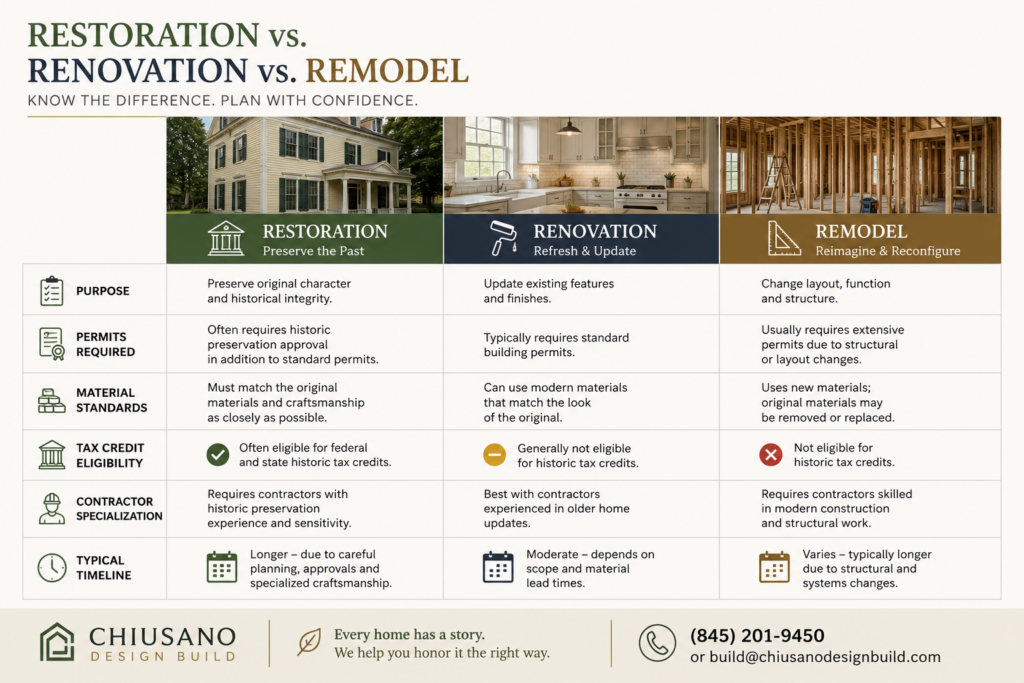
It matters more than most homeowners realize. Renovation means updating or improving a home. Restoration means returning it to its original or historic condition. These aren’t just semantic differences — they affect which contractors you hire, what materials you source, whether your project qualifies for historic tax credits, and how your local municipality will treat your permit applications.
If your home is listed on the National Register of Historic Places, or sits within a locally designated historic district, restoration work may need to follow the Secretary of the Interior’s Standards for Rehabilitation. These standards govern everything from window replacement (you often can’t swap original wood windows for vinyl) to how structural repairs are documented and completed. Ignoring these standards can result in fines, forced reversal of work, and loss of eligibility for any available tax incentives.
New York State offers a Historic Homeownership Rehabilitation Tax Credit equal to 20% of qualified rehabilitation expenditures for owner-occupied historic residences. Federal historic tax credits of an additional 20% are available for income-producing properties. Combining these incentives can substantially offset restoration costs, but only if the work meets specific eligibility criteria and is properly documented from the beginning of the project.
For homeowners who aren’t dealing with a formally designated property, the distinction still matters for scoping purposes. Understanding the complete home restoration process helps you set realistic expectations about timelines, subcontractor needs, and material sourcing — none of which look anything like a standard kitchen remodel.
How Should You Budget for a Restoration Without Getting Burned?
Budgeting for a restoration project requires a fundamentally different mindset than budgeting for new construction or a simple renovation. The unknown is always present, and it almost always costs something.
Industry estimates suggest that historic home restoration projects in the Northeast typically run between $150 and $400 per square foot depending on the scope of work, materials required, and condition of the existing structure. Full gut restorations on older Victorian-era homes with significant deterioration can exceed $500 per square foot when structural, mechanical, and historic compliance requirements are all factored in.
The most important budget line item you can create is a contingency fund. Experienced restoration contractors consistently recommend setting aside 15 to 25 percent of your total estimated budget specifically for unforeseen conditions. That’s not padding or pessimism — it’s a reflection of how restoration projects actually behave. Walls opened up reveal unexpected framing. Floors lifted for new subfloor reveal rot that extends further than anyone anticipated. Plumbing systems that appeared functional turn out to require full replacement once a licensed plumber evaluates them properly.
Understanding the true cost of restoration means thinking in phases and priorities. Not everything has to happen at once. Work with your contractor to identify what’s structural and safety-critical versus what’s cosmetic and can be deferred. A phased approach allows you to preserve cash flow while making steady, meaningful progress on the home.
What Permits Are Involved — and Why They Can’t Be Skipped?
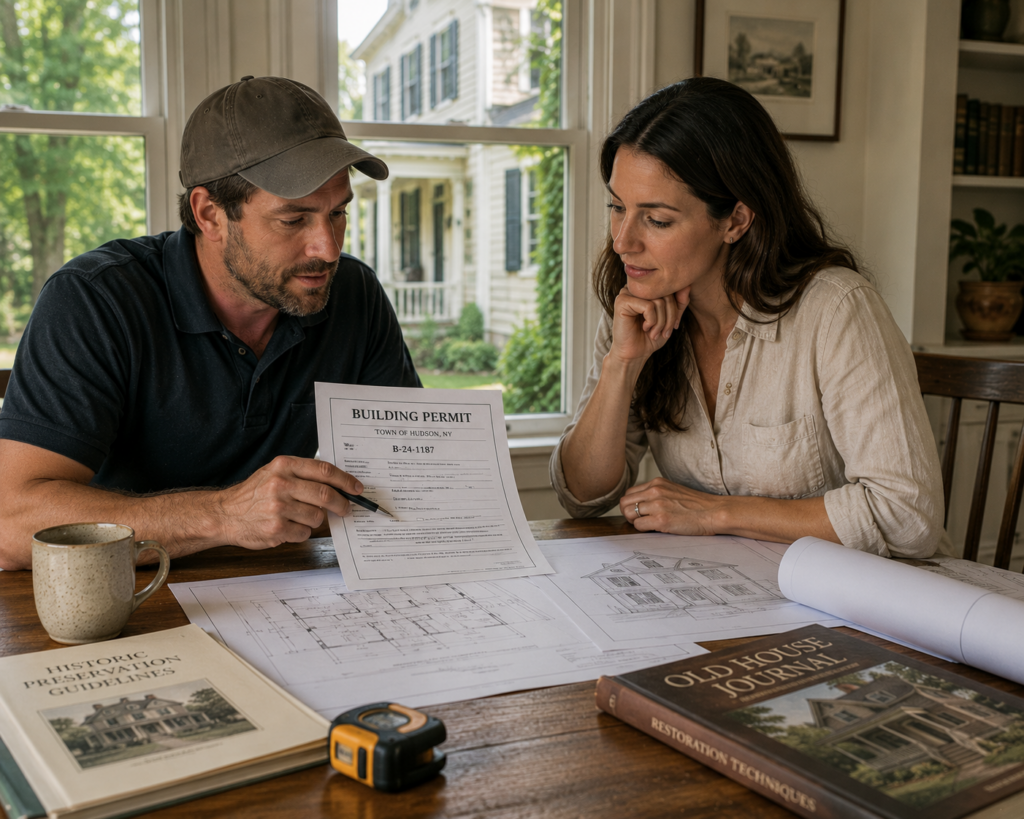
Permit requirements for restoration work in New York vary by municipality, but the general rule is this: if it touches structure, electrical, plumbing, or the exterior envelope of the home, it almost certainly requires a permit. In Hudson Valley towns and cities, building departments have become more rigorous in recent years, particularly for work on older homes where code compliance can’t be assumed.
Skipping permits isn’t a shortcut — it’s a liability. Unpermitted work can surface during a future home sale, trigger stop-work orders mid-project, create homeowner’s insurance complications, and in some municipalities, require full removal and reconstruction of completed work. In historically designated areas, permits are not just about safety — they’re about ensuring the work meets preservation standards that protect neighborhood character and property values across the district.
Your contractor should be pulling all required permits as part of their standard process. If a contractor suggests working without permits to save time or money, that is a serious red flag. Proper permitting protects you as the homeowner, and any reputable firm offering home restoration services in the Hudson Valley will handle this process transparently from the start.
Frequently Asked Questions
What should I inspect before starting a home restoration project?
You’ll want assessments that go well beyond a standard home inspection. Focus on the foundation for signs of movement or moisture intrusion, the roof and envelope for water infiltration, and all mechanical systems including electrical, plumbing, and HVAC. If the home was built before 1980, hire specialists to test for lead paint and asbestos before any demolition or disturbance work begins. Getting this information before scoping begins prevents budget-destroying surprises mid-project.
How do I know if my home needs restoration or renovation?
Restoration focuses on returning the home to its original historic condition using period-appropriate materials and methods, while renovation means updating or improving it with modern materials and systems. If your home is in a historic district, is listed on a historic register, or if you want to preserve original architectural features, restoration is the correct approach. A contractor with historic restoration experience can assess your home and help you determine which path fits your goals and the home’s legal status.
What permits are required for a home restoration?
In New York and throughout the Hudson Valley, any work affecting structure, electrical, plumbing, HVAC, or the exterior of the home requires permits from your local building department. Homes in historic districts may also require approval from a historic preservation commission before work begins. Your contractor should identify all required permits during the planning phase and manage the application process on your behalf. Never allow work to proceed without proper permits in place.
How can I budget for a home restoration without surprises?
Start with a thorough pre-project assessment to surface as many known conditions as possible, then build a contingency fund of 15 to 25 percent on top of your base estimate. Prioritize work by structural importance and safety first, deferring cosmetic items to later phases if needed. Ask your contractor for a detailed written scope and cost breakdown so you understand exactly what’s included and what could trigger a change order. Transparency up front is your best protection against mid-project sticker shock.
How do I choose the right home restoration contractor?
Look for contractors who specialize specifically in historic restoration, not just general remodeling. Ask to see completed restoration projects similar in age and style to your home, request references from previous clients, and verify that the contractor is fully licensed and insured in New York State. Confirm they have experience working with local building departments and, if applicable, historic preservation boards. A design-build firm with dedicated restoration expertise will coordinate architecture, permitting, and construction under one roof, which simplifies the entire process significantly.
Ready to Move Forward? Start With the Right Team.
Imagine walking through your restored home five years from now — original hardwood floors refinished to a warm glow, historic millwork repaired to its former precision, mechanical systems quietly doing their job behind walls that look exactly as they did a hundred years ago. That outcome is absolutely achievable. But it starts with the right preparation, the right planning, and the right contractor beside you from day one.
The decisions you make before the first wall is opened will shape every dollar, every timeline, and every outcome this project produces. Homeowners who invest time in proper inspections, realistic budgeting, and partner selection consistently report smoother projects, fewer costly surprises, and a final result they’re genuinely proud of. Those who rush the process or cut corners on the front end spend the back half of their project fixing problems that didn’t have to exist.
At Chiusano Design Build, we’ve worked with Hudson Valley homeowners on historic and older homes throughout the region. We understand the regional building stock, the permit landscape, and what it takes to do restoration work the right way — the kind of work that stands up to scrutiny, preserves historical integrity, and adds lasting value to your property. Whether you’re in the earliest stages of thinking this through or ready to move into planning, we’re here to help you get it right. To learn more about our approach or to schedule a conversation with our team, visit our Contact Us page or call us directly at 845-201-9450. Let’s talk about what your home deserves.