How Much Does a Home Addition Cost in the Hudson Valley?
Home addition costs in the Hudson Valley typically range from $150 to $500 or more per square foot, depending on addition type, complexity, materials, and local labor rates. This guide breaks down real cost ranges for room additions, second-story expansions, bump-outs, and more, so Hudson Valley homeowners in Dutchess, Greene, Albany, Columbia, and Ulster counties can plan with confidence.
You’ve outgrown your home. Maybe the kids are sharing a room, your home office is the kitchen table, or you’ve simply run out of space for the life you’re actually living. Moving is expensive, stressful, and means leaving a neighborhood you love. A home addition is often the smarter path, but the big question that stops most homeowners dead in their tracks is the same one every time: what is this actually going to cost me?
The honest answer is that it depends on more factors than most contractors will tell you upfront. This guide is built to change that. You’ll find real cost ranges, the variables that move the number up or down, and what to expect at every stage of the process so there are no surprises when your project gets underway.
Key Takeaways
- Home addition costs in the Hudson Valley generally range from $150 to $500+ per square foot, with significant variation based on type and scope.
- A basic single-room addition typically costs between $80,000 and $200,000 in this region.
- Second-story additions and primary suite expansions are among the most expensive project types.
- Permits, design fees, and site prep are real costs that must be factored into your total budget from day one.
- Choosing a local design-build firm can simplify the process and reduce costly miscommunications between separate design and construction teams.
- Planning a home addition early and thoroughly is one of the most effective ways to control final costs.
Why Do Home Addition Costs Vary So Much?
The single most frustrating thing about searching for home addition costs online is that the numbers are all over the map. You’ll see figures ranging from $20,000 to well over $500,000 on the same search results page. That’s not a mistake. It reflects how genuinely different projects can be, even when two homeowners describe their goals in almost identical terms.
The type of addition matters more than almost any other variable. A simple bump-out extending your kitchen by 100 square feet involves a completely different scope of work than a full second-story addition above an existing ranch home. Labor costs, structural requirements, foundation work, and finishing specifications all shift dramatically depending on what you’re building. Regional location plays a significant role too. Hudson Valley construction costs reflect local labor rates, permit fee schedules, and the realities of working with older homes that were often built before modern codes existed.
What Are the Real Cost Ranges by Addition Type?
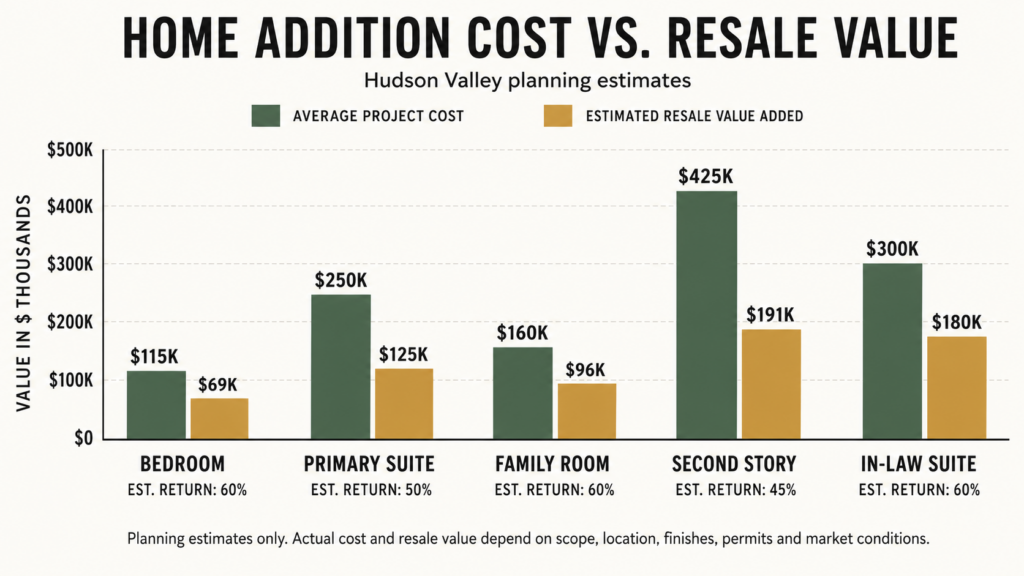
A standard single-room addition, like a bedroom, family room, or home office, typically runs between $80,000 and $200,000 in the Hudson Valley. That range accounts for the cost of foundation work, framing, roofing, insulation, drywall, electrical, HVAC tie-in, and finish work. Smaller rooms toward the lower end of the square footage spectrum will naturally land closer to the floor of that range, while larger or more complex rooms push upward quickly.
Bump-out additions are a popular option for homeowners who need a modest footprint increase without the cost of a full addition. These typically cost between $20,000 and $75,000 depending on size and complexity. Because they’re smaller and don’t always require a full foundation, they can be significantly more affordable, but costs rise fast when plumbing or significant structural modification is involved. If you’re curious about how these work in practice, exploring bump-out addition ideas can help you assess whether this approach fits your goals.
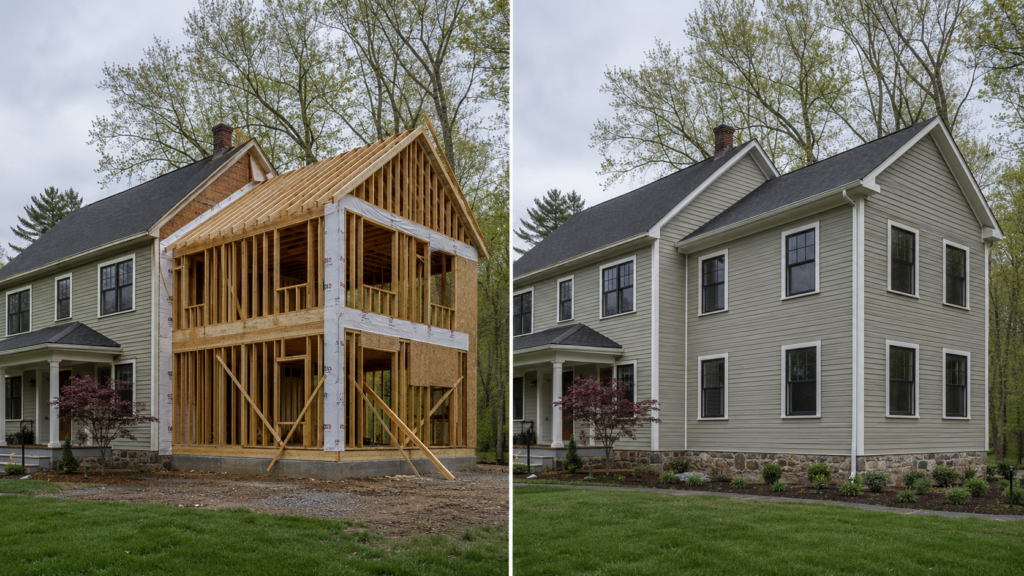
Second-story additions are among the most expensive projects a homeowner can undertake, with costs in the Hudson Valley frequently falling between $200,000 and $500,000 or more. Adding a full second floor requires structural engineering assessments, reinforcement of the existing foundation and first-floor framing, temporary relocation considerations, and a complete roofing replacement. The payoff is substantial additional square footage without expanding your home’s footprint, which is particularly valuable on smaller lots in communities like Rhinebeck, Hudson, and Catskill.
In-law suites and accessory dwelling units (ADUs) have become increasingly sought after across Dutchess and Ulster counties, especially among families supporting aging parents or adult children. These projects typically cost between $100,000 and $300,000 depending on whether they’re attached, detached, or built above a garage. Self-contained units with a full kitchen and bathroom sit at the higher end of that range due to the additional mechanical and plumbing systems required.
What Drives the Cost Per Square Foot?
In the Hudson Valley, home addition costs per square foot generally range from $150 on the conservative end to $500 or more for high-finish, complex projects. A mid-range addition with solid but not luxury finishes typically lands between $200 and $350 per square foot. That figure encompasses all hard costs including labor and materials, but design fees, permits, and contingency are typically calculated separately and added on top.
Several factors push that per-square-foot number higher. Kitchens and bathrooms cost considerably more than finished living space because of the plumbing, tile work, cabinetry, and appliances involved. Vaulted ceilings, large window packages, custom millwork, and radiant floor heating are all features that add meaningful cost. On the structural side, projects that require significant foundation work, load-bearing wall removal, or beam installation will carry higher costs than simpler additions that connect cleanly to an existing structure.
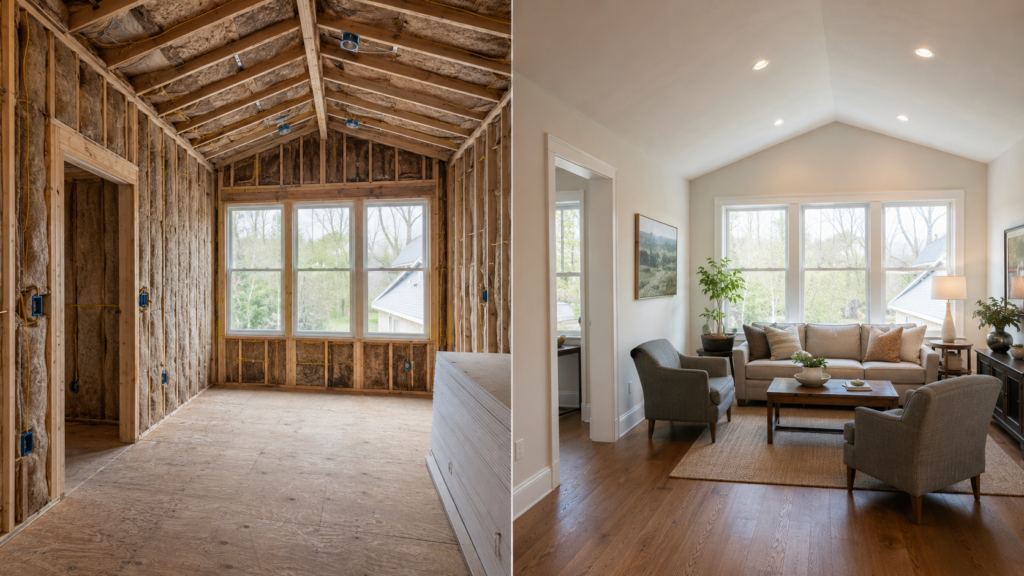
The age of your home is another variable that Hudson Valley homeowners in particular need to factor in. Older homes in Columbia County farmhouse styles or Victorian-era properties in Kingston and Catskill often reveal surprises once walls are opened: outdated wiring, original plumbing, structural modifications made decades ago without permits, or insulation that doesn’t meet current code. A good contractor will build contingency into your budget specifically for these discoveries.
What About Permits, Design Fees, and the Costs People Forget?
One of the most common mistakes homeowners make when budgeting for an addition is treating the construction cost as the total cost. It isn’t, and the gap between the two can catch people off guard by tens of thousands of dollars.
Architectural and design fees typically run between 10% and 15% of total construction cost for a fully custom project. If your addition costs $200,000 to build, expect to spend $20,000 to $30,000 on drawings, engineering, and project coordination before a single nail is driven. Some design-build firms include portions of this in their project management fee, so it’s worth asking specifically how design costs are structured.
Building permits in Dutchess, Greene, Albany, Columbia, and Ulster counties vary by municipality, but homeowners should generally budget between $1,500 and $6,000 for permit fees on a mid-size addition. Some towns also require zoning board approval, variance applications, or environmental review depending on lot size and location, which can add both cost and timeline. Projects that involve septic system modifications or well proximity requirements carry additional review fees.
A realistic contingency reserve is non-negotiable. Most experienced contractors recommend setting aside 10% to 20% of your total budget for unforeseen conditions. This isn’t pessimism; it’s sound financial planning for a project that involves opening up an existing structure and integrating new systems into old ones.
Does a Home Addition Add Value to Your Home?
Imagine finishing a 600-square-foot primary suite addition. You’ve added a spa-style bathroom, a proper walk-in closet, and a reading nook that overlooks your backyard. Think about what that means for your daily life, your household’s comfort, and what it communicates to a future buyer when they walk through your home. That’s the kind of transformation that goes well beyond the dollar figures on an appraisal report.
Nationally, home additions return between 50% and 80% of their cost at resale depending on addition type, quality of construction, and local market conditions. In the Hudson Valley, where housing inventory has remained tight and demand from buyers relocating from metro areas continues to be strong, well-executed additions in communities like Red Hook, Woodstock, and Chatham can perform at the higher end of that range. A quality addition that adds a bedroom or brings a home up to a competitive square footage for its neighborhood can have an outsized effect on appraised value.
Return on investment isn’t the only lens worth looking through. Many Hudson Valley homeowners who work with custom home addition services are solving an immediate problem: they need more space now, in the community they’ve built their lives around. The financial return matters, but so does the quality of life difference that comes from finally having a home that fits your family.
How Do You Budget and Plan for a Home Addition?
The most important thing you can do before any contractor visits your home is to define your goals clearly. Not just “we want more space,” but specifically: what room, what size, what function, what level of finish, and what’s the hard budget ceiling? That clarity changes the conversation you have with every professional you bring in.
Getting multiple estimates is standard advice, but the quality of those estimates depends on how well you’ve communicated your scope. Comparing a detailed design-build proposal to a rough verbal estimate from a general contractor isn’t an apples-to-apples comparison. Ask every contractor to break out their cost structure the same way so you’re evaluating comparable information.
Financing is worth addressing early too. Home equity loans and HELOCs are the most common vehicles for funding additions, and current rates in 2025 mean your monthly payment projections will look very different than they did two years ago. Some homeowners also explore construction-to-permanent loans, which wrap the build and long-term financing into a single product. Talk to your lender before you finalize your budget ceiling.
For a thorough walkthrough of the full process from concept to construction start, the guide on planning a home addition covers every phase in detail and is a useful resource before your first contractor meeting.
Frequently Asked Questions
What is the average cost of a home addition?
In the Hudson Valley, the average home addition costs between $100,000 and $300,000 for a single-room or moderate-scope project. Smaller bump-outs can come in below that range, while full second-story additions or large primary suite expansions routinely exceed $300,000. The best way to get an accurate number is a site visit and detailed scope review with a local contractor.
How much does a home addition cost per square foot?
Expect to budget between $150 and $500 per square foot for a home addition in this region, with most mid-range projects landing between $200 and $350 per square foot. That figure covers hard construction costs. Design fees, permits, and contingency are typically added on top and can represent an additional 15% to 25% of your total investment.
What factors affect the cost of a home addition?
The biggest cost drivers are addition type, square footage, finish level, and the structural complexity involved. Projects that require significant foundation work, plumbing, or integration with aging mechanical systems cost more. The age and condition of the existing home, local permit requirements, and current labor and material pricing in your specific county also play meaningful roles.
Which type of home addition costs the most?
Second-story additions are consistently the most expensive type, followed closely by large primary suites with luxury bathrooms and full in-law suite or ADU builds. These projects involve the most structural complexity, the most trades, and the longest timelines. Single-room additions and bump-outs are generally the most cost-effective options for homeowners who need targeted space rather than a comprehensive expansion.
Are permits and design fees included in the total cost?
That depends on how a contractor structures their proposal, and you should always ask explicitly. Many contractors quote construction cost only, with permits and design fees listed as separate line items or left for the homeowner to arrange independently. A full design-build firm will often provide an all-in number, but it’s still worth confirming exactly what’s included before signing anything.
Ready to Find Out What Your Home Addition Will Actually Cost?
Every homeowner who’s gone through this process has said the same thing afterward: the hardest part was getting started. Once you have a real number in front of you, a real plan, and a team you trust, the project stops feeling abstract and starts feeling possible.
Chiusano Design Build has helped homeowners across Dutchess County, Greene County, Albany County, Columbia County, and Ulster County expand their homes with additions that are built to last and designed to fit the way they actually live. From the first conversation to the final walkthrough, the process is handled in-house so there’s no gap between what was designed and what gets built.
If you’re ready to move from wondering to knowing, start your home addition by calling 845-201-9450 to schedule a consultation. Chiusano Design Build will give you a clear, honest assessment of what your project will involve, what it will cost, and how to make it happen on a timeline that works for your family.