How to Clean Tile Floors in Hudson Valley Homes (And Actually Keep Them That Way)
- eaners are safe to use.
- Most streaking is caused by using too much soap or not rinsing properly.
- Grout needs a separate, targeted cleaning approach to stay bright.
- Acidic cleaners can permanently etch natural stone and should be avoided entirely on those surfaces.
- Regular light cleaning prevents the kind of buildup that requires heavy-duty treatments.
- Damaged, cracked, or deeply stained tile may need professional repair, not just better cleaning.

Why Tile Floors in Hudson Valley Homes Need a Specific Approach
Homes throughout the Hudson Valley deal with particular conditions that affect how tile floors age and collect grime. Between muddy entryways from wet spring seasons, high humidity in older homes without great ventilation, and the general foot traffic that comes with family life in the region, tile floors here tend to accumulate a specific combination of soil, mineral deposits from hard water, and mildew in grout joints.
Hard water is a well-documented issue across much of the Hudson Valley, where water hardness levels regularly exceed 120 mg/L. That mineral content leaves behind calcium and magnesium deposits on tile surfaces over time, creating the hazy, dull film that no amount of casual mopping seems to fully remove.
Most homeowners default to the same cleaning routine they’ve always used without realizing that routine may be the source of the problem, not the solution. Using the wrong cleaner, mopping with a dirty mop head, or skipping the rinse step are all common mistakes that compound over months into a floor that always looks slightly off.
What’s the Right Way to Clean Tile Floors Without Damaging Them?
Before anything touches your floor, it’s worth identifying what type of tile you have. Ceramic and porcelain tile are the most forgiving. Natural stone tiles like travertine, marble, and slate require a more protective approach because they’re porous and sensitive to acidic cleaners. The cleaning method that works beautifully on a ceramic kitchen floor can permanently dull a marble bathroom floor.
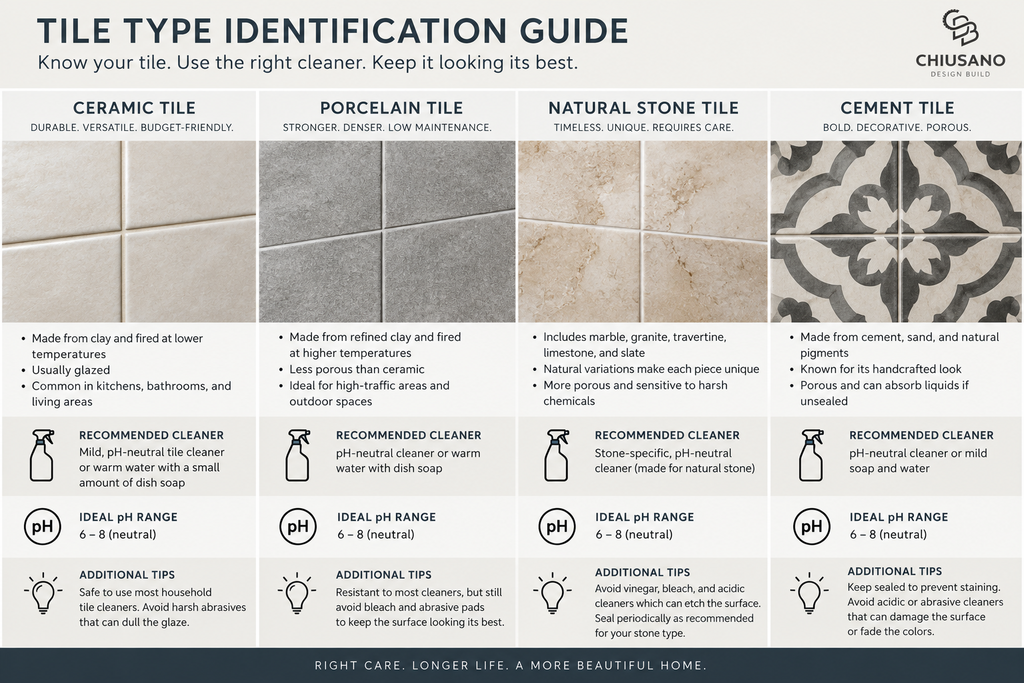
For ceramic and porcelain tile, the basic cleaning sequence is straightforward. Start by dry-sweeping or vacuuming the floor thoroughly to remove loose debris. Skipping this step means you’re just pushing grit around in your mop water, which scratches the surface over time. After sweeping, mop with a pH-neutral cleaner diluted in warm water, working in sections. Wring the mop head until it’s damp, not soaking. A saturated mop leaves water sitting in grout joints, which accelerates staining and can eventually loosen grout over years of repetition.
For natural stone tile specifically, experts recommend using only pH-neutral or stone-safe cleaners with a pH between 7 and 10. Anything below that range, including many popular household multi-surface sprays and vinegar-based solutions, can etch the surface of calcite-based stones like marble and travertine, causing permanent dullness that cannot be cleaned away and often requires professional honing or polishing to correct.
The rinse step is the one most people skip. After mopping with your cleaning solution, go over the floor once more with a clean mop dampened with plain warm water. This removes the soap film that, when it dries, leaves that streaky, hazy finish everyone complains about. It takes an extra few minutes but makes a visible difference in the final result.
How Do You Get Tile Floors to Stay Clean Longer?
The best cleaning routine is one that reduces how often deep cleaning is necessary. Placing mats at entryways catches the majority of dirt before it reaches your tile. Dry-sweeping or vacuuming two to three times per week prevents the light layer of grit and dust from bonding to the tile surface when tracked moisture dries over it. These habits keep your floor looking maintained between proper mopping sessions.
Sealing grout lines every one to two years is one of the most effective maintenance steps a homeowner can take. Unsealed grout is highly porous and absorbs spills, oils, and foot traffic residue at a much faster rate than sealed grout. Sealed grout also resists mildew growth more effectively, which is particularly relevant in bathroom settings where moisture exposure is ongoing.
Spot-cleaning spills immediately is also worth building into household habits. Most staining on tile floors happens when something is allowed to sit, dry, and penetrate either the grout or the tile surface itself. A spilled glass of juice wiped up immediately leaves no mark. The same spill left overnight on unsealed grout becomes a project.
What’s Actually Ruining Your Tile Without You Knowing It?
Some of the most common tile-cleaning habits cause slow, cumulative damage. Bleach is frequently used on grout because it visually whitens it, but regular bleach use degrades grout over time by breaking down the binder that holds it together. The grout may look clean for a few days, then revert quickly because the texture has become rougher and more porous from repeated chemical exposure.
Steam mops are popular, and they work well on sealed ceramic and porcelain. On natural stone or floors with older, cracked grout, the heat and moisture can worsen existing damage. If your grout already has hairline cracks or sections that are beginning to loosen, steam mopping accelerates moisture intrusion beneath the tile, which is one of the leading causes of tiles cracking or lifting from the substrate. Learning how to fix chipped tile before it becomes a larger problem is worth understanding alongside your cleaning routine.
Vinegar is one of the most widely recommended DIY cleaning solutions online, but its acetic acid content, typically between 4% and 8% concentration in standard household white vinegar, can etch natural stone, corrode grout sealant, and dull the finish on unglazed tile with repeated use. Despite its popularity in cleaning blogs and social media posts, tile industry organizations generally advise against using vinegar on any tile floor as a regular cleaner.
Oil-based soaps like Murphy’s Oil Soap are another frequent mistake. While they work well on hardwood, they leave a waxy buildup on tile that accumulates with each use. Over time, this coating attracts and holds dust and foot traffic grime, creating a floor that looks perpetually dirty despite regular cleaning.
How Should You Tackle Grout That’s Already Dark or Stained?
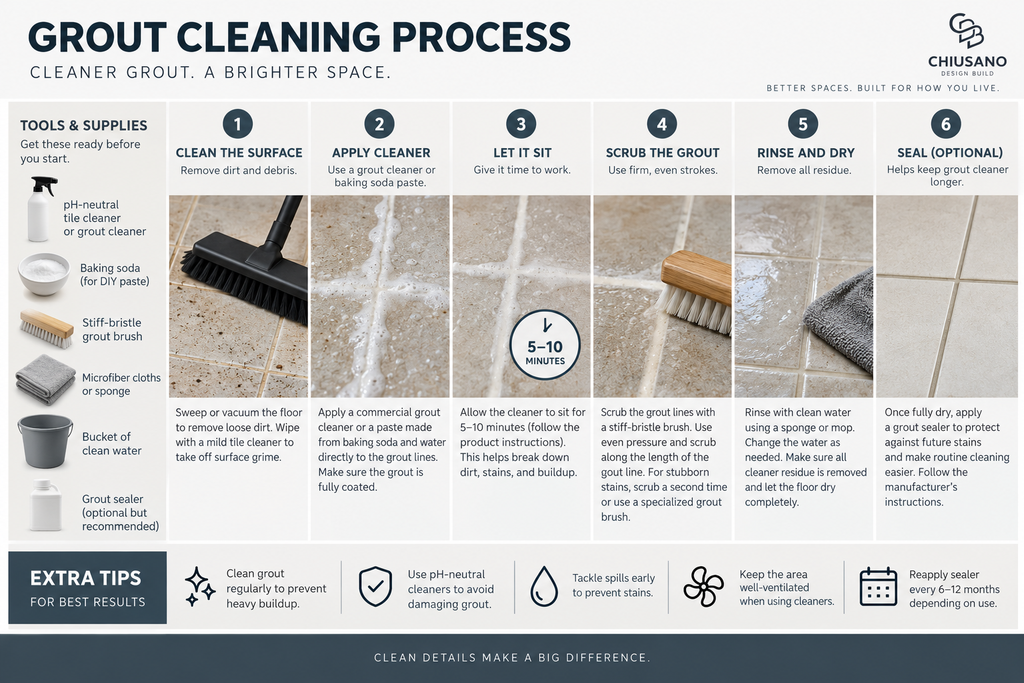
If your grout has already reached the point where regular mopping makes no difference, you’re dealing with embedded staining that requires a more direct approach. A stiff-bristled grout brush, a targeted grout cleaner, and some time are the starting point. Apply the cleaner directly to the grout line, let it dwell for a few minutes, then scrub in a circular motion before rinsing thoroughly. Repeat as needed. A detailed breakdown of products and techniques specifically for this problem is covered in our guide on how to clean tile grout in Hudson Valley homes.
For grout that’s stained beyond what surface cleaning can resolve, grout colorant or grout paint is an option. These products penetrate and seal the grout surface while restoring a uniform color. They’re not a cleaning product, but they can transform grout that would otherwise require full replacement. When grout is crumbling, deeply cracked, or missing in sections, cleaning is no longer the right solution. That’s a repair.
Frequently Asked Questions
What is the best cleaner to use on tile floors?
A pH-neutral, tile-specific cleaner is the safest and most effective choice for most tile types, including ceramic, porcelain, and natural stone. Brands like Aqua Mix, Black Diamond, and Bona offer cleaners formulated for tile that won’t leave residue or damage sealants. Avoid anything with bleach, vinegar, or citrus acids as a regular cleaner, especially on stone tile.
How often should tile floors be deep cleaned?
For most households, a thorough wet mop with a proper pH-neutral cleaner once a week is sufficient, supported by dry sweeping two to three times per week. High-traffic areas like kitchens may benefit from more frequent mopping. A deep clean targeting grout lines specifically should happen every one to three months depending on foot traffic and how quickly your grout tends to darken.
How do you clean tile floors without leaving streaks or residue?
Streaks and residue are almost always caused by too much soap in the mop water or skipping the rinse pass. Use only a capful or small measured amount of cleaner per bucket. After mopping, go over the floor with a clean mop dampened with plain water to remove any soap film. Microfiber mop heads are particularly effective at picking up residue without pushing it around.
How can you remove stains and buildup from tile grout?
Apply a dedicated grout cleaner directly to the grout lines and allow it to sit for five to ten minutes before scrubbing with a stiff grout brush. For stubborn staining, a paste of baking soda and water applied and scrubbed can lift surface grime without harsh chemicals. If the grout is too far gone for surface treatment, professional regrouting or grout colorant may be the more practical solution. Our full resource on how to clean tile grout covers advanced stain removal in more detail.
What cleaning products should you avoid using on tile floors?
Avoid vinegar, lemon juice, and any cleaner with a low pH on stone or sealed tile. Skip bleach for regular cleaning since it degrades grout over time. Oil-based soaps build up a coating that attracts grime. Abrasive scrubbing powders can scratch glazed tile and porcelain. When in doubt, check the manufacturer’s care instructions for your specific tile, or choose a cleaner explicitly labeled safe for your tile type.
When Cleaning Isn’t Enough: Knowing When to Call a Professional
There’s a point in every tile floor’s life when the problem shifts from maintenance to repair. Tiles that are cracked, chipped, hollow-sounding underfoot, or lifting at the edges are no longer a cleaning challenge. Grout that’s crumbling, deeply discolored despite aggressive treatment, or missing in sections needs replacement, not more scrubbing.
Imagine walking into your kitchen or bathroom and having the floor actually look the way it did when it was installed. That’s not an unrealistic expectation. It usually just requires identifying what’s actually wrong and addressing it properly, whether that’s adjusting your cleaning routine, resealing, regrouting, or replacing damaged sections entirely. The Professional Tile Work team at Chiusano Design Build handles all of it for homeowners throughout the Hudson Valley.
Ready for a Tile Floor That Looks and Stays Clean?
Sometimes the issue isn’t your cleaning technique at all. Tile floors with underlying damage, failed grout, or surfaces that were never properly sealed will disappoint no matter what products you use. If your floors have reached that point, or if you’re planning a bathroom or kitchen renovation and want tile done right from the start, Chiusano Design Build is here to help.
We work with homeowners across the Hudson Valley on everything from targeted tile repairs to full floor installations. If you’d like an honest assessment of what your tile floors actually need, reach out to our team. Contact Us online or call us directly at 845-201-9450 to get started.